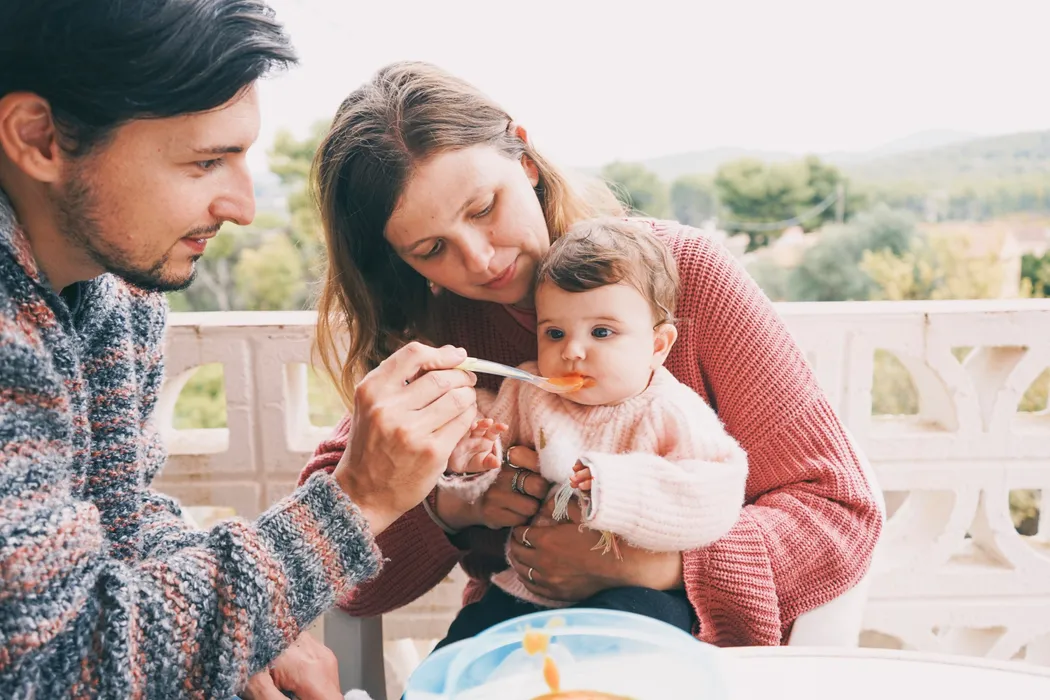
First Foods to Introduce (Month-by-Month Guide)
6 Months: Starting Simply
When introducing foods, offering one new single-ingredient food at a time and waiting about 3 to 5 days before introducing another can make it easier to identify a possible reaction. A variety of foods, including common allergenic foods, should not be unnecessarily delayed once the baby is developmentally ready.
Good first foods for baby in India include:
- Single-grain porridge made from rice, ragi, or suji, cooked to a thin, smooth consistency
- Mashed banana or ripe papaya, soft enough to dissolve on the gums
- Smooth mashed potato or sweet potato
- Well-cooked and mashed moong dal
- Mashed cooked carrot or pumpkin
Start with small amounts and gradually increase according to your baby's appetite and ability. WHO guidance suggests beginning with around 2–3 tablespoonfuls per feed at 6–8 months and gradually increasing toward about ½ of a 250-mL cup or bowl. Breastfeeding should continue alongside complementary foods.
7 to 8 Months: Adding Variety and Texture
Once your baby is comfortable with smooth purees, thicken textures gradually and begin introducing protein sources:
- Mashed cooked egg, well-cooked all the way through
- Soft-cooked legumes like masoor dal or chana dal, mashed thoroughly
- Minced soft-cooked chicken or fish
- Soft fruits such as pear, peach, or melon, mashed or in small soft pieces
- Full-fat plain curd, if there is no known dairy concern in the family
From 6–8 months, offer complementary foods 2–3 times a day, gradually increasing portions as your baby's appetite and feeding skills develop. From 9–11 months, this generally increases to 3–4 meals a day.
9 to 12 Months: Family Foods with Modifications
At this stage, a baby can try lightly seasoned, soft versions of what the family eats. Khichdi, soft idli, well-cooked sabzi with minimal salt, and soft chapati pieces all work well. Finger foods become more appropriate as pincer grip develops.