logo
0

Amul Milk Price, Pasteurisation, and Is It Safe for Babies?

Compare Amul milk price with other Indian brands, understand pasteurization, and know when milk is safe to introduce to infants.
For personalised support with weight management, explore weight-loss guidance from Apollo 24|7 and find an approach suited to your health goals.

article image

Dr.Kamran

Choosing the right milk for your family becomes especially important when a new baby arrives. For parents comparing Amul milk price against other brands, or wondering whether pasteurised cow milk is safe for their infant, the stakes feel high. This guide covers Amul's pricing across variants, how it compares to other popular brands, and what paediatric guidance says about feeding cow milk to babies.

Amul Milk Price Across Variants

Amul offers several milk variants to suit different households, and prices vary by city, retail outlet, and whether you buy loose pouches or tetra packs. The figures below are indicative and subject to revision by Amul or your local distributor.
 

VariantTypical Price Range (500 ml pouch)Fat Content
Amul Toned MilkRs. 25 to Rs. 303% fat
Amul Double TonedRs. 22 to Rs. 271.5% fat
Amul Gold (Full Cream)Rs. 31 to Rs. 356% fat
Amul ShaktiRs. 27 to Rs. 32    4.5% fat

Amul Gold full cream milk tends to sit at the higher end because of its fat content, while double toned is the most affordable. Tetra pack versions cost more per litre than pouch variants. Always check the printed MRP on the pack, as regional pricing can differ.

Amul vs Other Popular Indian Milk Brands

Several strong regional and national brands compete with Amul. Here is a straightforward comparison across the factors that matter most to families, including Amul milk vs other brands on price, fat content, and reach.
 

BrandKey VariantsApprox. Price (500 ml)Primary Availability
AmulToned, Gold, Shakti, Double TonedRs. 22 to Rs. 35Pan-India
Mother DairyToned, Full Cream, Token MilkRs. 24 to Rs. 33North and East India
Nandini (KMF)Toned, Homogenised, GoldRs. 21 to Rs. 32Karnataka, parts of South India
Heritage FoodsToned, Standardised, Full CreamRs. 23 to Rs. 34Andhra Pradesh, Telangana, Tamil Nadu

A few things worth knowing before you pick:

  • Amul has the widest national distribution, so it is the most consistently available brand across cities and small towns alike.
  • Mother Dairy is well-regarded in Delhi-NCR and has strong cold-chain infrastructure.
  • Nandini is often cited as excellent value in Karnataka, with competitive full-cream milk pricing in India.
  • All four brands follow FSSAI-mandated fat and SNF (solids-not-fat) standards, so quality benchmarks are largely uniform.

No single brand is universally "best." The best milk brand for infants and families depends on local availability, freshness of supply in your area, and your budget.

What Pasteurisation Means and Why It Matters

Pasteurisation is a heat treatment process where raw milk is heated to a specific temperature for a set duration and then rapidly cooled. This kills harmful bacteria such as Salmonella, Listeria, and E. coli that can cause serious illness, especially in young children and immunocompromised individuals.

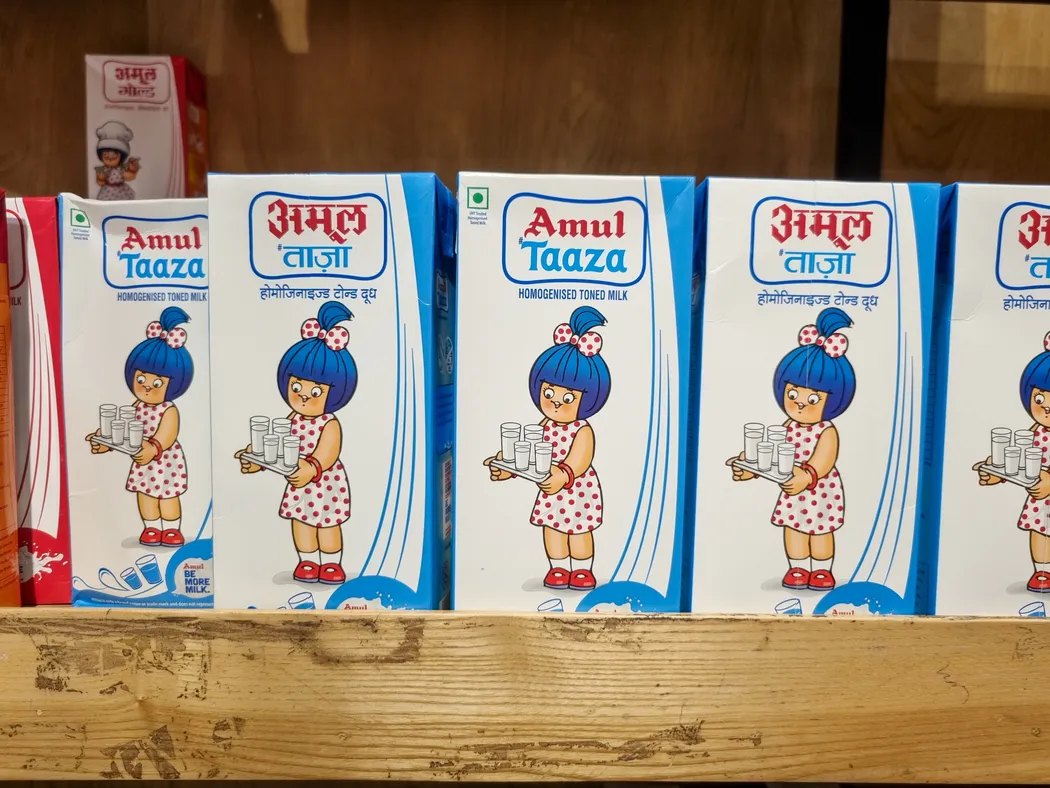
Amul milk is pasteurised and, in the case of tetra pack variants, UHT (ultra-high temperature) treated, giving it a longer shelf life without refrigeration until opened.

Pasteurised milk for babies sounds reassuring, but Pasteurisation alone does not make cow milk appropriate for infants under 12 months. Pasteurisation removes pathogens; it does not change the protein, mineral, or iron composition that makes cow milk difficult for a young baby's digestive system and kidneys to handle.

Is Cow's Milk Suitable for Infant Feeding?

This is one of the most common questions new parents have, and the answer from paediatric guidance is clear: cow's milk, including Amul milk, is not recommended as the main drink for babies under 12 months of age. Breast milk or, when that is not possible, iron-fortified infant formula should be the primary nutrition source in the first year.

The question of when babies can drink cow's milk has a straightforward answer: generally after the first birthday, once your paediatrician confirms readiness. After 12 months, full-cream cow's milk can be introduced in small amounts as part of a varied diet, as long as the child is eating solid foods and growing well.

Can I give Amul milk to my baby?

Not as a main feed before 12 months. Small amounts of cow milk used in cooking (for instance, in khichdi or porridge) after 6 months are generally considered acceptable, but this should be discussed with your child's doctor.

Contraindications and Risks of Early Milk Introduction

Introducing cow milk too early carries specific risks that parents should understand clearly.

Who should not be given cow milk:

  • Infants under 12 months should not receive cow milk as a primary or main drink.
  • Babies with a known or suspected cow milk protein allergy (CMPA) should avoid all cow milk and products unless directed otherwise by a doctor.
  • Infants with kidney conditions or those born prematurely may face additional risks and require tailored advice.

Risks of early introduction include:

  • Iron deficiency and anaemia: cow milk is low in iron and can reduce iron absorption from other foods, increasing the risk of anaemia in rapidly growing infants.
  • Allergic reactions: cow milk protein allergy is one of the most common food allergies in infants. Symptoms can range from skin rashes and vomiting to more serious reactions.
  • Kidney strain: the high protein and mineral load in cow milk is harder for immature infant kidneys to process safely.
  • Intestinal bleeding: very early introduction has been associated with microscopic intestinal blood loss in some infants, contributing to iron loss.

Report adverse events to your healthcare provider or the relevant regulatory authority.

These are not theoretical concerns. They are well-documented reasons why paediatric bodies consistently recommend waiting until 12 months before introducing cow's milk as a drink.

When to Consult a Paediatrician

Before making any change to your infant's diet, including introducing cow's milk, dairy-based foods, or switching from formula, speak to your paediatrician. Every child has different nutritional needs, growth patterns, and health histories.

This is especially true if your child was born prematurely, has a family history of allergies, or has shown any reaction to dairy products in the past. Your doctor can advise on the right timing, the appropriate variant (toned milk vs full cream milk, for instance, matters post-infancy too), and the right portion sizes.

For broader guidance on caring for your newest family member, reading up on newborn care essentials for new parents can be a helpful starting point.

Prescribing information note: This article is for general informational purposes only and does not constitute medical advice, a prescription, or a clinical recommendation. Feeding decisions for infants should always be made in consultation with a qualified healthcare professional.

Conclusion

Amul offers several milk variants at different price points, but the most important consideration for infants is not the brand or cost. Pasteurised cow's milk, including Amul milk, should not be used as the main drink for babies under 12 months. Breast milk or iron-fortified infant formula should remain the primary milk source during the first year.

After 12 months, cow's milk can generally be introduced as part of a balanced diet, with the choice between toned and full-cream milk based on the child's nutritional needs. Parents should consult a paediatrician before making feeding changes, particularly if the baby has allergies, was born prematurely, or has any underlying health condition.

FAQS

What is the current price of Amul milk in India?

Amul milk pouches typically range from around Rs. 22 to Rs. 35 for a 500 ml pack depending on the variant, with double toned being the cheapest and Gold full cream the most expensive. Prices vary by city and can change when Amul revises its rates, so always check the MRP printed on the pack.

Is Amul milk good for newborn babies?

No. Amul milk, like any cow's milk, is not suitable as the main drink for babies under 12 months. Newborns and young infants need breast milk or iron-fortified infant formula, not cow's milk.

Which is healthier, toned or full cream milk?

Neither is universally better. Full cream milk provides more fat-soluble vitamins and calories, which can be useful for toddlers and children needing energy-dense food. Toned milk is lower in fat and calories, making it more suitable for older children and adults managing weight.

How is Amul milk pasteurised?

Amul pasteurizes its milk by heating it to eliminate harmful bacteria, then rapidly cooling it. Tetra Pak variants undergo UHT treatment, which uses higher heat for a shorter time and allows the sealed pack to stay shelf-stable without refrigeration until opened.

At what age can babies drink cow's milk?

Paediatric guidance consistently recommends waiting until 12 months before offering cow's milk as a drink. After the first birthday, whole or full-cream cow's milk can be introduced gradually alongside a balanced solid food diet, with your paediatrician’s go-ahead.
Apollo 247 Floating Action Button