logo
0

Avocado Puree for Babies: Benefits & Safe Introduction

Learn how to make easy avocado puree for babies, its nutritional benefits, and safe first-food weaning tips. Doctor-reviewed guidance for parents.

article image

Dr.Yusuf

Starting solids is one of the most exciting milestones in your baby's first year, and avocado puree is one of the simplest, most nutritious places to begin. Smooth, naturally creamy, and rich in the healthy fats a growing brain needs, avocado puree for baby is a favourite among paediatricians and parents alike. This guide covers when to start, how to make it, how much to offer, and when to hold back.

Is Avocado Safe as a First Food for Babies?

Most babies are ready to begin complementary foods at around 6 months of age. Paediatric guidelines generally advise waiting until your baby shows clear readiness signs before introducing any first foods for baby, including avocado puree.

Signs your baby may be ready:

  • Sitting up with minimal support and holding their head steady.
  • Showing interest in food, watching you eat and reaching toward meals.

Avocado is an excellent early option because its texture mashes effortlessly to a smooth consistency, posing minimal choking risk when prepared correctly. It also requires no cooking, which makes it practical for busy caregivers. If your baby was premature, always check with your paediatrician about timing, since adjusted age matters.

Nutritional Benefits of Avocado for Babies

Avocado contains a combination of nutrients that directly support infant growth during a critical developmental window.

NutrientWhy it matters for babies
Monounsaturated fatsProvide energy and contribute to healthy growth and development
PotassiumHelps healthy muscle and nerve function
FolateImportant for cell growth
Vitamin KNeeded for normal blood clotting
Dietary fibreSupports a healthy digestive system
Vitamin ESupports immune health

Babies and young children need a relatively high proportion of fat in their diet to support growth and development. The fats in avocado are a gentle, plant-based way to meet that need. Avocado is also low in sugar, making it a good counterbalance to sweeter fruit purees, and its mild flavour means most babies accept it readily.

Easy Homemade Avocado Puree Recipes

Making a homemade baby puree from avocado takes under five minutes. Here are three simple avocado puree recipe options suited to different stages.

Recipe 1: Plain Avocado Puree (6 months+)

The best starting point when introducing avocado for the first time.

What you need: Half a ripe avocado

  1. Cut the avocado in half and remove the stone.
  2. Scoop the flesh into a bowl.
  3. Mash with a fork until completely smooth, adding a small amount of breast milk or formula to thin the texture if needed.
  4. Serve immediately.

Texture tip: For babies aged 6 to 7 months, make it as smooth as possible. Around 8 to 9 months, a slightly chunkier mash helps develop early chewing skills.

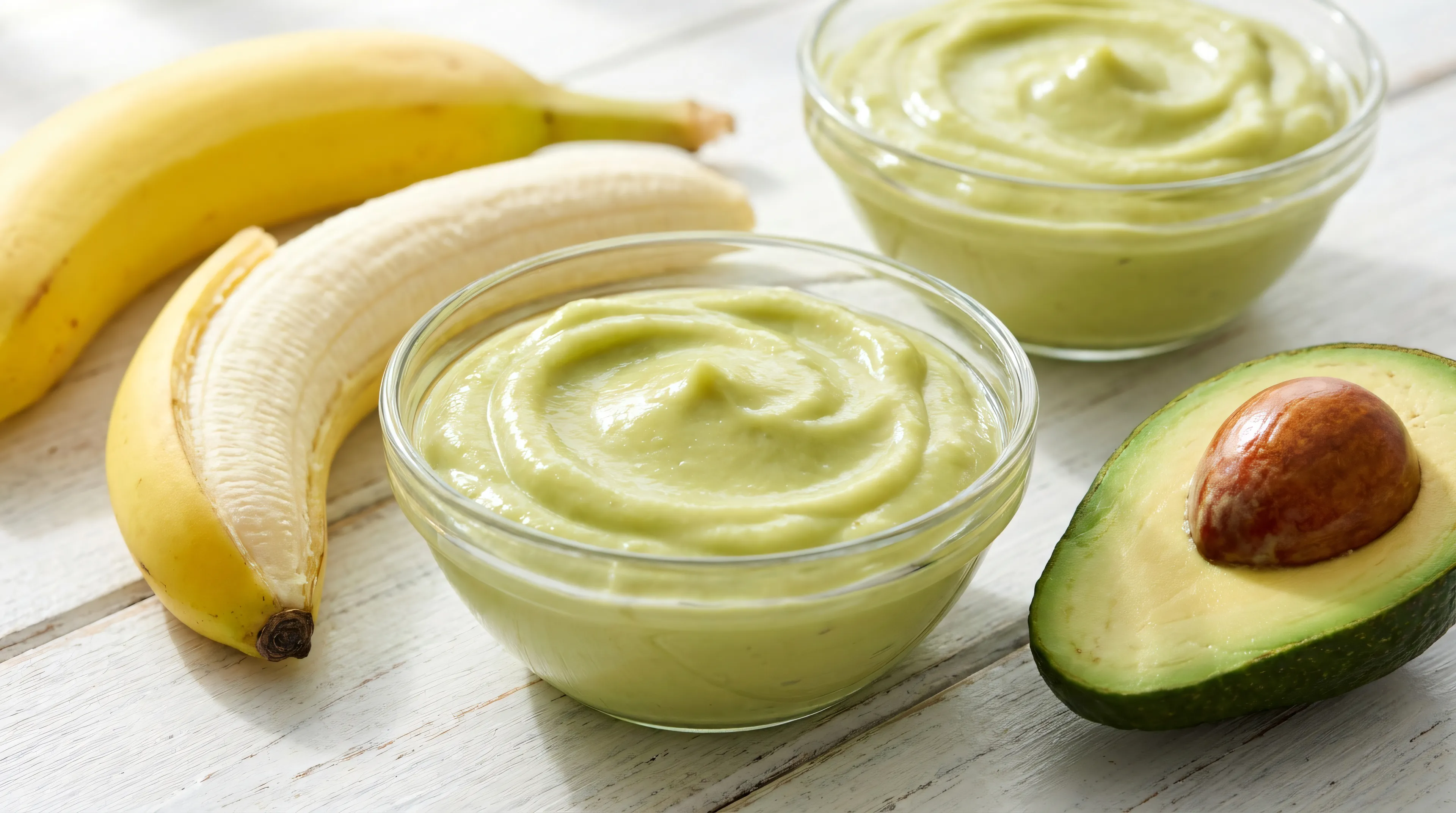
Recipe 2: Avocado and Banana Puree (6 months+)

A naturally sweet combination popular with babies adjusting to new flavours.

What you need: Half a ripe avocado, half a ripe banana

  1. Mash both together until smooth.
  2. No added liquid is usually needed as banana provides enough moisture.

Recipe 3: Avocado and Apple Puree (7 months+)

Introduce this only after your baby has already tolerated avocado and apple separately.

What you need: Half a ripe avocado, two tablespoons of unsweetened cooked apple puree

  1. Steam or cook apple pieces until soft, then puree them.
  2. Mash with avocado until well combined.
  3. Serve at room temperature.

Never add salt, sugar, honey, or cow's milk to any recipe for babies under 12 months.

How to Safely Introduce Avocado Puree to Your Baby

Offer new foods one at a time so you can more easily identify any reaction. There is no need to follow a fixed 3-day waiting period before introducing another food.

Portion guidance by age:

  • 6 months: Start with one to two teaspoons per feed, once a day.
  • 7 to 8 months: Work up to two to three tablespoons, once or twice a day.
  • 9 to 12 months: Up to a quarter of an avocado per meal alongside other foods.

Breast milk or formula remains the primary nutrition source throughout the first year. Solid foods complement milk feeds rather than replacing them at this stage.

Storage tips:

  • Prevent browning: Fresh avocado puree oxidises quickly and turns brown. Store leftovers in an airtight container with cling film pressed directly onto the surface.
  • Refrigeration: Refrigerate and use within 2 days.
  • Freezing: To freeze, spoon puree into an ice cube tray, freeze until solid, then transfer to a freezer bag. Label and date the bag, and thaw portions overnight in the fridge before serving.

As you settle into this new routine, you may find our newborn care essentials guide helpful for other early parenting questions.

Contraindications and When to Avoid Avocado Puree

Avocado is generally well tolerated, but it is not the right choice for every baby.

Speak to your paediatrician before offering avocado if:

  • Latex allergy: Your baby has a known or suspected latex allergy. People with latex allergy may also react to avocado because some proteins in avocado are similar to proteins in natural latex. This is known as latex-food syndrome.
  • Family history of allergies: There is a family history of tree-fruit or latex allergies.
  • Allergic conditions: Your baby has eczema, asthma, or other allergic conditions, as these babies may have a higher risk of food allergies.
  • Dietary restrictions: Your baby has been advised to avoid specific foods by a healthcare provider.
  • Watch for signs of an allergic reaction after any new food: hives, swelling around the mouth, vomiting, or difficulty breathing. If any of these occur, stop feeding immediately and seek medical attention. Report adverse events to your healthcare provider or the relevant regulatory authority.

Never start solids, including baby weaning foods like avocado, without your paediatrician's go-ahead if you have any concerns about your baby's readiness or health.

Conclusion

Avocado puree can be a simple, nutrient-rich first food for babies who are ready to start solids, usually around 6 months. Its soft texture and healthy fats make it easy to prepare and serve. Start with plain avocado, offer age-appropriate portions, and introduce new foods carefully. Continue breast milk or formula as the main source of nutrition during the first year, and consult your paediatrician if your baby has allergies, health concerns, or signs of a reaction.

FAQS

Can babies be allergic to avocado?

Yes, although avocado allergy is uncommon in infants. Babies with a latex allergy or a family history of food allergies may be at slightly higher risk, so introduce avocado puree for the first time at home when you can observe your baby for at least an hour afterward.

How long can avocado puree be stored?

Freshly made avocado puree should be refrigerated in an airtight container and used within 2 days. Pressing cling film directly onto the surface slows browning.

Can you freeze avocado puree for babies?

Yes. Spoon the puree into an ice cube tray, freeze until solid, then transfer the cubes to a labelled freezer bag. Thaw portions overnight in the fridge before serving.

How much avocado should a baby eat daily?

Start with one to two teaspoons at 6 months, gradually increasing to a few tablespoons by 8 to 9 months. By 9 to 12 months, up to a quarter of an avocado per meal is a reasonable guide, always alongside varied foods and continued milk feeds.

Can avocado cause constipation in babies?

Avocado is unlikely to cause constipation. Its fibre content generally supports healthy digestion. Some babies may have looser stools initially when avocado is introduced, which is normal as their gut adjusts to solids.
Apollo 247 Floating Action Button