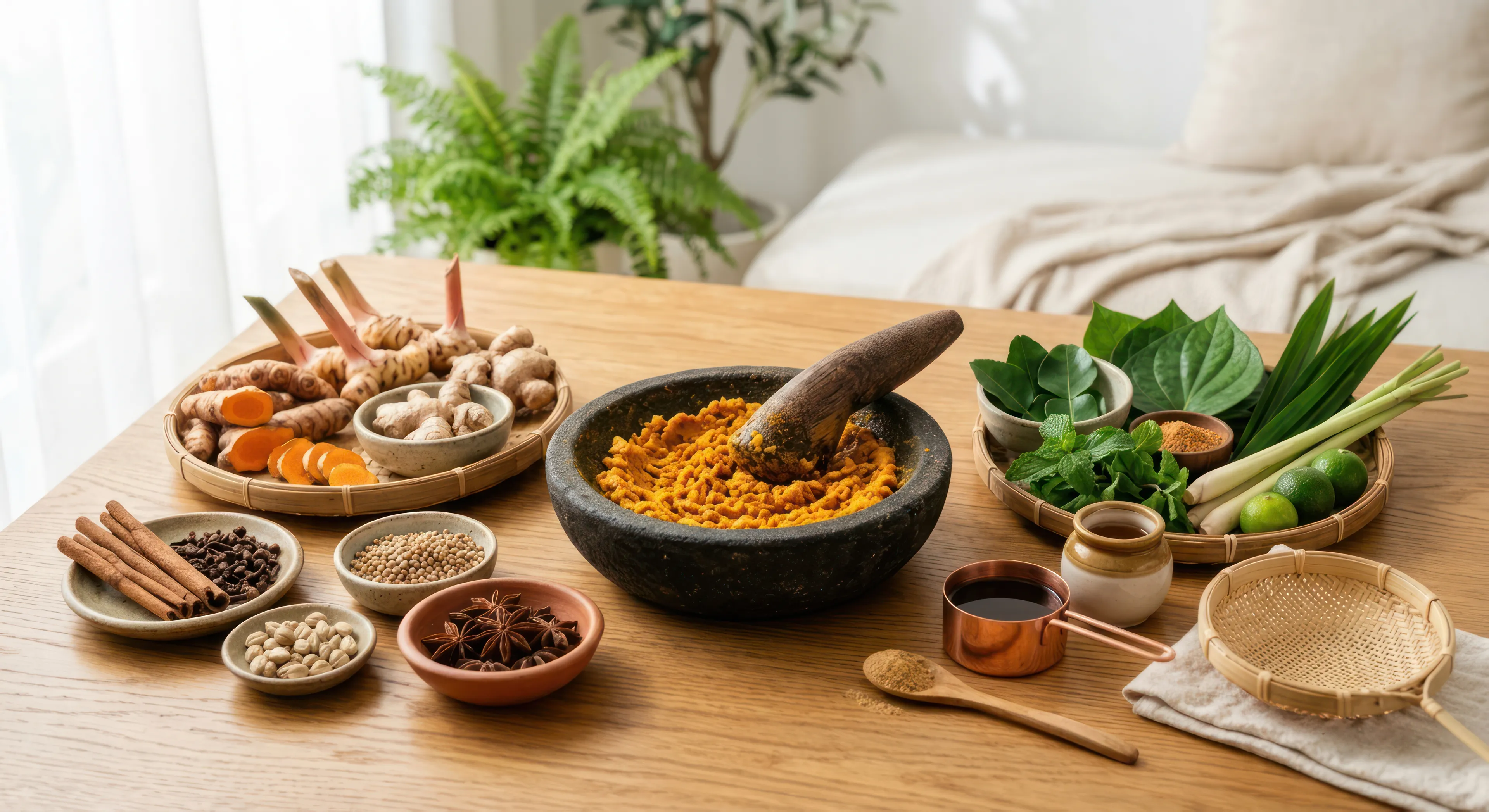
Common Ayurvedic and Natural Remedies
Several herbs are traditionally used in Ayurveda for women's health or as astringent, tonic or supportive preparations. Traditional use, however, does not establish that an herb can treat an infection or abnormal vaginal discharge.
Natural remedies for white discharge should therefore be approached cautiously, particularly when the discharge is new, persistent or accompanied by other symptoms.
Ashoka (Saraca asoca)
Ashoka is an Ayurvedic medicinal plant traditionally used in women's health. Classical Ayurvedic sources describe its astringent properties, and preparations such as Ashokarishta are traditionally used in Ayurvedic practice.
However, this traditional use does not establish that Ashoka specifically treats abnormal vaginal discharge or vaginal infection. Ashoka preparations should not be used instead of medical assessment when discharge is abnormal.
Lodhra (Symplocos racemosa)
Lodhra is traditionally described as an astringent Ayurvedic herb and is used in various classical preparations. It is sometimes included in traditional approaches to leucorrhoea home remedies, but evidence that it treats the medical causes of abnormal vaginal discharge is limited.
If discharge is associated with itching, odour, pain or an unusual colour, do not rely on Lodhra or another herb instead of seeking appropriate medical care.
Amla (Phyllanthus emblica)
Amla, also known as Indian gooseberry, is widely used in Ayurveda as a Rasayana (a traditional rejuvenating preparation) and as a food. Amla fruit contains vitamin C, although the amount can vary according to variety, growing conditions and preparation.
Amla can be part of a balanced diet, but there is no good evidence that eating amla or taking amla preparations treats abnormal vaginal discharge.
Shatavari (Asparagus racemosus)
Shatavari is a well-known Ayurvedic herb with several traditional uses. Ayurvedic sources describe its use in traditional strengthening and supportive preparations, as well as for other health purposes.
It should not be described as a proven treatment for leucorrhoea or as an established treatment for hormonal imbalance. Anyone considering Shatavari, particularly during pregnancy or while taking medicines, should discuss its use with a qualified healthcare professional or registered Ayurvedic practitioner.
Triphala
Triphala is a traditional Ayurvedic combination of three fruits: Haritaki, Bibhitaki and Amalaki. It is traditionally used as a supportive and Rasayana preparation.
Describing Triphala simply as a “detoxifying agent” can be misleading because detoxification is not a precise modern medical indication. There is also no established evidence that Triphala taken orally or used as a vaginal preparation treats abnormal vaginal discharge. It should not be inserted into the vagina or used for vaginal douching.