logo
0

Diaper Changing Pad Guide: Baby Care Essentials

Choosing a diaper changing pad? Learn types, hygiene tips, and organizational tools for safe, efficient baby diaper changes at home or on the go.

article image

Dr.Ezhilrasan

Every new parent quickly learns that diaper changes happen constantly, and where and how you change your baby matters more than you might expect. A diaper changing pad protects your baby from cold, hard surfaces, keeps messes contained, and gives you a clean, dedicated space to work safely. Choosing the right pad and the accessories that go with it can make the whole routine faster and less stressful for you and your baby.

What Is a Diaper Changing Pad and Why It Matters

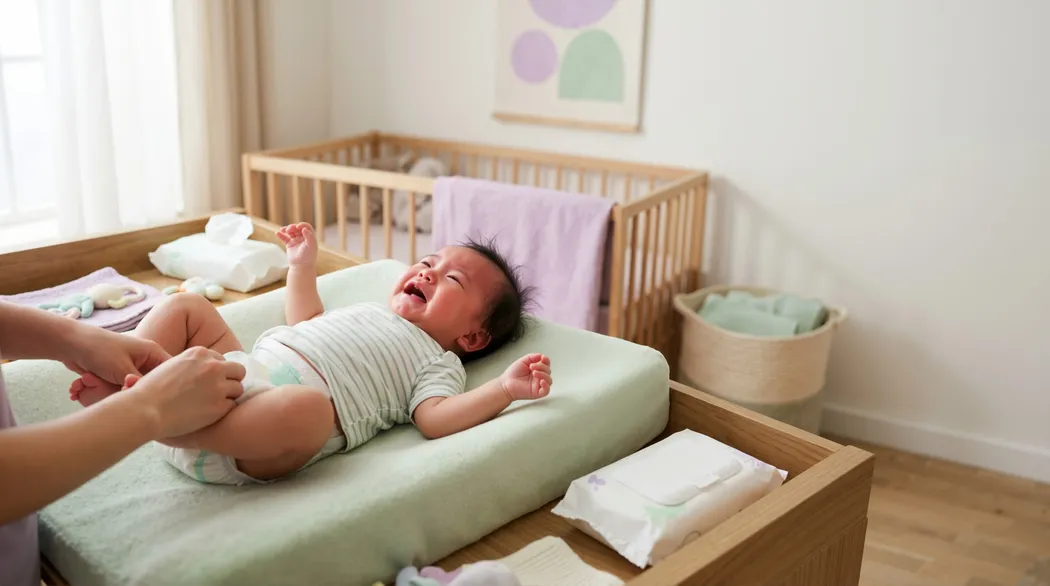
A diaper changing pad is a cushioned, wipeable surface designed specifically for diaper changes. Most are made with a foam core and a water-resistant or waterproof outer layer. Some fit onto a changing table topper; others are freestanding or portable.

The hygiene argument is straightforward. Changing a baby directly on a bed, sofa, or carpet exposes that surface to urine, stool, and bacteria every single time. A dedicated pad is easy to wipe down or cover with a washable liner, keeping your furniture cleaner and reducing cross-contamination. Safety matters too: contoured pads have raised edges that make it harder for a wriggling newborn to roll off, which a flat towel simply cannot offer.

Types of Diaper Changing Pads

Pads come in several forms, and the right choice depends on your home setup and how much you travel.

  • Contoured changing pads: Are the standard option for a nursery. They have a concave shape with raised sides that help keep the baby centred. Most are covered with easy-clean vinyl.
  • Contoured pads are designed to sit on top of a changing table or dresser topper.
  • The curved shape provides a natural sense of security during changes.
  • They pair well with a baby changing pad cover for warmth and softness.
  • Waterproof changing pads: (Also called flat or rectangular pads) lie flush on any surface. They are fully waterproof, quick to wipe clean, and can also be used as a play mat for tummy time in the early months.
  • Travel changing pads: Fold up compactly into a pouch or clutch. A travel changing pad can be useful for outings, especially when you want a clean, portable surface for diaper changes. Look for ones with a waterproof surface and a small pocket for a few wipes and a spare diaper.
  • Disposable changing pad liners: Single-use absorbent sheets placed on top of a reusable pad. They are useful during a stomach bug, for travel, or for parents who want minimal laundry. They add cost over time but can be genuinely convenient in specific situations.
TypeBest ForKey Feature
ContouredNursery useRaised sides, fits changing table
Waterproof flatVersatile home useWipes clean instantly
Travel/portableOn-the-go changesFolds compact, lightweight
Disposable linersTravel, illnessNo washing needed

Essential Organisational Tools for Diaper Changing

A well-stocked changing station reduces the frantic searching that happens mid-change. The goal is simple: everything you need should be within arm's reach before you lay the baby down. Never leave an infant unattended on a changing pad, even for a second.

  • Diaper caddy organiser: A diaper caddy organiser holds diapers, wipes, creams, and small accessories in one portable bin. You can carry it from room to room, which is helpful in the early weeks when you may be changing the baby in multiple spots around the home.

Key items to stock in your caddy:

  • Diapers in the current size (keep a few sizes up on hand as babies grow fast).
  • Fragrance-free baby wipes.
  • A barrier cream or petroleum jelly for rash prevention.
  • A small changing mat or disposable liners for when you use the caddy away from the main pad.
  • A spare onesie and a small plastic bag for soiled clothes.
  • Baby changing pad cover: A cover made from soft cotton or muslin goes over the vinyl pad surface, making it warmer and more comfortable against bare skin. Most covers are machine washable, so having two or three lets you always have a clean one ready.
  • Wipe warmer: Optional but appreciated in cold climates. Warm wipes reduce the shock of a cold touch, which can help keep a sleepy baby calm during night changes.
  • Diaper pail: Placed near the changing station, a lidded pail with a carbon filter controls odours far better than a regular bin.

Hygiene, Safety and Skin Care During Diaper Changes

Keeping the diaper changing mat clean is not complicated, but it does need to be consistent.

How to clean a changing pad:

  • After each use, wipe the vinyl or waterproof surface with a baby-safe disinfectant wipe or a cloth dampened with mild soapy water.
  • Wash the baby changing pad cover after every soiling incident and routinely every two to three days.
  • Allow the pad to air dry fully before placing a fresh cover on it.

For skin care, gentle wiping from front to back, allowing skin to air dry for a minute before applying cream, and using a fragrance-free barrier product at each change all help prevent irritation. Avoid talcum powder near babies. If you notice minor redness, basic wound care tips for minor skin irritation can guide you on keeping small raw patches clean while the skin heals.

Safety checklist at a glance:

  • Always keep one hand on the baby.
  • Use the safety strap on a table-mounted pad if one is present.
  • Do not place the pad on an elevated surface without a restraint strap and close supervision.
  • Replace a pad if the surface has cracks, tears, or permanent staining that cannot be disinfected.

For newborn care basics beyond diapering, including cord stump care in the early weeks, check the linked guide.

When to Consult a Doctor for Diaper Rash or Skin Concerns

Mild diaper rash is common and usually clears within a few days with barrier cream and frequent diaper changes. Some signs mean you should call your paediatrician rather than wait:

  • Rash that does not improve or is getting worse after two to three days of treatment.
  • Blisters, open sores, or bleeding in the nappy area.
  • Bright red or pink rash with sharp edges and small red bumps or pimples, which may suggest a yeast infection.
  • Fever alongside a rash.
  • Rash spreading beyond the diaper area.

Do not apply over-the-counter antifungal or steroid creams to a baby without a doctor's recommendation, as the skin in this area is delicate and easily irritated by incorrect products.

Who should not use certain diaper creams without advice: Parents of babies with known skin conditions such as eczema or psoriasis, or babies born very prematurely with fragile skin, should confirm any topical product with a healthcare provider before use.

Report adverse events to your healthcare provider or the relevant regulatory authority.
Conclusion

A suitable diaper changing pad creates a clean, comfortable, and organised space for everyday diaper changes. Choosing the right type for your home or travel needs and keeping essential accessories within reach can make diaper changes easier. Regular cleaning, safe positioning, and close supervision are also important for keeping your baby comfortable and reducing avoidable risks.

FAQS

How often should I replace a diaper changing pad?

Replace a contoured or flat pad when the surface shows cracks, tears, or permanent staining that cannot be cleaned away.

Can I use a regular towel instead of a changing pad?

A towel works in a pinch but offers no waterproof barrier, no raised edges for safety, and no firm support. It is not a reliable long-term substitute for a dedicated diaper changing mat.

What size changing pad do I need?

Some standard changing pads measure around 32 by 16 inches. Check your changing table or dresser dimensions before buying to confirm the pad will fit the space. Check your changing table or dresser dimensions before buying to confirm the pad will fit the space.

Are changing pad covers necessary?

They are not strictly necessary, but they are practical. Covers add a soft, warm layer and are machine washable, which is far easier than wiping down the vinyl pad after every change.

How do I disinfect a changing pad?

Wipe the surface with a baby-safe disinfectant wipe or a cloth with mild soap and water after each change. For deeper cleaning, a diluted solution of water and white vinegar works on most vinyl surfaces; rinse with a damp cloth and air-dry fully before use.

Apollo 247 Floating Action Button