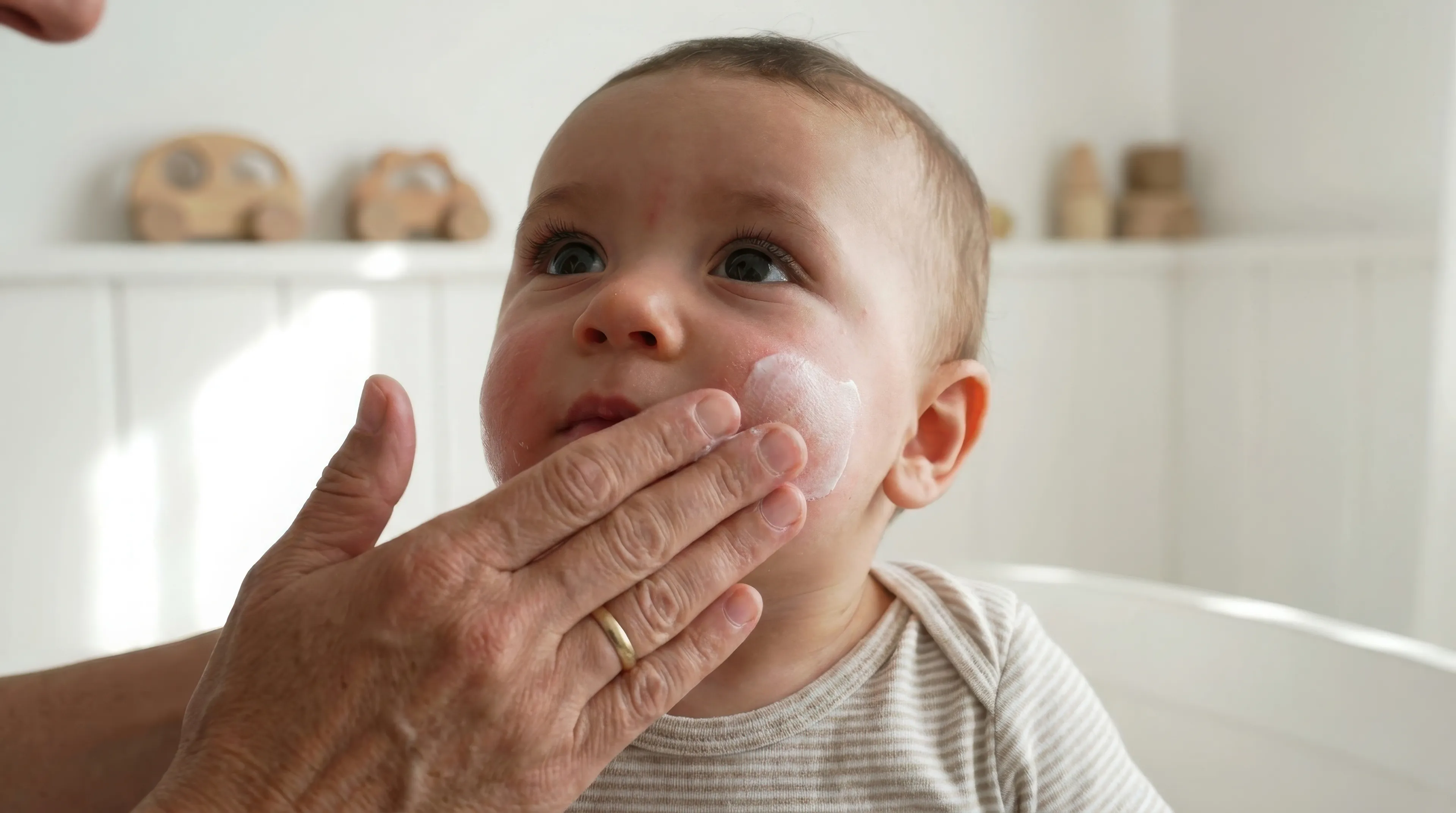
Age-Appropriate Application: Newborn to Toddler
Newborns (0 to 3 Months)
Newborn skin care cream should be minimal. In the first few weeks, vernix (the waxy coating at birth) provides natural protection, and many paediatricians advise delaying routine cream use for two to four weeks. When you do start, choose a plain, unfragranced moisturiser and apply it only to dry patches rather than all over. Avoid the face unless your doctor recommends otherwise.
Knowing how to apply baby cream correctly at this stage is especially important. Warm a small amount between your palms first, then use very gentle strokes. Never rub hard on a newborn's skin.
Frequency: Once daily, or as needed for visible dryness.
Infants (3 to 12 Months)
By three months, you can introduce a regular moisturising routine. Apply baby cream after bath time while skin is still slightly damp to lock in moisture. Pay attention to skin folds at the neck, wrists, and behind the knees, where moisture and friction can cause irritation. Use diaper rash cream at every nappy change if active redness is present.
When learning how to apply baby cream on infants, use circular, gentle strokes and work methodically from the chest outward. Avoid applying near the eyes or mouth.
Frequency: Once or twice daily for moisturiser; at every diaper change for rash cream.
Toddlers (1 to 3 Years)
Toddlers are more active and exposed to more environmental irritants. The best cream for baby skin at this stage is one that maintains consistent hydration, especially after baths and hand washing. If your child attends daycare or plays outdoors, reapply to hands and exposed areas as needed. How to apply baby cream for toddlers follows the same gentle technique as for infants, though toddlers may need a slightly thicker application on very dry areas like shins and elbows during winter.
Frequency: Once or twice daily, or more often on particularly dry days.