logo
0

Best Baby Cream for Newborn Skin: Dryness & Sensitivity

Learn how to choose the best baby cream for newborn skin, including ingredients to look for, products to avoid, application tips, and care for dry or sensitive skin.

article image

Dr. Kamran

Choosing the right baby cream for your newborn is one of the earliest skincare decisions you will make as a parent, and it matters more than many people expect. A newborn's skin is structurally different from adult skin, making it prone to dryness, irritation, and sensitivity. Understanding what to look for, and what to steer clear of, can save your baby from unnecessary discomfort and help you feel confident in what you reach for every day.

Why Newborn Skin Needs Special Care

A newborn's outer skin layer, the stratum corneum, is thinner and less developed than an adult's. The skin barrier cannot fully hold moisture in or keep irritants out, and water loss through the skin is higher in the first few weeks of life. Even babies born without visible dryness can develop flaky or tight-feeling skin within days.

The skin's surface pH is more neutral at birth and gradually becomes mildly acidic over the first few weeks. This shift matters because a healthy acid mantle helps resist bacterial growth and supports barrier function. During that transition, skin reacts more easily to fragrances, harsh chemicals, and even water itself.

Premature babies face an even steeper challenge. Their barrier is less mature, and they require particularly gentle, targeted care from day one.

How to Choose a Baby Cream: Key Ingredients

A good newborn skin care cream should lock in moisture, support the skin barrier, and avoid triggering irritation. Here is what to look for, and what to leave on the shelf.

Ingredients worth choosing:

  • Ceramides: Help replenish the skin barrier's lipid structure and may be particularly useful for dry, sensitive, or eczema-prone skin.
  • Glycerin: A gentle humectant that attracts and helps retain water in the skin, supporting hydration.
  • Shea butter: Acts as an emollient and occlusive ingredient, helping soften the skin and reduce moisture loss.
  • Colloidal oatmeal: Has soothing properties and can be useful for babies with dry or reactive skin.
  • Petrolatum (white soft paraffin): A highly effective occlusive that forms a protective layer over the skin and helps reduce water loss.

Baby cream ingredients to avoid:

  • Added fragrances: Fragrances, including those marketed as “natural,” can trigger contact dermatitis in sensitive infant skin.
  • Parabens and formaldehyde-releasing preservatives: Consider fragrance-free alternatives with simpler formulations when available.
  • Alcohol: Ingredients such as ethanol and isopropyl alcohol can dry the skin and may cause stinging on delicate or irritated areas.
  • Essential oils: Lavender, tea tree, and eucalyptus oils can cause skin sensitisation in young babies despite their natural origin.

Always choose products labelled fragrance-free rather than just "unscented," and confirm the formulation is designed specifically for newborns or infants.

Baby Cream vs Lotion vs Oil: What to Use Where

These three product types are not interchangeable. Each has a different texture and a different role in a newborn skincare routine.

ProductTextureBest Use
Baby creamThick, emollientDry patches, elbows, knees, cheeks
Baby lotionLight, fluidDaily whole-body moisture after a bath
Baby oilLiquid, occlusiveMassage, sealing moisture post-bath

A baby cream for newborn dryness is the most occlusive of the three. It works best on areas that are noticeably dry or flaky, including the cheeks and forehead where dryness often appears first.

The best baby lotion for dry skin has a lighter consistency and spreads more easily, making it practical for full-body application every day. Baby oils are useful for massage but work best applied before a final moisturising layer, since oil alone does not add water to the skin.

How to Apply Baby Cream Safely

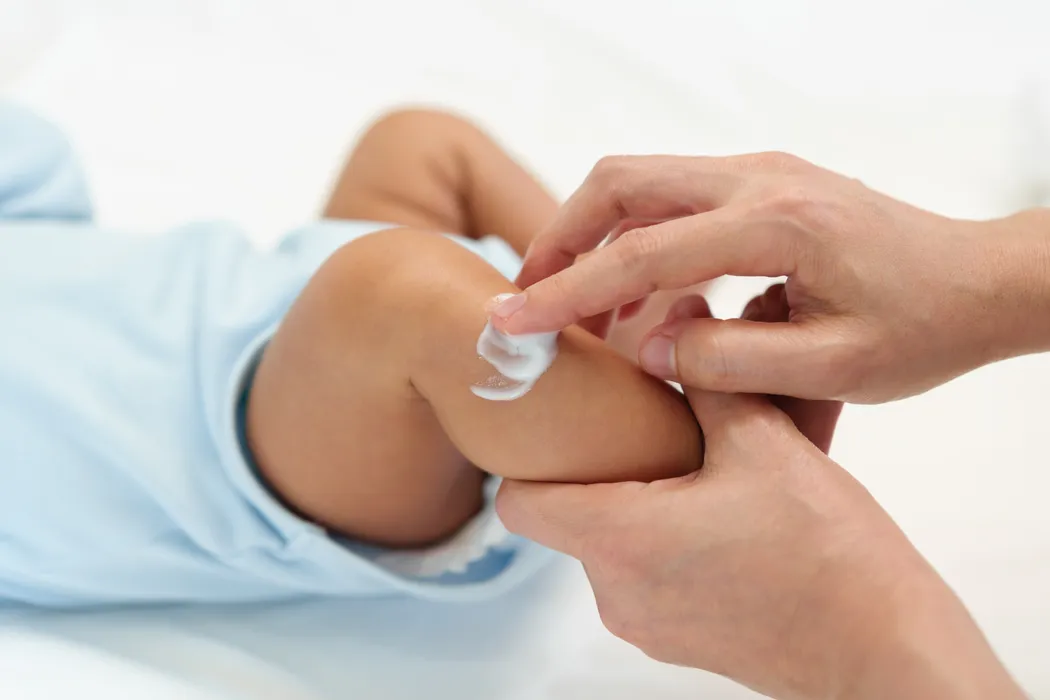
Timing makes a real difference. The best moment to apply a baby moisturiser for face and body is within a few minutes of bathing, while the skin is still slightly damp. This traps water in the skin rather than simply coating already-dry skin.

Practical steps to follow:

  • Patch test every new product. Apply a small amount to the inner wrist or behind the ear, wait 24 hours, and check for redness or swelling before using it more widely.
  • Use a thin, even layer. A pea-sized amount is usually enough for the face.
  • Keep cream away from the eye area and mouth, even products labelled "gentle" or "natural."
  • Once daily is usually enough for healthy newborn skin. Babies with dry or eczema-prone skin may need application twice a day or after each bath.
  • Wash your hands thoroughly before applying cream to your baby.

For guidance on caring for other delicate newborn areas, see this advice on how to care for your newborn's belly button.

Contraindications and When to Avoid Certain Creams

Not every situation calls for a standard baby cream, and some scenarios require you to pause and seek medical advice first. Do not apply baby cream to:

  • Broken or open skin: Avoid applying baby cream to cuts, grazes, or cracked skin that is bleeding. Follow appropriate wound-care guidance instead.
  • Infected skin: Weeping, crusting, yellow discharge, or spreading redness may indicate infection and should be assessed by a healthcare professional rather than treated with moisturiser alone.
  • Previous skin reaction: If a cream has caused a rash, hives, swelling, or another reaction, stop using it and do not reintroduce it without discussing it with your paediatrician.
  • Steroid-containing creams: Do not apply steroid creams or ointments to a baby unless they have been prescribed or specifically recommended by a doctor. Adult-strength or inappropriate topical steroids can cause harm to delicate infant skin.

Report adverse events to your healthcare provider or the relevant regulatory authority (CDSCO, India, or your local health authority).

When to Consult a Paediatrician?

Dry skin that responds to a good baby cream for sensitive skin within a day or two is generally not a cause for concern. However, some signs mean you should see a doctor rather than continue self-managing at home.

Seek medical advice if you notice:

  • A rash that spreads, oozes, crusts, or does not improve after 48 to 72 hours of gentle moisturising.
  • Skin that looks infected, with warmth, swelling, or yellow discharge.
  • Fever alongside any skin change.
  • Hives, significant swelling, or difficulty breathing after applying a product, which may indicate an allergic reaction requiring urgent care.
  • Persistent red, scaly patches that could point to eczema or another condition needing a diagnosis.

A paediatrician can confirm whether your baby needs a prescription treatment, a referral to a dermatologist, or simply a change in skincare routine.

Conclusion

Choosing the best baby cream for newborn skin is less about finding the most expensive product and more about choosing a simple, gentle formulation that supports the skin barrier without unnecessary irritants. Look for moisturising ingredients such as ceramides, glycerin, colloidal oatmeal, shea butter, or petrolatum, and prefer fragrance-free products designed specifically for infants. Apply cream to clean, slightly damp skin, particularly where dryness or flaking is visible. If your baby's skin is broken, infected, severely inflamed, or repeatedly reacts to skincare products, avoid experimenting with new creams and seek advice from a paediatrician. With gentle cleansing, appropriate moisturisation, and careful ingredient selection, most newborn skin dryness can be managed comfortably and safely.

FAQs

Is baby cream safe for a newborn's face?

Yes, a fragrance-free, paediatrician-tested cream formulated for newborns is generally safe for the face. Apply a thin layer, avoid the eye area and mouth, and patch test first on a small area of skin.

Can I use an adult moisturiser on my baby?

Adult moisturisers often contain fragrances, preservatives, and active ingredients that are too harsh for infant skin. Stick to products specifically designed for babies or those recommended by your child's doctor.

How do I treat dry skin patches on my baby?

Apply a fragrance-free emollient cream immediately after bathing while the skin is still slightly damp, and use it consistently once or twice daily. If patches persist beyond a few days or look inflamed, consult a paediatrician.

Is coconut oil better than baby cream?

Coconut oil can feel soothing but there is limited clinical evidence supporting its use over well-formulated emollient creams for newborn skin, and some babies react to it. A ceramide- or glycerin-based baby cream for sensitive skin is generally a more reliably tested option.

How do I choose a cream for eczema-prone newborn skin?

Look for creams containing ceramides, petrolatum, or colloidal oatmeal, and confirm they are fragrance-free and free of alcohol and essential oils. Always get a confirmed diagnosis from a paediatrician or dermatologist before treating suspected eczema.

Apollo 247 Floating Action Button