logo
0

Diaper Changing Pad: A Guide to Safe Changes

Learn how to pick the right diaper changing pad, keep changes hygienic, and avoid common safety mistakes. Practical tips for new parents.

article image

Dr.Mayank

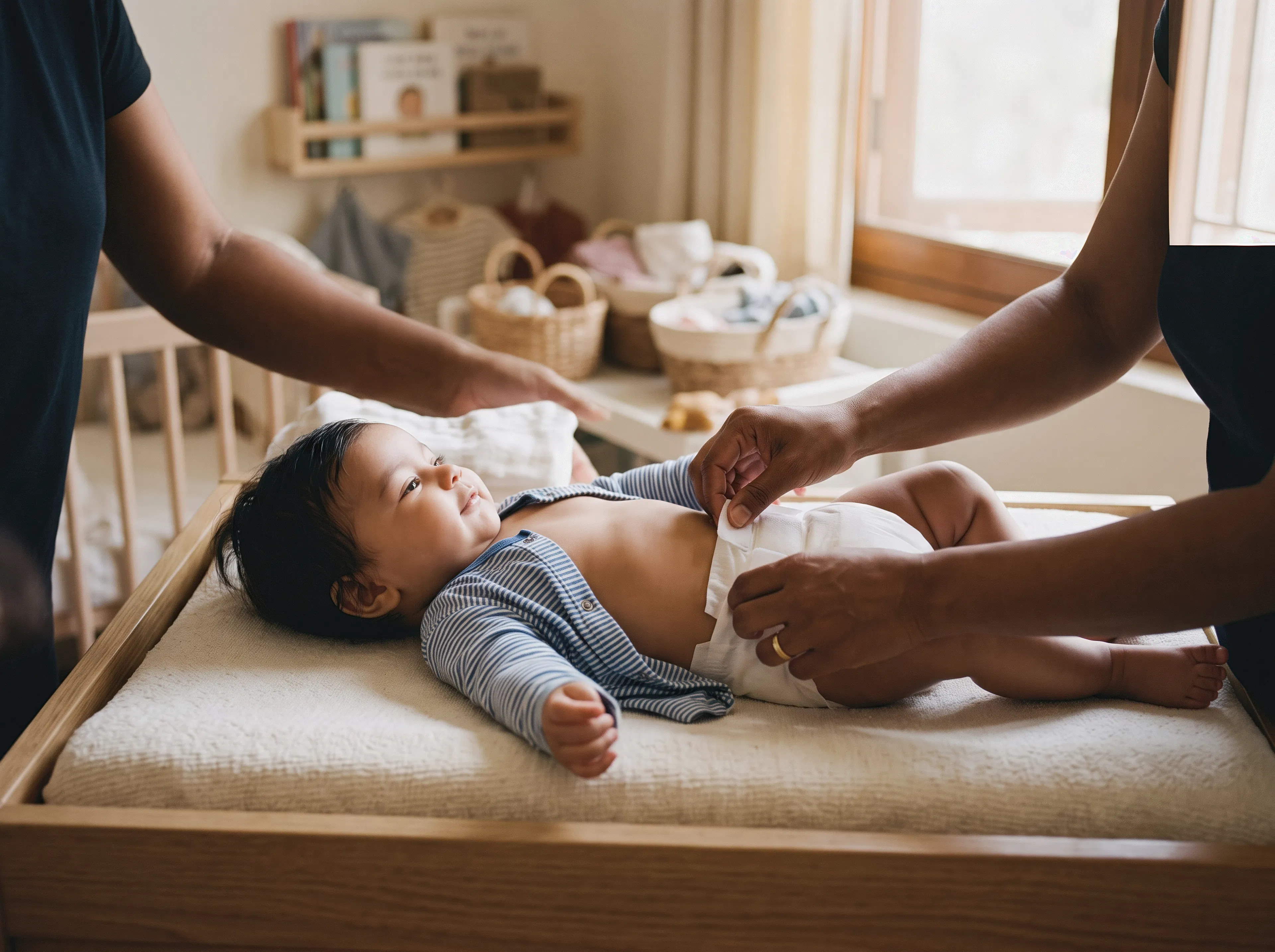
A diaper changing pad provides a dedicated, clean, and cushioned space for changing an infant's diapers throughout the day. Newborns and infants require anywhere from 8 to 12 diaper changes every 24 hours, making the changing area one of the most frequently used spots in your home. Having a supportive, easily cleaned surface helps protect your baby's delicate skin from dirt and bacteria on household furniture while offering physical support.

Beyond hygiene, the right changing surface helps protect infants from accidental falls. Falls from raised furniture during diaper changes remain a common cause of preventable infant injuries. Setting up an organised, secure changing station allows parents to manage cleanups quickly and calmly without taking their attention off the baby.

What Is a Diaper Changing Pad and Why It Matters?

A diaper changing pad is a cushioned mat designed specifically to support an infant during diaper changes, clothing swaps, and basic skin hygiene routines. These pads are typically constructed with a firm foam core covered by a water-resistant or wipeable outer layer.

Using a designated pad serves three main purposes:

  • It creates a physical divide between your baby's bare skin and household surfaces like beds, carpets, or sofas, preventing the spread of fecal bacteria and urine to living spaces.
  • Babies need gentle spinal support while lying flat on their backs, particularly when dealing with cleanups on hard tables or dressers.
  • Most standard changing pads have contoured edges, curved sides, and safety straps that prevent an infant from easily rolling off a high surface.

Setting up a clean changing area fits naturally alongside newborn hygiene and umbilical cord care basics during those first few weeks at home, ensuring that sensitive skin and healing areas remain free of contaminants.

Types of Diaper Changing Pads and Accessories

Parents can choose from several designs depending on their living space, travel habits, and daily routines.

Standard Contoured Pads

These pads feature raised sides (two-sided or four-sided bevels) that create a shallow cradle for your baby. They usually sit atop a dedicated changing table or a low dresser, secured with bottom anchor straps. Most measure around 16 by 32 inches and include a built-in safety strap to fasten around the infant's midsection.

Portable Changing Pad

A portable changing pad is lightweight, foldable, and designed to slip into a diaper bag. Many fold up into small clutches with pockets for wipes and clean diapers. They let you change your baby on public restroom stations, car seats, or park grass without letting bare skin touch unwashed public surfaces.

Flat Waterproof Diaper Mat

A waterproof diaper mat is a thin, flexible, wipeable sheet without foam padding. These mats are practical for placing over beds or carpets for quick changes, or as an extra protective layer on top of a thicker pad to catch unexpected messes.

Essential Changing Pad Accessories

  • Diaper changing pad cover: Removable fabric sleeves (often cotton, bamboo, or plush polyester) that fit over standard foam pads. They add warmth and softness under the baby's back, making the cold vinyl or polyurethane surface more comfortable.
  • Washable or disposable liners: Small rectangular pads placed directly under the baby's bottom on top of the main cover. If an accident happens mid-change, you simply wash or toss the liner instead of laundering the entire pad cover.

How to Choose the Right Changing Pad?

When choosing a diaper changing pad, evaluate the product against your home setup, travel needs, and nursery dimensions.

FeatureWhat to Look ForWhy It Matters
Size and FitMatches changing table dimensions without hanging edges    Prevents tipping and slipping off the furniture surface
Core MaterialDense, firm foam or solid polyurethaneSupports developing spines without excessive sinking
WaterproofingHeat-sealed seams and non-porous outer vinyl or TPUStops fluids from soaking into inner foam, preventing mold
Safety FeaturesUnderside non-skid grip, furniture screws, waist beltKeeps both the pad and the infant securely in place
Cleaning NeedsWipe-clean surface or machine-washable fabricsSaves time during multiple daily changes


Checklist for Selection

  1. Measure your furniture surface: Ensure your dresser or changing table top has enough clearance for the pad to sit completely flat with zero overhang.
  2. Check non-toxic material certifications: Look for pads free of phthalates, PVC, lead, and chemical flame retardants to safeguard indoor air quality and infant skin.
  3. Assess durability: Press down firmly on the foam. It should spring back immediately rather than leaving a lasting depression.

How to Use a Changing Pad Safely

Even the highest-quality gear cannot replace active supervision. Following proper changing table safety tips ensures diaper routines run smoothly and without injury.

  • Never leave your baby unattended: Keep at least one hand gently placed on your baby at all times, even when reaching for a wipe, rash cream, or fresh diaper. Babies develop rolling skills suddenly without warning.
  • Fasten the safety buckle: Secure the built-in safety strap over your baby's lower abdomen every time you place them on a raised pad. The strap should fit snugly, allowing two fingers between the belt and your baby's tummy.
  • Secure the pad to the furniture: Use the attachment straps and screws provided by the manufacturer to anchor the pad directly to the back or top of the changing table or dresser.
  • Keep supplies within arm's reach: Store diapers, wet wipes, barrier ointments, and spare clothes directly beside or below the changing surface so you never need to walk away.
  • Sanitize the surface regularly: Wipe down the waterproof surface with a mild soap solution or baby-safe disinfectant wipe after every change, especially after loose stools.
  • Wash your hands: Clean your hands thoroughly with soap and water both before and immediately after every diaper change to prevent the spread of bacteria.

When to Consult a Doctor: Skin and Hygiene Concerns

While a clean diaper changing pad reduces the spread of germs, regular diaper wear can still lead to irritation. Moisture, friction, and digestive enzymes from urine and stool can compromise the skin barrier, leading to diaper dermatitis.

Contact a pediatrician or dermatologist if you notice:

  • Bright red, inflamed skin with distinct red dots or pustules spreading beyond the diaper area, which may indicate a fungal (yeast) or bacterial infection.
  • Peeling skin, open blisters, weeping sores, or cracked bleeding areas on the buttocks or groin.
  • A diaper rash that does not improve after 48 to 72 hours of regular barrier cream application and frequent diaper changes.
  • Fever, lethargy, or extreme fussiness during urination or diaper changes.

Prescribing information disclaimer: Never apply prescription-strength medicated creams, topical antifungals, or steroid ointments to your baby's skin without an explicit diagnosis and instructions from a qualified healthcare professional. Over-the-counter barrier creams containing zinc oxide or petroleum jelly are suitable for mild, everyday irritation, but persistent or severe cases require professional medical evaluation.

Contraindications and Safety Precautions

Diaper changing pads are simple consumer nursery items, but certain precautions are necessary to prevent injuries and skin reactions:

  • Allergy considerations: If your baby develops contact redness matching the shape of the pad or cover, discontinue using that specific cover material or cleaning agent immediately. Choose hypoallergenic, unbleached, or 100% organic cotton covers.
  • Avoid damaged pads: Discard or repair any foam pad with cracked vinyl, ripped seams, or exposed inner foam. Exposed foam harbors moisture, mold, and bacteria that cannot be sanitized.
  • Floor changes for hyperactive infants: If your baby has outgrown the weight limit of the changing table or actively resists lying flat on a raised surface, transition to changing them on a waterproof diaper mat on the floor.
  • No loose toys or cords nearby: Ensure that blind cords, electrical wires, wall hangings, and small choking hazards are entirely out of your baby's reach from the changing pad.

Report adverse events to your healthcare provider or the relevant regulatory authority.

Conclusion

A diaper changing pad can provide a dedicated, comfortable, and hygienic surface for changing a baby's diaper at home or while travelling. When choosing one, parents can consider factors such as size, firmness, surface material, portability, ease of cleaning, and compatibility with the changing area. Safety is especially important, and babies should never be left unattended on a changing pad, even for a moment. The pad should be placed on a stable, secure surface according to the manufacturer's instructions and kept clean and free from damaged or worn components. Portable changing mats can be useful outside the home, but they should also be used on a safe surface with the baby supervised throughout the change. If the pad includes safety straps or other features, parents should use them only as instructed and never rely on them as a substitute for constant supervision.

FAQS

How often should a diaper changing pad be cleaned?

Wipe down waterproof pads daily with warm soapy water or a child-safe disinfectant, and clean them immediately after any stool leaks. Fabric covers and washable liners should be laundered at least once or twice a week, or as soon as they become soiled.

What size changing pad do I need?

Standard changing pads measure approximately 16 inches wide by 32 inches long and fit most standard changing tables and dresser toppers. Measure your furniture's flat surface beforehand to ensure the pad sits flat without extending past the edges.

Can I use a changing pad without a cover?

Yes, modern non-porous and wipeable changing pads are designed for use without a fabric cover. However, using a soft, breathable cover adds warmth against chilly vinyl surfaces and provides extra comfort for your baby.

Is a portable changing pad worth buying?

Yes, a portable pad provides a hygienic, cushioned barrier when changing diapers in public restrooms, in vehicles, or outdoors. It folds compactly into your diaper bag and helps prevent direct contact with unwashed surfaces.

How long can a baby use a changing pad?

Most infants use a standard changing pad until they reach approximately 30 pounds or around 18 to 24 months of age. Once an infant becomes too tall or rolls aggressively during changes, switching to a mat on the floor is safer.

Apollo 247 Floating Action Button