logo
0

Diaper Rash Cream: Causes, Prevention and Treatment Guide

Learn what causes diaper rash, how to prevent it, which diaper rash creams can help, how to apply them and when your baby needs medical advice.

article image

Dr.Mayank

Diaper rash is common during infancy and can make your baby uncomfortable, particularly during diaper changes. Most mild cases improve with regular diaper changes, gentle cleaning and good skin care.

Choosing a suitable diaper rash cream can help protect irritated skin from moisture and friction. This guide explains what causes diaper rash, how to prevent it, which ingredients can help, how to apply a cream and when to seek medical advice.

What Is Diaper Rash and What Causes It?

Diaper rash is irritation affecting the skin covered by a diaper. It can appear on your baby's bottom, thighs and genital area. Several factors can contribute, including moisture, stool, friction, and irritation from products.

Common causes include:

  • Prolonged contact with a wet or soiled diaper.
  • Frequent loose stools or diarrhoea.
  • Friction from a diaper that is too tight or does not fit well.
  • Irritation from wipes, soaps, detergents or other skincare products.
  • Sensitive or already irritated skin.
  • Certain infections, including fungal infections.
  • Antibiotic treatment, which can sometimes increase the risk of a fungal rash.

If your baby keeps developing diaper rash despite regular changes and gentle skin care, speak to your paediatrician. Your doctor can check whether another skin condition, infection or product reaction may be contributing to the rash.

What Does Diaper Rash Look Like?

A mild diaper rash may appear as pink or red, irritated skin in the diaper area. Your baby's skin may feel sore, and your baby may become uncomfortable during diaper changes.

More severe irritation can cause:

  • Swelling or tenderness.
  • Cracked or raw skin.
  • Blisters or open sores.
  • Bleeding or oozing.

Fungal infections can also affect the diaper area. However, you cannot reliably identify the cause of a rash from its appearance alone. If the rash persists, spreads or becomes more severe, consult your paediatrician.

How Can You Prevent Diaper Rash?

Regular diaper changes and gentle skin care can help reduce the risk of diaper rash. The aim is to keep your baby's skin clean, dry and protected from prolonged contact with moisture and stool.

You can help prevent diaper rash by:

  • Checking your baby's diaper regularly.
  • Changing the diaper when it is wet or soiled.
  • Changing a soiled diaper as soon as possible.
  • Gently cleaning the diaper area with water or fragrance-free, alcohol-free wipes.
  • Wiping from front to back when cleaning a baby girl.
  • Patting the skin dry rather than rubbing it.
  • Making sure the diaper fits comfortably without leaving deep marks.
  • Giving your baby short periods without a diaper when practical.
  • Using a barrier cream if your baby's skin is prone to irritation.
  • Avoiding talcum powder.
  • Avoiding strongly fragranced products if they irritate your baby's skin.

Which Diaper Rash Cream Is Best for Babies?

A suitable diaper rash cream can create a protective barrier between your baby's skin and moisture. The right product depends on your baby's skin and the severity of the irritation.

Zinc Oxide

Zinc oxide is commonly used in diaper rash barrier creams. It forms a protective layer over the skin and helps reduce contact with moisture and irritants.

Products containing zinc oxide are available in different strengths. Follow the product label instructions and apply the product as directed.

Petrolatum

Petrolatum, also known as petroleum jelly, forms a protective barrier over the skin. It can help reduce moisture exposure and friction.

Dimethicone

Dimethicone is a silicone-based ingredient used in some skin-protective products. It can help form a barrier that protects the skin from moisture and irritation.

You do not need to use several creams at the same time. Choose a suitable barrier product and follow its instructions.

If your baby's rash does not improve with regular changes and barrier care, speak to your paediatrician rather than repeatedly changing products or starting medicated treatment yourself.

How Do You Apply Diaper Rash Cream?

Applying a barrier cream correctly can help protect your baby's skin.
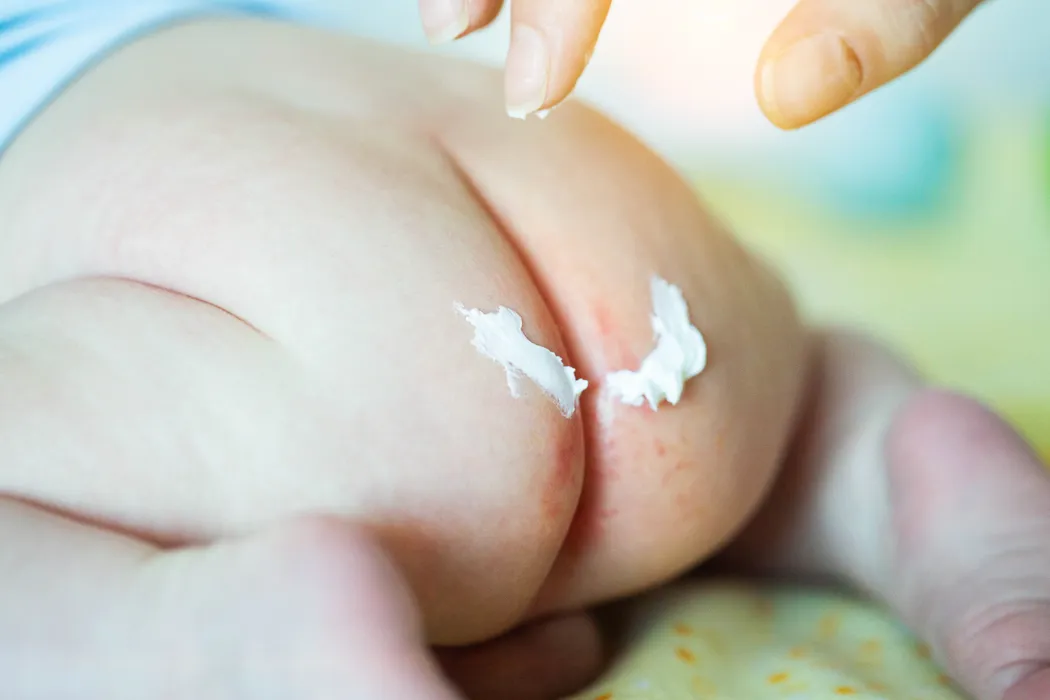
Follow these steps:

  • Remove the wet or soiled diaper.
  • Gently clean your baby's skin with water or a fragrance-free, alcohol-free wipe.
  • Pat the skin dry instead of rubbing.
  • Apply a protective layer of diaper rash cream to the irritated area. Follow the product instructions for how much to use.
  • Put on a clean diaper that fits comfortably.

You do not need to scrub off every trace of barrier cream at each change. If the remaining cream is clean and your baby's skin is not soiled, gently clean the area and apply more product as needed.

If the skin becomes more irritated after using a particular product, stop using it and speak to your healthcare professional if the reaction does not settle.

When Should You Avoid Certain Diaper Rash Creams?

Some diaper rashes need medical assessment rather than another over-the-counter cream.

Keep these precautions in mind:

  • Do not use a product if your baby has previously reacted to one of its ingredients.
  • Do not use steroid, antifungal or antibiotic creams unless a healthcare professional recommends them.
  • Do not use leftover prescription creams from another child or family member.
  • Do not apply medicated products to broken or infected skin unless your doctor advises you to do so.
  • Follow the product label for directions and age restrictions.
  • Stop using a product if it causes new or worsening irritation.

For general guidance on caring for minor skin irritation and wounds, see this Apollo guide to treating minor cuts and wounds.

When Should You Seek Medical Advice?

Mild diaper rash can often improve with regular diaper changes and gentle skin care. Seek medical advice if the rash doesn't improve, worsens, or keeps returning.

Consult your paediatrician if:

  • The rash is spreading beyond the diaper area.
  • Your baby's skin has blisters or open sores.
  • The skin is bleeding or has pus.
  • You notice marked swelling.
  • Your baby has a fever.
  • Your baby appears unusually uncomfortable or unwell.
  • The rash keeps returning despite good diaper care.
  • You suspect that a particular product is causing a skin reaction.

Some rashes need specific treatment, including treatment for an infection. Your paediatrician can examine your baby's skin and decide whether further treatment is needed.

Conclusion

Regular diaper changes, gentle cleaning and a comfortable fit can help prevent and manage mild diaper rash. A barrier cream containing ingredients such as zinc oxide, petrolatum or dimethicone can help protect irritated skin from moisture and friction.

If the rash persists, spreads or becomes severe, do not rely on self-treatment or changing creams. Consult your paediatrician so your baby can receive the right treatment.

FAQS

How long does diaper rash take to heal?

Mild diaper rash may improve with regular diaper changes and gentle skin care. The time it takes to settle varies depending on the cause and severity. If the rash does not improve, becomes worse or keeps returning, consult your paediatrician.

Can breastfeeding cause diaper rash?

Breastfeeding itself does not directly cause diaper rash. However, your baby's stools, feeding pattern, antibiotic exposure and other factors can affect the skin around the diaper area. If your baby develops persistent diaper rash, speak to your paediatrician rather than assuming that breastfeeding is the cause.

Is coconut oil good for diaper rash?

Coconut oil is sometimes used as a home remedy for irritated skin, but evidence supporting its use to treat diaper rash is limited. A suitable barrier product such as one containing zinc oxide or petrolatum has a clearer role in protecting the skin from moisture and irritation. Speak to your healthcare professional if the rash persists.

Can I use talcum powder for diaper rash?

No. Avoid talcum powder around babies because they can inhale the powder during application. Regular diaper changes, gentle cleaning and a suitable barrier cream are safer ways to protect irritated skin.

Does teething cause diaper rash?

Teething itself has not been shown to directly cause diaper rash. Changes in stool, increased drooling or other changes around the same time may coincide with skin irritation. If your baby develops a rash, focus on regular diaper changes and gentle skin care rather than assuming that teething is the cause.

Apollo 247 Floating Action Button