logo
0

Baby Skincare and Health Checklist for New Parents

Complete baby essentials checklist covering skincare, hygiene, and health products every new parent needs. Doctor-reviewed guidance from Apollo Pharmacy.

article image

Dr.Kamran

Bringing a newborn home is one of the most joyful and overwhelming experiences a parent can have. Knowing which baby essentials to keep ready, especially for skincare and basic health care, can make those early weeks calmer for everyone. This checklist focuses on what actually matters: the products that protect your baby's skin, support hygiene, and help you respond to minor health concerns safely.

What Counts as a Baby Essential?

Not everything marketed for babies belongs in your nursery. For this guide, baby essentials cover three specific categories:

  • Skincare products that protect and maintain a newborn's delicate skin barrier.
  • Hygiene supplies for daily cleaning, diapering, and cord care.
  • Basic health and first-aid items for monitoring and managing minor symptoms at home.

Toys, prams, bouncers, and feeding gear are outside this scope. The goal is a lean, doctor-friendly kit that covers your baby's health and comfort without unnecessary products.

Skincare Essentials for Newborn Comfort

A newborn's skin barrier is significantly thinner and more permeable than adult skin, which means it absorbs topical substances quickly and loses moisture faster through transepidermal water loss. Keeping the skin calm and intact is the priority.

  • Baby wash and shampoo: Choose a mild, soap-free, fragrance-free formula. Many brands market products as "paediatrician-tested", but this promotional phrase has no standardised legal or regulatory definition under drug and cosmetic authorities. Look for a short ingredient list and avoid sulphates and artificial dyes.
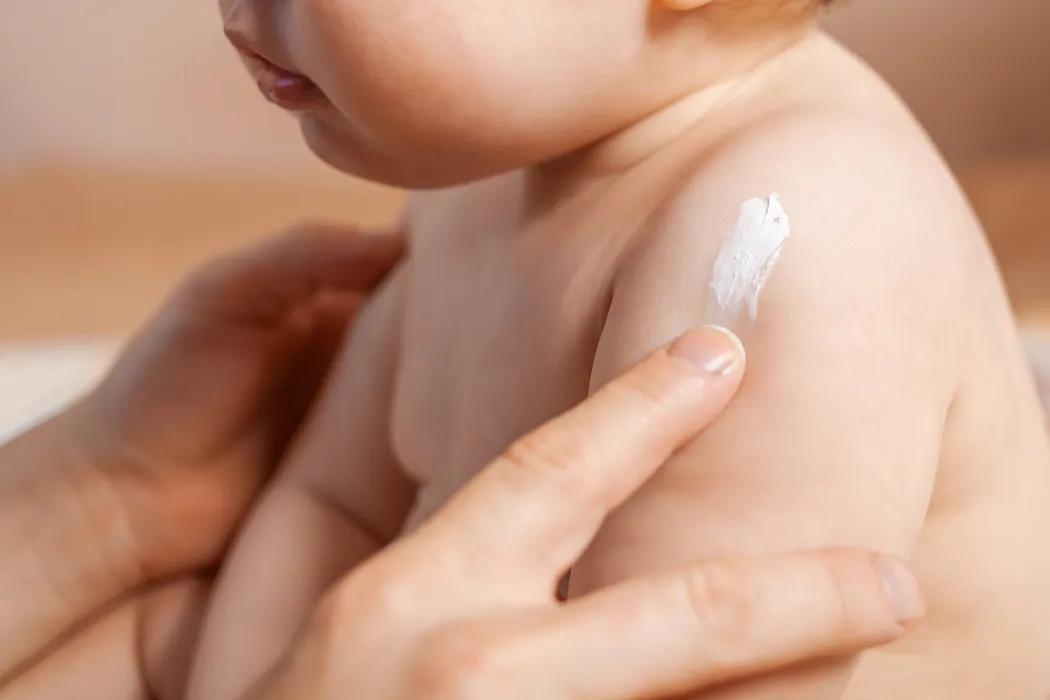
  • Moisturiser: A plain, fragrance-free baby lotion or cream helps prevent dryness, particularly in the first few weeks when the skin is adjusting to air exposure. Apply after a bath while the skin is still slightly damp.
  • Nappy Rash Barrier Cream: A zinc oxide-based barrier cream applied at each nappy change forms a protective shield against moisture and digestive enzymes, preventing and soothing rash before it worsens.
  • Baby oil: Gentle massage with baby oil is a common practice in India and is generally safe for newborns when used externally. Opt for a refined, mineral-based or cold-pressed oil with no added fragrance. Avoid applying oil inside the nostrils or ears. Pure coconut or sesame oil has a long tradition in Indian baby care and is widely used by families across the country.

For babies with eczema-prone or reactive skin, baby skincare for sensitive skin products with very few ingredients and no preservatives like parabens are preferable. Always patch-test any new product on a small area of the inner arm and wait 24 hours before applying it more widely.

Hygiene and Diapering Must-Haves

Good hygiene habits reduce the risk of infection and skin irritation right from day one.

  • Diapers: Keep a mix of newborn and size-1 diapers ready before birth. Newborns generally need frequent diaper changes throughout the day and night. A wetness indicator, available on many brands, helps you track feeding output in the early days without needing to check each time manually.
  • Wet wipes: Choose alcohol-free, unscented wipes. For very sensitive or premature skin, plain warm water and soft cotton pads are often gentler in the first few weeks.
  • Cotton and gauze: Soft cotton balls or gauze swabs are useful for cleaning the face, neck folds, and around the umbilical cord stump. Do not use cotton-tipped swabs inside your baby's ears or nose.
  • Nail care: Newborn nails grow surprisingly fast. A soft baby nail file or small scissors with rounded tips keeps them from scratching the skin. Many parents find it easiest to trim nails while the baby is asleep.
  • Cord stump care: Keep the stump dry and exposed to air. Avoid covering it tightly with the diaper waistband.

Basic Baby Health and First-Aid Kit

You do not need a pharmacy at home, but a few reliable items help you stay calm during minor health concerns.

  • Digital thermometer: A digital rectal thermometer provides the most accurate core temperature for newborns; tympanic (ear) thermometers are not reliable until after 6 months of age due to narrow, curved ear canals. A fever in a baby under 3 months (at or above 38.0°C \[100.4°F\] rectally) requires immediate emergency medical evaluation, not home management.
  • Saline nasal drops: Newborns are obligate nasal breathers and become congested easily, as their narrow nasal passages are easily blocked. Saline drops help loosen mucus and are safe to use as directed on the pack. This is one of the few items suitable for use without a prescription, though always read the age guidance.
  • Nasal aspirator: A soft bulb syringe or nasal aspirator used after saline drops can clear congestion enough for your baby to feed comfortably.
  • Antiseptic solution and gauze: For minor grazes or small cuts, clean the area with a mild antiseptic recommended by your paediatrician and cover with a sterile gauze pad. The guide on best treatment for minor cuts and wounds walks through step-by-step care.
  • Oral rehydration solution (ORS): If your baby has loose stools, your paediatrician can advise on age-appropriate ORS use. Never give ORS or any oral medication without professional guidance for newborns.

For cold symptoms in older babies, some families find comfort in Ayurvedic remedies for cold relief, but always confirm any remedy with your paediatrician before using it in infants under 12 months.

When to Consult a Paediatrician

Some situations call for a doctor visit rather than home management. Contact your paediatrician promptly if you notice:

  • A rash that is spreading, blistering, or oozing.
  • Fever in a baby under 3 months, regardless of how mild it seems.
  • A wound that is not healing, looks red around the edges, or has discharge.
  • The umbilical stump area appears red, swollen, or has a foul smell.
  • Your baby seems unusually sleepy, is feeding poorly, or is difficult to wake.

Trust your instincts. If something feels wrong, a call to your doctor is always the right choice.

Contraindications and Safety Precautions

Some products and ingredients are not appropriate for newborns, particularly in the first four weeks of life.

  • Toxic Additives: Avoid products containing alcohol, artificial fragrances, camphor, menthol, or boric acid on newborn skin, particularly during the first four weeks, as rapid percutaneous absorption can trigger severe systemic toxicity and skin breakdown.
  • Respiratory Precautions: Do not apply any talcum powder near your baby's face or body; accidental inhalation of fine mineral particles poses severe risks of chemical pneumonitis and acute respiratory distress.
  • Unsupervised Drug Use: Never give any over-the-counter cough, cold, or pain medication to a baby without an explicit prescription from your paediatrician; many adult and even older-child formulations carry life-threatening risks of respiratory suppression or toxicity in infants.
  • Alternative Treatments: Herbal or home remedies should be discussed with your paediatrician before use. "Natural" does not always mean safe for a newborn.
  • Specialist Guidance: For babies with known skin conditions or prematurity, consult a dermatologist or neonatologist before introducing any new skincare product.

Baby lotions and creams are generally safe for healthy, full-term newborns, but patch-testing is always advisable. Products considered safe for older infants may not suit skin under one month old.

Conclusion

Welcoming a newborn into your home does not require an overwhelming array of commercial baby products or elaborate routines. Building a lean, doctor-approved nursery kit focused on the essentials mild, soap-free cleansers, fragrance-free barrier creams, sterile hygiene supplies, and baseline first-aid tools like a digital rectal thermometer and saline drops gives your baby effective protection without unnecessary skin exposure. Because an infant's skin barrier remains delicate, thin, and highly permeable during the early months, clinical safety and gentle formulations must always take precedence over marketing claims. Always patch-test new topical products, avoid hazardous items such as talcum powder or unprescribed infant medicines, and consult your paediatrician promptly if you observe red flags such as poor feeding, a spreading rash, or a fever in an infant under 3 months.

FAQS

What are the must-have baby essentials for newborns?

The core list includes a fragrance-free baby wash, moisturiser, zinc oxide diaper cream, baby oil, soft wipes, cotton, a digital thermometer, and saline nasal drops. Add a mild antiseptic and sterile gauze for basic first-aid readiness.
How do I choose safe skincare products for my baby?

Look for products labelled fragrance-free and formulated for newborns, with a short, recognisable ingredient list. Avoid sulphates, parabens, alcohol, and artificial dyes, and patch-test every new product before full use.

What is the correct way to care for a newborn's belly button?

Keep the stump clean and dry, and avoid submerging it in water until it separates and falls off naturally, usually within one to three weeks. For detailed guidance, see how to care for a newborn's belly button.

How can I treat minor cuts or wounds on my baby safely?

Clean the area gently with water or a paediatrician-recommended antiseptic, then cover with a sterile gauze pad. Never apply adult wound products without medical advice, and read the best treatment for minor cuts and wounds guide for more detail.

When should I consult a doctor about my baby's skin issue?

See a doctor if a rash spreads rapidly, blisters, or does not improve within 24 to 48 hours, or if it is accompanied by fever, unusual fussiness, or poor feeding. Skin issues in newborns can escalate quickly, so early review is always safer than waiting.

Apollo 247 Floating Action Button