logo
0

Feeding Difficulties in Infants

Learn about feeding difficulties in infants, common causes, warning signs, ICD-10 codes, and when to seek medical attention for feeding problems. 

article image

Dr.Ezhilrasan

Feeding your baby should ideally be a peaceful, bonding experience. However, many parents quickly realize that feeding can sometimes be a stressful challenge. If you are struggling with a baby who refuses to nurse, spits up constantly, or seems exhausted by eating, you are not alone.

In the medical world, paediatricians categorize these challenges under specific diagnostic terms, such as feeding difficulty in infant icd 10 codes, to help guide treatment, coordinate care, and monitor developmental milestones. Understanding these medical terms and identifying common infant feeding problems can help you feel more confident and empowered as you navigate your baby’s nutrition journey.

What Are Common Infant Feeding Problems?

In the first year of life, an infant's primary job is to eat, sleep, and grow. Feeding is a complex task that requires the coordination of more than 40 muscles in the face, mouth, and throat. Because this process is so intricate, even minor physical or developmental issues can lead to a noticeable feeding difficulty in the infant stages.

Some of the most common issues parents encounter include:

  • Latching difficulties: Common in breastfed babies, often caused by a shallow latch, flat/inverted nipples, or physical issues in the baby’s mouth.
  • Reflux and spitting up: While occasional spitting up is normal, severe gastroesophageal reflux can make feeding painful, causing infants to pull away from the breast or bottle.
  • Sensory issues: Some babies are highly sensitive to the texture, temperature, or flow rate of milk or formula.
  • Poor sucking reflex: Preterm babies or those with developmental delays may lack the strength or neurological maturity to suck effectively.

Understanding the Medical Codes: Feeding Difficulty in Infants ICD-10

When you visit your pediatrician because of feeding issues, you might notice specific diagnostic codes on your insurance paperwork or medical records. Doctors use the International Classification of Diseases, Tenth Revision (ICD-10) to standardize diagnoses globally.

The primary code associated with feeding difficulty in infants in ICD-10 is typically R63.39 (Other feeding difficulties) or R63.3 (Feeding difficulties). These codes allow healthcare providers to document that a baby is having trouble sucking, swallowing, or tolerating feeds.

In some cases, if the issue is severely impacting the baby’s growth, the doctor might document an alteration in nutrition in the infant ICD-10 code (such as R63.39 or related codes under E40-E64 for nutritional deficiencies and weight loss). This formal classification is crucial. It ensures that your child receives targeted therapies, such as pediatric speech therapy, occupational therapy, or specialized prescription formulas, covered by your insurance provider.

Why Is My Infant Sweating While Feeding?

One of the most surprising things parents notice is their baby working up a sweat during mealtime. If you observe your infant sweating while feeding, it is essential to understand why this happens and when it points to a deeper issue.

The Normal "Physical Workout"

To a tiny newborn, sucking and swallowing is equivalent to a high-intensity workout. It requires physical exertion. A mild amount of warmth or light dampness on their forehead can be completely normal, especially if the room is warm, they are wrapped in a heavy blanket, or they are held closely against your warm skin during skin-to-skin contact.

When Sweating is a Red Flag

However, frequent, heavy, or dripping infant sweating during feeding is not something to ignore. If you notice your baby routinely sweating profusely while eating, it could be a sign of an underlying medical issue.

In pediatric medicine, sweating during feeding in an infant is a classic clinical indicator of cardiovascular or respiratory strain. For instance, congenital heart conditions make the heart work much harder to pump oxygen-rich blood throughout the body. When the physical exertion of eating is added to this baseline strain, the baby’s sympathetic nervous system goes into overdrive, triggering excess sweat.

If your infant routinely develops a sweaty brow or damp hair during feeds, particularly if they are also breathing rapidly, you should bring this to your pediatrician's attention immediately.

Recognizing the Signs of Feeding Difficulty in Infants

Identifying infant feeding problems early can prevent complications like dehydration, poor weight gain, or developmental delays. While some babies may experience a temporary feeding difficulty in infant development due to growth spurts or minor colds, you should watch for persistent signs of distress.

Signs of Sucking and Swallowing Issues:

  • Poor Latch: Slipped latches, clicking noises while feeding, or excessive milk leaking from the sides of the mouth.
  • Coughing or Choking: Frequent coughing, gagging, or gasping for air while swallowing.
  • Long Feedings: Taking longer than 30 to 45 minutes to finish a standard feeding session.
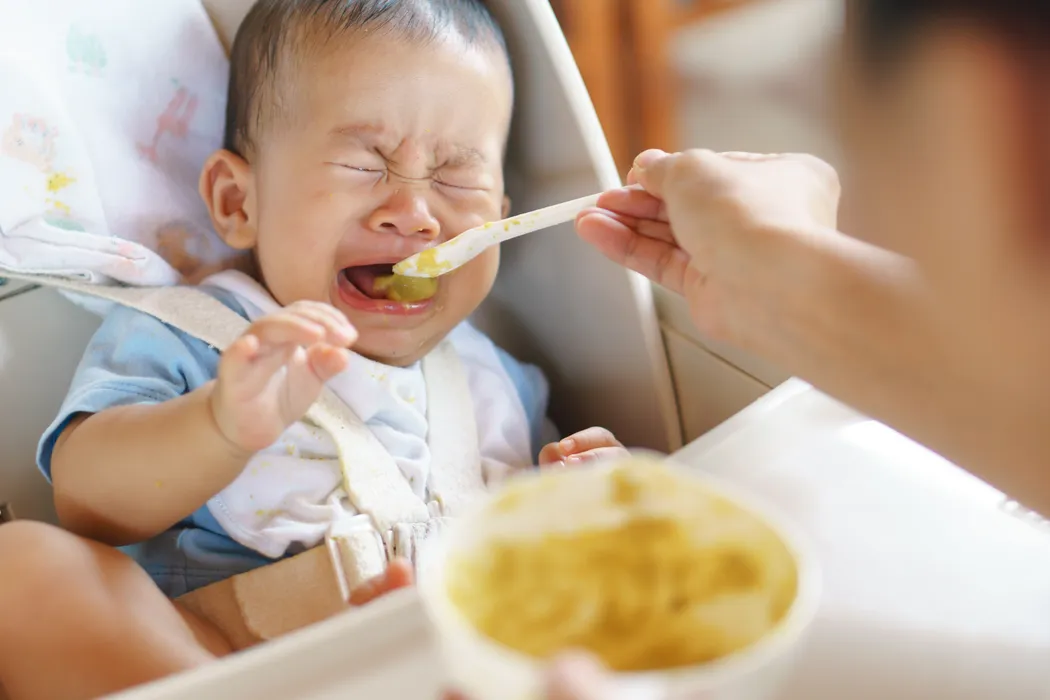
  • Refusal to Feed: Arching the back, crying, or pushing away from the bottle or breast.

Signs of Nutritional Impact:

  • Inadequate Weight Gain: Falling off their established growth curve, which may lead to a diagnosis of an alteration in nutrition in infants, ICD-10.
  • Dehydration: Having fewer than six wet diapers per day, lethargy, or dry mouth.

Causes of Feeding Difficulties in Infants

Understanding the root cause of your baby’s feeding challenges is the first step toward finding an effective treatment. Paediatricians look at several categories of causes:
 

CategoryKey causes
AnatomicalTongue-tie, Lip-tie, Cleft lip/palate 
GastrointestinalAcid reflux (GERD), Milk protein allergy 
Cardio-Respiratory Congenital heart defects, Chronic lung disease 
NeurologicalPrematurity, Low muscle tone 
  • Anatomical and Structural Issues: Physical conditions like tongue-tie (ankyloglossia), lip-tie, or cleft lip and palate prevent a baby from creating a proper vacuum seal to draw out milk efficiently.
  • Gastrointestinal Issues: Gastroesophageal reflux disease (GERD) or dietary intolerances (like cow’s milk protein allergy) can cause intense abdominal pain during and after eating, leading to feed aversion.
  • Cardiovascular and Respiratory Conditions: As mentioned, if a baby has a heart defect or chronic lung disease, the effort of eating exhausts them, leading to infant sweating during feeding and requiring frequent breaks.
  • Neurological and Developmental Delays: Preterm infants or babies with low muscle tone may lack the neurological maturity and coordination required to sync their sucking, swallowing, and breathing patterns.

How Doctors Evaluate Causes Using  ICD-10

When your pediatrician assesses these causes, they will use diagnostic tools, physical exams, and baby weight charts. If they find a mechanical issue with sucking, they will record the specific code for feeding difficulty in the infant ICD-10 to ensure that medical specialists, such as pediatric speech therapists or ENTs, can coordinate your baby's treatment plan.

Practical Tips for Parents Managing Feeding Problems

If you are experiencing mild infant feeding problems, there are several supportive strategies you can try at home:

  • Paced Bottle Feeding: If bottle feeding, keep the bottle horizontal to prevent the milk from flowing too fast, allowing your baby to control the flow and breathe comfortably.
  • Adjust Your Position: Hold your baby in a more upright position during feeds, and keep them upright for 20 to 30 minutes afterward to help reduce acid reflux.
  • Ensure a Quiet Environment: Reduce sensory distractions by feeding in a quiet, dimly lit room.
  • Check the Temperature: Keep the feeding environment cool and dress your baby in light clothing to reduce the chance of your infant sweating while feeding.
  • Consult a Specialist: Work closely with a Certified Lactation Consultant (IBCLC) or a pediatric occupational therapist who specializes in infant oral-motor mechanics.

When to Call the Pediatrician Immediately

While minor setbacks are a normal part of parenting, certain "red flag" symptoms require immediate medical attention. Contact your doctor right away if you observe:

  • Your baby seems unusually sleepy, lethargic, or difficult to wake up for feeding times.
  • You observe persistent sweating during feeding sessions, especially if accompanied by rapid breathing, chest retractions (skin pulling in around the ribs), or flared nostrils.
  • Your baby shows clear signs of dehydration (sunken soft spot, dry mouth, or no wet diapers for over 6 hours).
  • Your baby turns pale or blue around the lips or face during feeds.
  • Your baby regularly chokes, coughs, or changes color while swallowing.

Conclusion

Feeding difficulties in infants can have many causes, ranging from latching problems and reflux to anatomical, neurological, or underlying heart and lung conditions. While some feeding challenges are temporary, persistent problems such as poor feeding, coughing or choking during feeds, inadequate weight gain, or excessive sweating while feeding should not be ignored. Early evaluation by a paediatrician can help identify the underlying cause and ensure your baby receives the appropriate support for healthy feeding, growth, and development.

FAQS

What is the exact code for feeding difficulty in infant icd 10?

The most common ICD-10 code used by paediatricians for general feeding issues in babies is R63.39 (Other feeding difficulties) or R63.3 (Feeding difficulties). These codes are used for tracking issues like poor sucking, slow feeding, or food avoidance.

Is it normal for an infant to sweat while feeding?

A very mild amount of warmth or light sweat on the forehead can be normal because feeding takes physical effort. However, if your infant's sweating while feeding is heavy, occurs during every feed, or is accompanied by heavy breathing, it is not normal and should be evaluated by a pediatrician to rule out heart or lung strain.

What does alteration in nutrition in infant icd 10 mean on medical forms?

An alteration in nutrition in infant icd 10 notation indicates that a baby is not receiving or absorbing the necessary nutrients to sustain healthy growth. Doctors use this classification to authorize specialized therapies, referrals to pediatric dietitians, or insurance coverage for medical-grade formulas.

How can I tell if my baby has feeding difficulty in the infant stages?

Signs of feeding difficulty in infant stages include taking longer than 45 minutes to feed, regularly coughing, gagging, or choking during feeds, refusing to eat, arching their back in pain, or failing to gain weight consistently.

When is sweating during feeding an infant a medical emergency?

While a sweaty forehead can sometimes be due to a warm room, sweating during feeding in an infant becomes a medical emergency if the baby is also struggling to breathe, gasping for air, showing a blue tint around their mouth, or displaying extreme lethargy.

Apollo 247 Floating Action Button