logo
0

Essential Baby Feeding Products for Newborns & Toddlers

A practical guide to essential baby products — bottle warmers, sippy cup transition tips, and feeding accessories every parent needs.

article image

Dr. Vasantha Sree

Choosing the right baby products for feeding can feel overwhelming when you are already managing sleepless nights and a rapidly growing infant. The items you pick in those first months, from bottles to warmers to sippy cups, directly affect your baby's comfort, safety, and nutrition. This guide covers what you actually need, how to use everything safely, and when to call your doctor.

Must-Have Baby Feeding Products for Newborns

A newborn's feeding setup does not need to be elaborate. A handful of well-chosen items will cover most situations.

  • Feeding bottles in a small size (60 to 90 ml can be useful for newborn feeds, although feeding volumes vary by age and baby.
  • Slow-flow nipples matched to your baby's age, so milk does not drip too fast and cause gulping or gas.
  • Burp cloths in generous quantity, because most feeds end with at least one spit-up.
  • Soft bibs to protect clothing during feeds and early weaning.
  • A bottle brush sized to fit the bottles you choose.

For breastfeeding mothers who also plan to bottle-feed, a breast pump and milk storage bags round out the essentials. Stock two to four bottles to begin with.

Finding the Best Baby Bottles for Newborns

When comparing the best baby bottles for newborns, a few features matter most. Wide-neck bottles with a broader base make the latch feel more natural for babies who switch between breast and bottle. Anti-colic venting systems, which use a valve or inner vent to reduce air swallowing, can help babies prone to gas and fussiness. Glass bottles are heavier but durable; plastic bottles are lighter but should always be BPA-free; silicone bottles are soft and easy to squeeze, which can help with paced feeding. None of these is universally "best" as the right bottle is the one your baby will feed from comfortably.

Choosing and Using a Bottle Warmer Safely

A bottle warmer gently heats expressed breast milk or formula to a temperature suitable for feeding. Many warmers offer a setting around 37°C, but the appropriate temperature depends on the milk and the manufacturer's instructions.

Safe warming habits to build from day one:

  • Temperature Check: Always test the temperature on your inner wrist before feeding. The milk should feel warm, not hot.
  • Avoid Microwaves: Never warm a bottle in a microwave. Microwaves heat unevenly and can create scalding pockets inside the milk even when the outside feels fine.
  • Heating Time: Do not leave a bottle in the warmer beyond the recommended time; overheating destroys nutrients in breast milk.
  • Warmed Breast Milk: Breast milk that has been warmed should be used within 2 hours. Thawed breast milk that has been warmed or brought to room temperature should not be refrozen.
  • Cleaning: Wash the warmer's water reservoir regularly to prevent mould build-up.

If your baby refuses warmed milk or seems uncomfortable during feeds regardless of temperature, speak to your paediatrician. Feeding difficulties can sometimes signal reflux or a tongue-tie that no warmer will resolve.

When and How to Introduce a Sippy Cup

Sippy or other cup use can generally be introduced around 6 months, when babies begin complementary foods and can manage cup drinking with appropriate support. Starting too early is rarely helpful; motor skills and oral coordination need time to develop.

Signs your baby may be ready:

  • Reaches for your cup or bottle during mealtimes.
  • Can hold objects and bring them to the mouth with reasonable control.
  • Has started or is about to start solid foods.
  • Start with a soft-spout sippy cup and offer small amounts of water with meals. Juice or sweetened drinks are not recommended at this age, and breast milk or formula should remain the primary nutrition source. Some babies take to a cup quickly; others need several weeks of practice. If your child is past 9 months and still cannot manage any cup drinking, raise it at the next well-baby visit.

A 360-degree open cup trainer is often a smoother transition for babies closer to 12 months, as it teaches open-cup drinking without the prolonged suckling motion of a spouted trainer.

Feeding Accessories Worth Investing In

A few targeted accessories make the daily feeding routine considerably easier without cluttering your kitchen.

  • Drying Rack: A countertop drying rack with enough pegs for bottles, nipples, and pump parts keeps equipment hygienic between washes.
  • UV or Steam Steriliser: A UV or steam steriliser helps simplify the cleaning process. Some electric steam sterilisers can sterilise a full batch of bottles in around 10 minutes, depending on the model and manufacturer's specifications.
  • Weaning Spoons: Soft-tipped weaning spoons in two sizes protect tender gums during early solids.
  • Bottle and Nipple Brush Set: A bottle and nipple brush set with a small dedicated nipple brush is essential; standard dish brushes cannot clean narrow nipple openings properly.
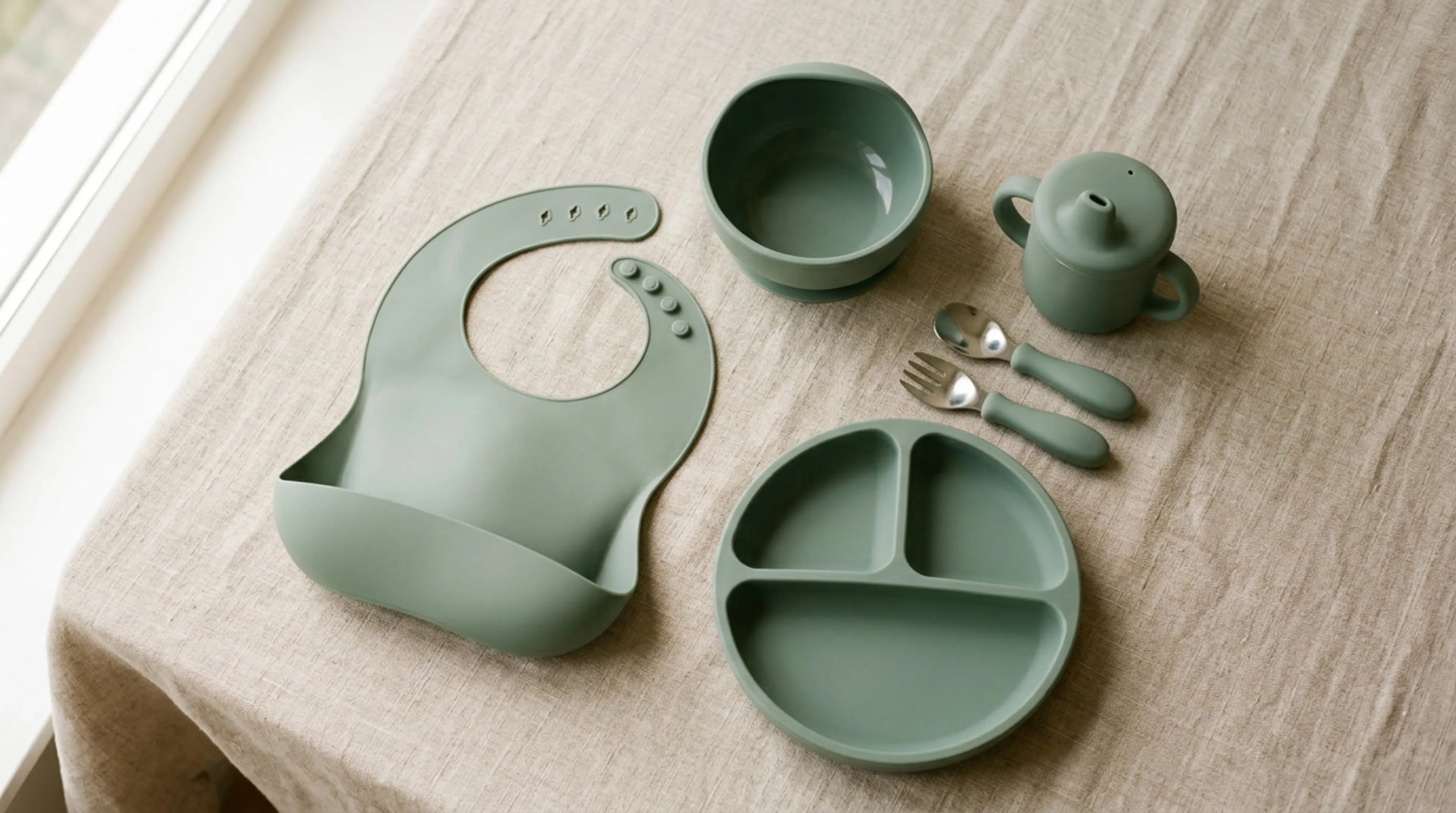
  • Silicone Bibs: Silicone bibs with a catch pocket wipe clean in seconds and outlast fabric bibs during messy weaning stages.
    Start with the basics and add items only as a genuine need arises.

Safety and Hygiene Tips for Baby Feeding Products

Knowing how to sterilise baby bottles correctly is one of the most important habits to build in the early months. It is also one of the areas where parents most often get conflicting advice.

For babies younger than 2 months, those born prematurely, or those with a weakened immune system, sanitise feeding items daily or more often as needed. For older, healthy babies, daily sanitising may not be necessary when feeding items are thoroughly cleaned after every use.

Three accepted sterilising methods:

  • Boiling is an accepted sanitising method; CDC guidance recommends boiling cleaned feeding items for 5 minutes, while NHS guidance recommends boiling for at least 10 minutes. Follow the guidance applicable to your location and the manufacturer's instructions.
  • Electric steam steriliser following the manufacturer's instructions.
  • Cold-water sterilising solution with items submerged for the required time.

Check every bottle and nipple before use. Discard any item with cracks, cloudiness, discolouration, or a nipple that tears easily. Damaged surfaces harbour bacteria even after sterilising. Replace nipples according to the manufacturer's recommendations and immediately if they become damaged or worn; some manufacturers recommend replacement every 1-2 months.

Good hygiene for your newborn extends well beyond the bottle. If you are also building your general newborn care routine, the Apollo Pharmacy guide on newborn care essentials beyond feeding covers practical steps like umbilical cord and belly button care that new parents often have questions about.

Contraindications and When to Seek Medical Advice

Certain newborn feeding accessories and products are unsuitable in specific situations.

  • Material Allergies: Silicone or latex nipples can cause allergic reactions in babies with known sensitivities. Signs may include redness or swelling around the mouth, rash, or excessive fussiness after feeds. If these occur, stop using the product and consult your paediatrician.
  • Sippy Cups and Open Trainers: These are generally inappropriate before 6 months, as younger babies may not have the head control and swallowing coordination needed to use them safely.
  • Small Detachable Parts: Small components on bottles or cup lids can pose a choking risk if they become loose. Inspect all parts before every use.
  • Formula Preparation Devices: Devices that heat water should only be used after confirming that the water temperature is appropriate for the formula being prepared. Incorrect temperatures can affect formula safety.
  • Cereal or Thickening Agents: Never add cereal or other thickening agents to bottles unless specifically directed by a doctor, as this may increase the risk of aspiration and overfeeding.


Always consult your paediatrician before changing feeding methods or products if your baby has a medical condition, was born prematurely, or has known allergies.

Report adverse events related to any feeding product or accessory to your healthcare provider or the relevant regulatory authority.

Conclusion

Choosing the right baby feeding products can make everyday feeding more comfortable, hygienic, and convenient for both parents and babies. From appropriately sized bottles and slow-flow nipples to bottle brushes, sterilisers, warmers, and cups, focus on products that match your baby's age, feeding needs, and developmental stage.

Safety should always come first. Clean and sterilise feeding equipment as recommended, avoid unsafe heating methods such as microwaving bottles, inspect products regularly for damage, and introduce cups and other feeding accessories at an age-appropriate stage. When your baby has allergies, feeding difficulties, or a medical condition, consult your paediatrician before changing feeding products or methods.
FAQS

What age can babies start drinking from a sippy cup?

Most paediatric guidance suggests introducing a sippy cup around 6 months, when babies begin solid foods and can sit with support. Every child develops at their own pace, so speak to your doctor if you have concerns about readiness.

Is it safe to warm baby bottles in the microwave?

No. Microwave heating creates uneven hot spots inside the liquid that can scald your baby's mouth even when the bottle feels warm on the outside. Use an electric bottle warmer or a bowl of warm water instead.

How often should baby feeding bottles be replaced?

Inspect bottles regularly and replace them if they become cracked, scratched, cloudy, discoloured, or otherwise damaged. Some manufacturers recommend replacing bottles every 4–6 months. Glass bottles last longer but should be discarded immediately if chipped. Nipples typically need replacing every one to two months.

What is the best material for baby bottles?

There is no single best material. Glass is durable and does not absorb odours; BPA-free plastic is lightweight; silicone is soft and flexible. Choose based on your baby's feeding style, your comfort with the weight, and your sterilising method.

How do I know if my baby is allergic to a bottle nipple?

Watch for redness, swelling, or a rash around your baby's mouth after feeds, or unusual fussiness that is not explained by hunger or gas. If you suspect a nipple material allergy, switch to a different material (for example, from latex to silicone) and consult your paediatrician.

Apollo 247 Floating Action Button