logo
0

Baby Fever: Causes, Warning Signs & Recovery

Learn about baby fever causes, warning signs, when to seek medical care, safe ways to support recovery, and how to monitor your baby's temperature.

article image

Dr. Kamran

A baby fever is one of the most anxious moments for any new parent. Your baby cannot tell you what hurts, and a thermometer reading above normal can feel alarming even when the cause is mild. Understanding what counts as fever, why it happens, and when it genuinely demands urgent care can help you respond calmly and wisely.

What Counts as Fever in Babies?

The normal temperature for babies sits around 36.5 to 37.5 degrees Celsius (97.7 to 99.5 degrees Fahrenheit), though it varies slightly with the time of day and how you measure it.

A fever is generally defined as a rectal temperature of 38 degrees Celsius (100.4 degrees Fahrenheit) or higher. Rectal measurement is the most accurate method for infants under one year. Axillary (underarm) readings run about 0.5 degrees lower, so if your thermometer reads 37.5 degrees Celsius under the arm, your baby likely has a true fever.

How to take your baby's temperature accurately:

  • Rectal: Use a digital thermometer with a soft, flexible tip. Lubricate it lightly, insert no more than 2.5 cm, and hold still for about one minute.
  • Axillary: Place the thermometer tip at the centre of the armpit and hold the arm snugly against the body. Add 0.5 degrees to approximate the true temperature.
  • Avoid ear and forehead thermometers in newborns: their accuracy in very young infants is limited.

Common Causes of Fever in Babies

Fever is not a disease. It is the immune system's response to something it is fighting. The most frequent triggers in fever in infants causes include:

  • Viral Infections: Viral infections such as the common cold, roseola, and respiratory syncytial virus (RSV) are common causes of fever in infants and toddlers.
  • Post-Vaccination Fever: A mild fever can occur within 24 to 48 hours after routine vaccinations as part of the normal immune response and usually settles on its own.
  • Bacterial Infections: Bacterial infections, including urinary tract infections and ear infections, can also cause fever, although they are generally less common than viral infections.
  • Overheating: Overdressing or exposure to a very warm environment can raise a baby's temperature slightly, but this rarely causes a true fever.

What about baby fever no other symptoms? A fever without a runny nose, rash, or cough is common and can still be viral. However, in infants under three months, any fever without an obvious cause needs immediate medical review.

Can teething cause fever? Teething may cause mild irritability and slightly elevated gum temperature, but research does not support it as a cause of true fever above 38 degrees Celsius. If your teething baby has a fever, look for another cause.

When Baby Fever Requires Immediate Medical Attention

Age matters enormously when deciding how urgently to act.

Go to the emergency room immediately if:

  • Under 3 Months: Seek immediate medical care if your baby is under 3 months old and has a rectal temperature of 38°C (100.4°F) or higher, even if the baby otherwise appears well.
  • 3 to 6 Months: Contact your healthcare professional if your baby is 3 to 6 months old and has a temperature above 38.5°C.
  • High Fever Under 2 Years: Seek medical advice if a child under 2 years has a fever above 39.4°C, particularly when there is no clear cause.

Call your doctor or seek urgent care if your baby shows any of these red flags alongside fever:

  • Unusual drowsiness or difficulty waking
  • Persistent crying that cannot be soothed
  • A bulging fontanelle (the soft spot on top of the head)
  • Skin rash, especially one that does not fade when pressed
  • Difficulty breathing or rapid breathing
  • Refusing all feeds for several hours
  • Convulsions or stiffening of the body
  • Fever lasting more than two days in infants or more than three days in toddlers

When to worry about baby fever often comes down to age and these accompanying signs. A temperature of 100.4 degrees Fahrenheit in a newborn is not a mild fever. In a baby under three months, it is the threshold for emergency evaluation.

Safe Ways to Manage Fever at Home

Home care is appropriate for older infants (above 3 months) with mild fever who are feeding, alert, and not showing red flags. These baby fever home remedies focus on comfort, not on forcing the temperature down.

  • Dress your baby in a single light layer. Bundling increases body temperature.
  • Keep the room comfortably cool, around 20 to 22 degrees Celsius.
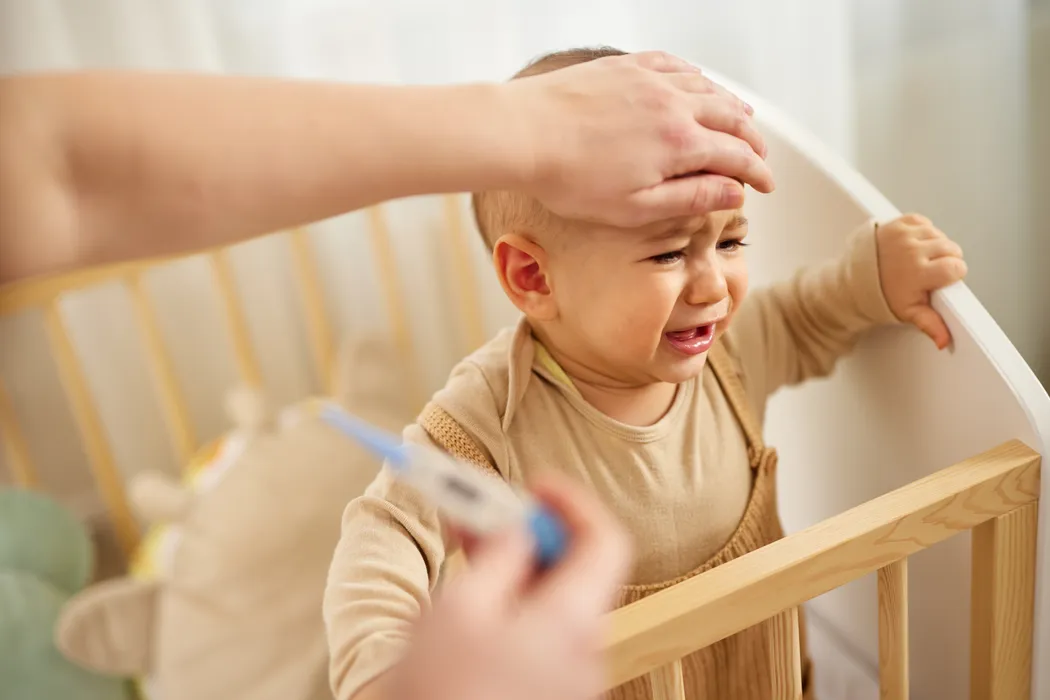
  • Offer lukewarm sponging of the forehead and body. Use water at room temperature, not cold water or ice, which can cause shivering and raise core temperature.
  • Never use alcohol rubs. Alcohol can be absorbed through infant skin and cause serious harm.
  • Ensure your baby gets extra rest and close physical contact for comfort.

On fever-reducing medicines: Infant formulations of paracetamol (acetaminophen) are used for babies above a certain age and weight, but dosing must be calculated by a paediatrician based on your baby's current weight. Never guess the dose, and never exceed the recommended frequency. Always consult your doctor before giving any medication to an infant.

Report adverse events to your healthcare provider or the relevant regulatory authority.

Supporting Nutrition and Hydration During Fever

Fever raises the body's fluid and energy demands, so feeding becomes especially important even though appetite often dips. Fever in babies nutrition should be a priority throughout the illness.

  • Breastfed babies: Continue breastfeeding on demand. Breast milk provides antibodies, fluids, and calories together. Offer the breast more frequently than usual, even for short feeds.
  • Formula-fed babies: Offer formula at regular intervals. For babies above 6 months, you can add small water feeds between bottles. For babies under 6 months, additional plain water is not recommended since formula provides adequate hydration.
  • Babies Eating Solids (Above 6 Months): Appetite loss during fever is usually normal and temporary. Do not force-feed your baby. Offer small, frequent feeds and easily digested foods such as mashed rice, banana, or dal water. If vomiting or diarrhoea occurs alongside the fever, oral rehydration solution (ORS) may help prevent dehydration.

Avoid high-sugar juices, processed snacks, and caffeinated drinks. These add little nutrition and can worsen dehydration.

Contraindications and Precautions

Certain medicines and actions are unsafe for infants and must never be used without explicit medical guidance.

  • Aspirin: Never give aspirin (salicylates) to children or infants unless specifically directed by a healthcare professional. Its use in children has been associated with the rare but serious Reye's syndrome.
  • Adult Cold and Flu Medicines: Do not give adult cold and flu medicines to infants. These products are formulated for adults, and even small doses may be unsafe for young children.
  • Combination Cough and Cold Medicines: Avoid combination cough and cold syrups in children under 2 years unless specifically prescribed by a paediatrician.
  • Over-the-Counter Medicines: Never give an over-the-counter medicine to a newborn or young infant without first consulting a doctor.

If you are unsure whether a medicine is safe, call your paediatrician before giving it. When in doubt, wait and call.

Conclusion

Fever in a baby is usually a sign that the immune system is responding to an infection, and many cases are caused by common viral illnesses. However, a baby's age, temperature, feeding, behaviour, and other symptoms all matter when deciding how urgently medical care is needed. In particular, a temperature of 38°C (100.4°F) or higher in a baby under 3 months requires prompt medical evaluation. For older babies with mild fever and no warning signs, focus on keeping them comfortable, well hydrated, and appropriately dressed rather than trying to normalise the temperature at all costs. Avoid unapproved home remedies and never guess medication doses. When in doubt, especially with a young infant or concerning symptoms, contact a paediatrician promptly.

FAQs

What is a dangerous fever temperature for a baby?

In a baby under 3 months, any rectal temperature at or above 38 degrees Celsius (100.4 degrees Fahrenheit) is considered dangerous and requires emergency care. In older infants, a temperature above 39.4 degrees Celsius, especially with other red-flag symptoms, warrants urgent medical attention.

How long can a baby fever last?

Most viral fevers in infants resolve within 3 to 5 days. If your baby's fever continues beyond two days in very young infants, or beyond three days in older babies and toddlers, consult your paediatrician promptly.

Can I bathe my baby when they have a fever?

Yes, a lukewarm bath can help your baby feel more comfortable and may gently lower the baby fever temperature. Avoid cold water, which causes shivering and can raise core temperature. Pat dry immediately and dress in a light layer.

Does fever affect a baby's appetite, and is that normal?

Reduced appetite during fever is very common and usually temporary. Continue offering breast milk, formula, or small, frequent meals as appropriate, and do not force feed. Appetite generally returns as the fever clears.

When does baby fever after vaccination go away?

Post-vaccination fever typically appears within 24 hours of the injection and usually resolves within 48 hours. If the fever persists beyond two days, exceeds 39 degrees Celsius, or your baby seems unusually unwell, contact your paediatrician.

Apollo 247 Floating Action Button