logo
0

Baby Food Pouches: Nutrition Guide & Homemade Puree Tips

Baby food pouches and homemade purees can both be part of complementary feeding. Learn about nutrition, safety, textures, storage, allergens and practical feeding tips for babies.

article image

Dr.J.T.Hema Prathima

Starting solids is an exciting milestone, but choosing what to feed your baby can feel overwhelming. Baby food pouches are convenient and widely available, while homemade purees allow you to control the ingredients, texture and preparation.

Both can have a place in complementary feeding. The important considerations are nutritional variety, food safety, appropriate textures, responsive feeding and how the food is offered. Understanding the strengths and limitations of each option can help you make practical choices without feeling that there is only one right way to feed your baby.

What Are Baby Food Pouches and When to Introduce Them?

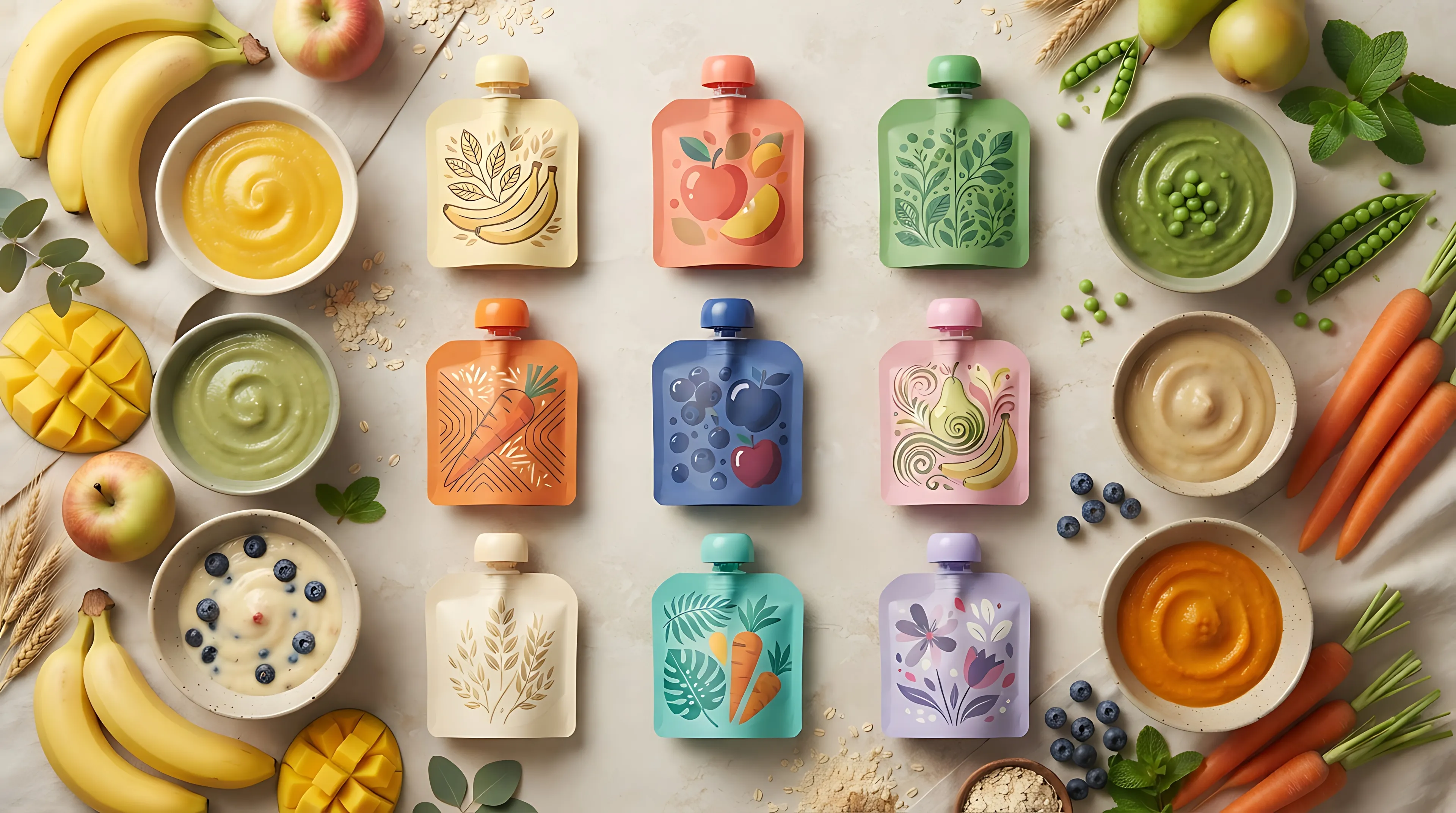
Baby food pouches are ready-to-eat foods containing pureed or blended fruits, vegetables, grains, pulses, meat, yoghurt or combinations of these ingredients. They are packaged in squeezable containers and can be convenient when travelling or when freshly prepared food is not readily available.

Complementary foods are generally introduced at around 6 months, when a baby is developmentally ready. Signs of readiness include being able to sit with support and control the head and neck, opening the mouth when food is offered, bringing objects towards the mouth and swallowing food rather than repeatedly pushing it out.

A pouch labelled as suitable from an earlier age does not by itself mean that a baby should start solids before around 6 months. Breast milk or infant formula remains an important source of nutrition during the first year while complementary foods are introduced and gradually increased.

Are Baby Food Pouches Suitable for Babies?

Baby food pouches can be used occasionally as part of complementary feeding. However, they should not become the main way a baby experiences food.

Many pouches have a very smooth consistency and may contain predominantly fruit or naturally sweet vegetables. Regular reliance on them can limit opportunities for babies to experience different flavours and textures.

If you use a pouch, squeeze the food onto a spoon or into a bowl rather than allowing your baby to suck directly from the spout. This supports more conventional spoon feeding and reduces prolonged exposure of the teeth to food sugars.

Nutrition Considerations for Packaged Baby Food Pouches

The nutritional value of baby food pouches varies considerably. The ingredient list and nutrition information are more useful than claims on the front of the package.

Check the Ingredient List

Look for products with simple, recognisable ingredients and no unnecessary added sugar or salt. A fruit pouch may taste very sweet even without added sugar because fruits naturally contain sugars.

Be particularly cautious of products containing fruit juice or fruit concentrates, as these can increase the overall sweetness of the food.

Consider Iron and Protein

From around 6 months, babies need complementary foods that provide important nutrients such as iron and protein. Fruit-only pouches may provide useful vitamins and energy but are not necessarily good sources of iron or protein.

As complementary feeding progresses, include a variety of foods such as:

  • Lentils, beans and other pulses
  • Egg
  • Meat, poultry and fish in suitable forms
  • Iron-fortified infant cereals
  • Vegetables and fruits
  • Full-fat, unsweetened yoghurt and other suitable dairy foods

A varied diet is more important than choosing a particular packaged product.

What About Fibre and Vitamins?

Processing and pureeing can change the texture and nutrient profile of foods. Some nutrients, particularly certain heat-sensitive vitamins, may be reduced during processing, although the extent varies between products and manufacturing methods.

This does not make packaged baby food automatically unhealthy. It simply means that pouches should be viewed as one option rather than a substitute for a varied diet of freshly prepared and appropriately textured foods.

Homemade Purees: Banana Puree and Other Options

Homemade baby food gives parents greater control over ingredients, preparation and texture. It can also make it easier to gradually progress from smooth purees to mashed, lumpy and soft finger foods.

Homemade food does not need to involve complicated recipes. Many suitable foods can be cooked until soft and mashed or blended to an appropriate consistency.

Banana Puree for Babies

Banana is a convenient food to mash because it is naturally soft and does not require cooking.

To prepare banana puree:

  1. Choose a ripe banana and wash the outside before peeling.
  2. Peel and remove any fibrous strands.
  3. Mash thoroughly with a clean fork.
  4. If needed, adjust the consistency with a small amount of breast milk, prepared infant formula or safe water.
  5. Offer the puree using a clean spoon.

Banana puree is best prepared fresh. If storing any homemade baby food, use clean containers, refrigerate promptly and follow safe food-storage practices. Do not leave homemade puree at room temperature for prolonged periods.

Other Homemade Purees

Several everyday foods can be adapted into suitable purees or mashed foods.

  • Sweet potato can be steamed or boiled until soft and mashed or blended.
  • Moong dal can be thoroughly cooked and blended to a smooth or appropriately textured consistency.
  • Apple should be cooked until soft, with the skin, seeds and core removed before pureeing.
  • Other vegetables such as pumpkin, carrot, peas and well-cooked leafy vegetables can also be incorporated into a varied diet.
  • Protein-rich foods such as lentils, beans, egg, meat or fish can be prepared in textures appropriate for the baby's developmental stage.

There is no requirement to rely only on fruit-based purees. Offering vegetables, pulses, grains and protein foods early in complementary feeding can help create greater dietary variety.

Pouches vs Homemade Purees: Pros, Cons and Practical Differences

Both options can be useful. Homemade food generally offers greater control over ingredients and texture, while pouches can be helpful when preparation facilities are limited.

The following comparison can help parents decide when each option is practical.
 

Factor    Baby Food PouchesHomemade Purees
Convenience    Ready to use and useful when travellingRequires preparation
Ingredient controlDepends on the product labelComplete control over ingredients
Texture    Often smooth and uniformCan be adjusted as feeding skills develop
Variety    Depends on available products    Wide range of foods can be prepared
Cost    Often more expensive per servingCan be more economical, especially when prepared in batches
Storage    Long shelf life when unopened, according to the packageRequires appropriate refrigeration or freezing
Travel    Convenient when unopened and stored as directed    More difficult without suitable storage
Feeding methodShould ideally be offered from a spoon or bowlUsually offered from a spoon, bowl or in suitable finger-food form
Texture progressionMay remain predominantly smoothEasy to gradually make thicker, lumpier and more textured
Food safetyFollow package instructions after openingRequires careful preparation, handling and storage

A practical approach may be to use homemade foods when convenient and keep appropriately selected pouches for travel or occasional situations. There is no need to feel that using a pouch occasionally means you are compromising your baby's diet.

How to Feed Baby Food Pouches Safely?

The way a food is offered matters as much as the food itself.

Avoid Direct Sucking From the Pouch

Do not routinely allow your baby to suck directly from a pouch. Instead, squeeze a small amount onto a spoon or into a bowl.

Direct sucking can make it easier for a baby to consume food quickly and may contribute to prolonged exposure of the teeth to naturally occurring sugars. Spoon feeding also gives babies opportunities to practise eating from a utensil.

Use an Upright Feeding Position

Always feed your baby while they are sitting upright in a safe position. Stay with your baby throughout the meal and make sure the food has an age-appropriate consistency.

As your baby develops, gradually introduce thicker, mashed, lumpy and soft finger foods rather than keeping every meal completely smooth.

Follow Responsive Feeding

Let your baby guide the pace of the meal. Offer food patiently and stop when your baby shows signs of being full or no longer interested.

Do not force a baby to finish a pouch, bowl or predetermined portion.

Introducing Allergens Safely

Common allergenic foods can generally be introduced around 6 months when a baby is developmentally ready. Examples include well-cooked egg, smooth peanut or other nut butter thinned into an appropriate consistency, wheat, dairy and fish.

There is no need to delay common allergens simply because they are potential allergens. However, babies with severe eczema, an existing food allergy or other relevant medical conditions may need an individual introduction plan from a healthcare professional.

When introducing a new food, offering it in an appropriate form and observing the baby helps parents recognise possible reactions. Once a food is tolerated, it can remain part of the baby's varied diet.

Foods and Ingredients to Avoid or Limit

Some foods require particular attention during the first year.

  • Honey should not be given before 12 months because of the risk of infant botulism.
  • Added sugars should be avoided in foods and drinks for infants.
  • Foods high in salt should not be routinely offered.
  • Whole nuts, hard raw vegetables, whole grapes and other choking hazards should be avoided unless modified into a safe texture and shape.
  • Cow's milk should not be used as the main drink before 12 months, although pasteurised milk can be used in cooking or mixed into foods where appropriate.
  • Do not add food or cereal to an infant's bottle unless specifically advised by a healthcare professional.

Artificial sweeteners are also unnecessary in an infant's diet.

Homemade Baby Food Safety and Storage

Homemade purees can be nutritious, but food safety is essential.

Wash your hands and preparation surfaces before handling food. Use clean utensils and containers, cook foods thoroughly when required, and refrigerate or freeze prepared food promptly.

Do not rely on a universal storage period for every homemade puree. Storage life varies according to the ingredients, preparation method, temperature and handling. When in doubt, prepare smaller quantities and use fresh food more frequently.

If freezing baby food, divide it into small portions, use suitable food-grade containers and label them with the preparation date. Thaw food safely and do not repeatedly freeze and thaw the same portion.

Moving Beyond Purees

Purees are often useful when complementary feeding begins, but babies should gradually experience a wider range of textures.

As feeding skills develop, progress from smooth purees to thicker mashed foods, soft lumps and appropriately prepared finger foods. This helps babies learn how to move food around the mouth, chew and swallow.

The timing varies between babies. Some may progress quickly, while others need more practice with new textures. The aim is gradual progression rather than keeping a baby on smooth purees for an extended period.

When to Consult a Paediatrician?

Professional advice is appropriate if you have concerns about your baby's feeding, growth or ability to tolerate foods.

Speak with a paediatrician or appropriately qualified infant-feeding professional if:

  • Your baby consistently refuses food and you are concerned about growth or nutrition.
  • Your baby frequently coughs, chokes or appears distressed while eating.
  • Your baby has repeated vomiting, diarrhoea or other symptoms after eating a particular food.
  • Your baby has severe eczema, a known food allergy or another medical condition affecting feeding.
  • Your baby was born prematurely and you are unsure how to approach complementary feeding.
  • You are concerned that your baby is not progressing from purees to more textured foods.

If a baby develops difficulty breathing, swelling of the lips, tongue or throat, or other signs of a severe allergic reaction after eating, seek emergency medical care immediately.

Conclusion

Baby food pouches and homemade purees can both be used during complementary feeding, but neither needs to replace a varied diet. Homemade foods offer greater control over ingredients and texture, while pouches can provide useful convenience when families are travelling or short on preparation time.

For most babies, the priority is to introduce complementary foods around 6 months when developmentally ready, offer a variety of nutrient-rich foods, progress textures as skills develop, and practise safe, responsive feeding. If pouches are used, offering them from a spoon or bowl rather than directly from the spout can support healthier feeding habits and reduce prolonged exposure to food sugars.

FAQS

Can babies have baby food pouches every day?

Occasional use of baby food pouches can be convenient, but they are better treated as one option rather than the foundation of a baby's diet. Regularly offer a variety of homemade or family foods with different flavours, textures and nutrient profiles as your baby's feeding skills develop.

Are homemade purees safer than packaged baby food pouches?

Neither option is automatically safer. Packaged foods need to be selected, opened and stored according to the manufacturer's instructions, while homemade foods require careful hygiene, cooking and storage. Safe handling is important with both.

How long can homemade banana puree be stored?

Fresh banana puree is best served soon after preparation. If you need to store it, place it promptly in a clean, covered container in the refrigerator and use it within a short period rather than keeping it for several days. Discard food that has been contaminated by a used spoon or that has been left out for too long.
Can babies suck directly from food pouches?

It is better not to let babies routinely suck directly from food pouches. Squeeze the food onto a spoon or into a bowl instead. This gives babies more opportunities to practise spoon feeding and reduces prolonged contact between sugary foods and emerging teeth.

What consistency should a baby's first puree have?

When complementary foods are first introduced, smooth mashed or pureed foods can be easier for some babies to manage. As the baby's eating skills develop, gradually move towards thicker, mashed and lumpier textures and then appropriately prepared finger foods. The progression should follow the baby's developmental abilities rather than a rigid timetable.

Apollo 247 Floating Action Button