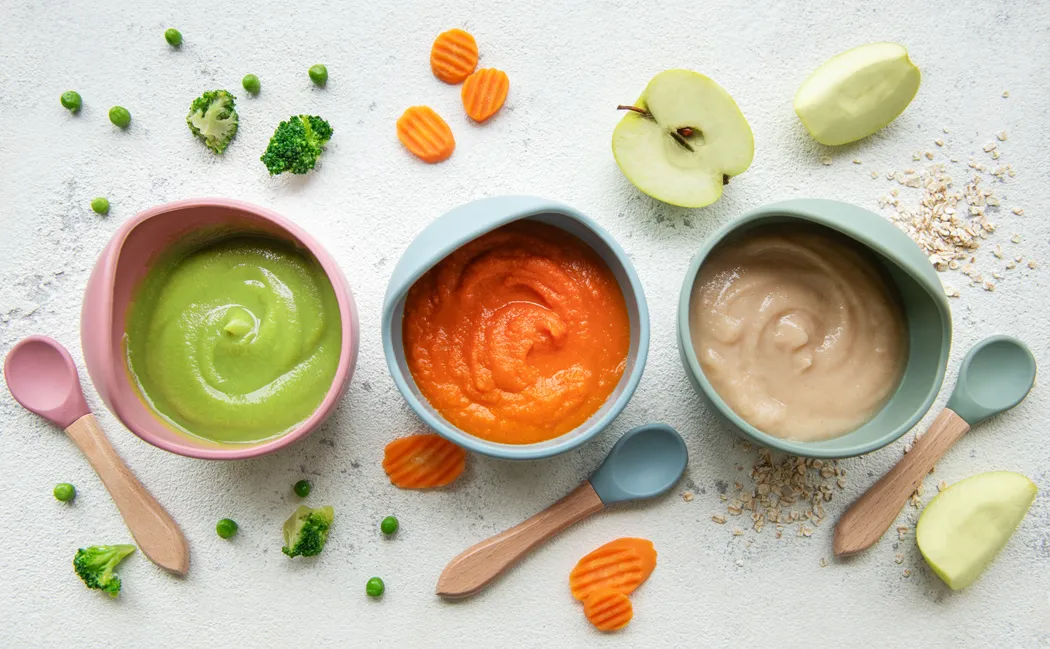
2. Understanding the Types of Baby Food by Stage
As your child grows, their feeding capabilities and nutritional needs change rapidly. Familiarising yourself with the different types of baby food is crucial for a smooth, choke-free transition. Generally, these foods are categorised into stages based on texture, consistency, and digestive complexity.
- Stage 1: Smooth Purees (6 Months)
- Stage 2: Thicker Blends (7-8 Months)
- Stage 3: Soft Chunks (9-12 Months)
Stage 1: Smooth Purees (6 Months)
At the very beginning, your child requires foods that are incredibly easy to swallow and digest. A silky, single-ingredient baby puree made from cooked fruits or vegetables is highly recommended. Classic starter options include sweet potato, pumpkin, carrots, apples, and pears. Introducing a gentle food puree for baby helps them learn how to move food from the front of their mouth to the back to swallow, without any choking hazards.
Stage 2: Thicker Textures and Blends (7 to 8 Months)
Once your baby masters basic swallowing, they can graduate to thicker, slightly textured blends. This is the perfect time to introduce a nutritious baby food mix, combining different ingredients like bananas and oats, or lentils and vegetables. Offering a variety of baby food flavors during this period helps expand their palate and prevents picky eating habits later in life. Always start with a small baby food portion, allowing them to dictate when they are full.
Stage 3: Mashed and Soft Chunky Foods (9 to 12 Months)
By this stage, your baby is developing a stronger grip and may have a few teeth. You can begin offering mashed versions of family meals, soft finger foods, and finely chopped cooked vegetables. This stage encourages self-feeding, supports hand-eye coordination, and prepares them to transition to the family table.