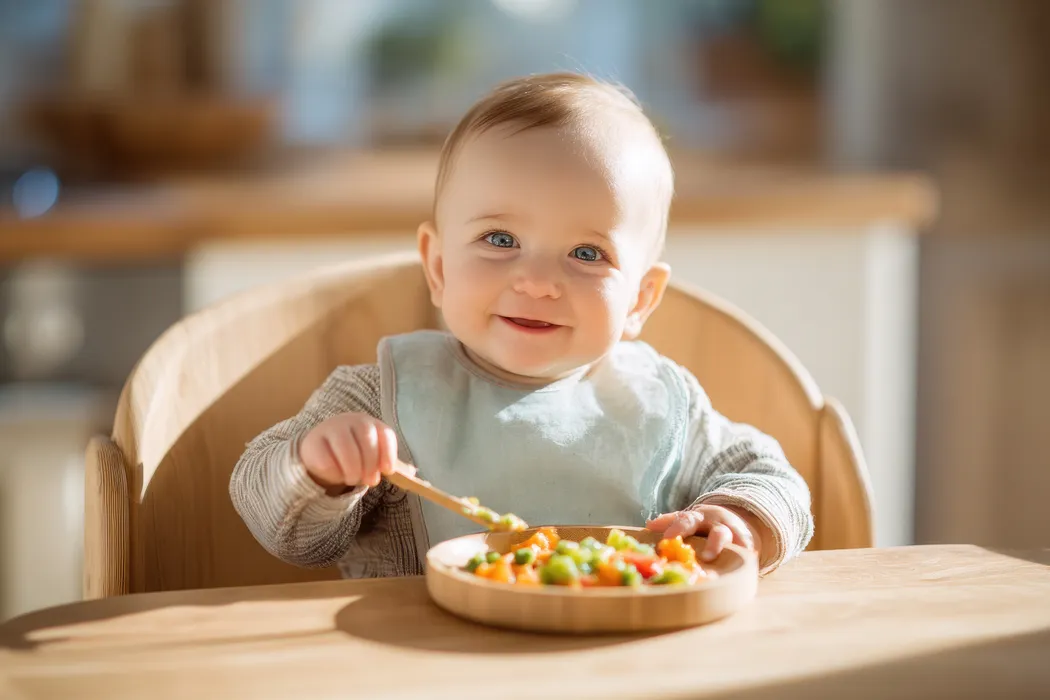
What Is Baby-Led Weaning?
Baby-led weaning (BLW) is a feeding approach where soft, appropriately sized pieces of whole food are placed in front of the baby, who then feeds themselves from the very start. There is no spoon-feeding of purees. The baby decides what to pick up, how much to eat, and when they are done.
The term was popularised by midwife and health visitor Gill Rapley in the early 2000s, though the core idea of letting babies handle real food is much older. In practice, it means placing a soft-cooked carrot stick or a strip of ripe avocado on the tray and letting your baby explore it at their own pace.
Baby-Led Weaning vs Purees
Baby led weaning vs purees is a genuine debate among parents and paediatricians. Puree-based weaning gives caregivers more control over intake and texture progression. BLW prioritises the baby's autonomy and sensory engagement with food from the beginning. Both can produce healthy, well-nourished children, and neither is the single right answer for every family. Many parents settle on a combination of both, which is perfectly reasonable.