logo
0

Baby Led Weaning: Methods & Age-Wise Food Guide

Learn about baby-led weaning, including when to start, suitable foods, safe textures, feeding methods, essential nutrients and choking prevention tips.

article image

Dr.Rohini priyanaka

Starting solids is one of the most exciting and nerve-wracking milestones of the first year. Baby-led weaning offers a hands-on approach that lets your baby explore real food at their own pace, but understanding how it compares to traditional spoon-feeding, and knowing exactly which foods are safe at each stage, makes the difference between a confident start and a stressful one.

What Is Baby-Led Weaning?

Baby-led weaning (BLW) skips purees entirely. Instead of spooning smooth mashes into your baby's mouth, you offer soft, finger-sized pieces of food and let them pick it up, gum it, and decide how much to eat. The baby controls the pace and the quantity from the very first meal.

This is quite different from the traditional weaning method, which starts with thin purees and moves through progressively lumpy textures over several months, with a parent or caregiver doing most of the feeding. BLW is not a brand or a program; it is simply a philosophy: trust the baby to self-feed.

Many families blend both approaches, and that is perfectly fine. The goal is getting your child comfortable with a variety of whole foods before their first birthday.

Signs Your Baby Is Ready to Wean

Age alone is not the only guide. Most babies reach the baby-led weaning age to start around six months, but look for all three of these cues together before introducing solids.

  • Sits upright with little or no support and holds their head steady
  • Shows clear interest in food, reaching toward what you are eating or watching your fork intently
  • Has lost the tongue-thrust reflex and no longer automatically pushes food out of the mouth

These signs baby is ready for weaning matter as much as the calendar date. If your baby is not yet six months old, or if any of these signs are absent, hold off. Introducing solids too early is linked to digestive discomfort and a higher risk of choking. Premature or low-birth-weight babies should follow a corrected age timeline; always check with your paediatrician. For broader first-year care guidance, see this newborn care basics guide.

Baby-Led Weaning vs Traditional Spoon-Feeding: Comparison

Neither method is universally right. The baby-led weaning vs spoon-feeding debate often comes down to your family's comfort level and your baby's temperament. Here is a plain comparison across the factors that matter most.
 

Factor    Baby-Led WeaningTraditional Spoon-Feeding
Who controls the paceBabyParent or caregiver
Texture progressionSoft finger foods from the startPuree to lumps over weeks to months
Mess levelHigh    Moderate
Nutrition tracking    Harder to measure intakeEasier to track volume
Family meal inclusionBaby joins family meals easilyMay need separate preparation
Skill developmentFine motor skills develop earlyMotor skills develop later
Choking concern (perception)Often seen as riskier; evidence is mixedFeels more controlled to many parents

The honest answer to "which is better" is: it depends on your baby and your family. BLW works well when parents can supervise closely and are comfortable with mess and gagging. Spoon-feeding suits families who want clearer intake tracking or who have a baby with feeding difficulties. Combining both is the most common real-world approach.

Age-Appropriate Food Introduction: 6 to 12 Months

A baby-led weaning chart by age helps you stay on track with textures and variety. Think of texture as a ladder: every piece should be soft enough to squash between two fingers before you offer it. Use the baby-led weaning chart below as a starting point, always adjusting based on your baby's pace and your paediatrician's advice.

6 to 7 Months: First Tastes

At this stage, the aim is exploration, not nutrition. Breast milk or formula remains the main source of calories.

  • Soft-cooked vegetables cut into finger-length batons: carrot, sweet potato, broccoli florets
  • Ripe banana or avocado in thick pieces or a firm mash
  • Well-cooked dal or khichdi, soft enough to mash easily between fingers
  • Plain whole-milk yoghurt (pasteurised), offered by spoon or let baby dip fingers

Keep portions tiny. One or two foods per meal is plenty. Baby-led weaning first foods should have no added salt or sugar, and textures should always yield easily under gentle pressure.

8 to 9 Months: Building Variety

Babies develop a pincer grip around this time, which opens up smaller foods they could not manage before.

  • Soft-cooked egg: scrambled or hard-boiled and quartered
  • Ripe mango, papaya, or pear in small cubes
  • Soft-cooked rice, idli, or small pasta shapes
  • Minced or very finely flaked fish (check carefully for bones)
  • Small cubes of soft-cooked chicken or paneer

Introduce one new food every two to three days. This window makes it easier to spot any allergic reaction. Common allergens such as egg, fish, and peanut products (offered as a smooth paste, never as whole nuts) should be introduced early and one at a time.

10 to 12 Months: Joining the Family Table

Most babies at this stage handle a wider range of textures and can begin to use a spoon with help.

  • Soft chapati torn into pieces, steamed idli, or soft-cooked rice
  • Chopped soft fruit: kiwi, grapes halved lengthways, watermelon in small pieces
  • Lightly spiced dal, sabzi, and mild curries without whole spices or chilli
  • Pasteurised soft cheese or paneer in small cubes
  • Scrambled eggs with soft vegetables mixed in

By twelve months, three small meals plus two snacks a day is a reasonable rhythm, alongside continued breast milk or formula.

Foods and Practices to Avoid

These are not preferences; they are safety rules for all babies during weaning, regardless of method.
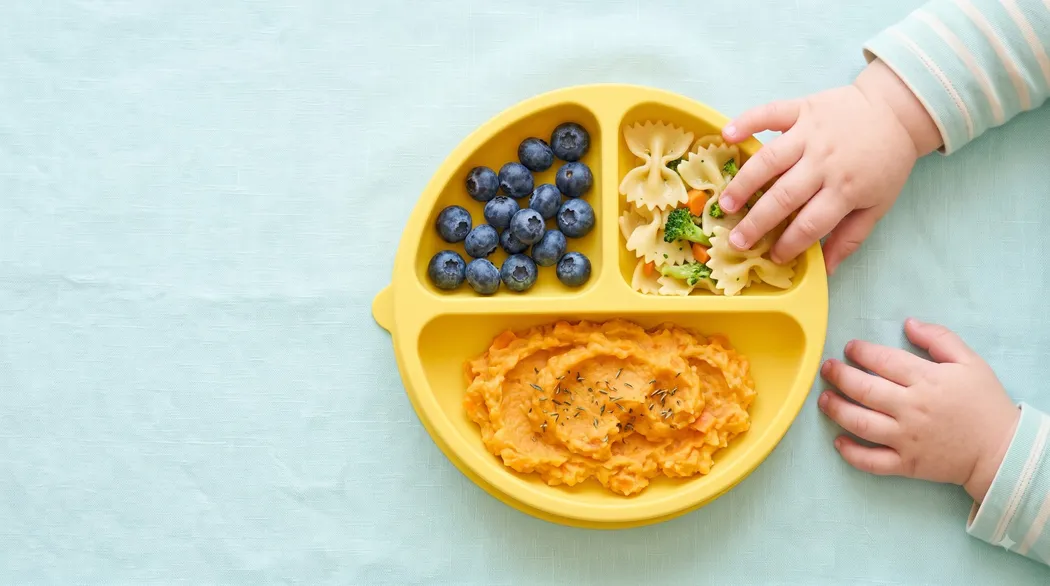
Foods to avoid entirely under 12 months:

  • Honey, in any form, including cooked into food or drinks. It can carry spores that cause infant botulism, a serious illness in babies whose digestive systems are not yet mature enough to neutralise the toxin.
  • Whole nuts and large seeds are a choking hazard. Smooth nut butters or pastes are safe; whole nuts are not.
  • Added salt and sugar. Baby kidneys cannot process excess salt, and early sugar exposure shapes taste preferences in ways that are hard to reverse.
  • Unpasteurised dairy products, including raw milk and soft cheeses made from unpasteurised milk, carry bacterial risks that are especially dangerous for infants.

  • Firm raw vegetables, whole grapes, large chunks of any food, and stringy or fibrous meat pieces are all choking hazards.
  • Caffeinated drinks, fruit juices with added sugar, and fizzy drinks have no place in a baby's diet in the first year.

Safety Precautions and When to Consult a Paediatrician

Baby-led weaning safety tips centre on one rule above all others: never leave a baby alone while they are eating. Always sit within arm's reach.

Gagging vs choking: Gagging is normal and protective. It looks dramatic but means the gag reflex is doing its job, pushing food forward before it can cause a problem. Choking is silent or nearly silent, with no effective cough, a bluish tinge around the lips, and visible distress. Learn infant first aid before you start solids so you can tell the difference and respond quickly.

Other practical safety steps:

  • Always seat your baby upright in a high chair with foot support
  • Offer food at the right size: finger-length strips or pieces large enough to grip, not small enough to swallow whole
  • Stay current with your infant first aid training, ideally a certified course before six months

When to pause and call your paediatrician:

  • Signs of a possible allergic reaction after introducing a new food: hives, swelling around the face or lips, vomiting, or difficulty breathing. This is a medical emergency; seek care immediately.
  • Persistent refusal of all solids beyond seven to eight months
  • Significant choking episodes
  • Consistent gagging that does not resolve, or any concern about swallowing

Report adverse events to your healthcare provider or the relevant regulatory authority.

Conclusion

Baby-led weaning can help babies explore a variety of age-appropriate foods, flavours and textures while developing feeding skills and independence. It is generally introduced around 6 months when the baby shows signs of readiness, while breast milk or infant formula continues to provide important nutrition. Foods should be soft, appropriately sized and prepared to reduce choking risks, with a variety of nutrient-rich options introduced gradually. Parents should avoid choking hazards and unsuitable foods such as honey before 12 months. If there are concerns about readiness, allergies, growth, feeding difficulties or nutritional intake, seek advice from a paediatrician or qualified healthcare professional.

FAQS

Can I combine baby-led weaning with purees?

Yes, and most families do. Offering both purees and soft finger foods at the same meal is called a combined or mixed approach. It gives your baby the motor skill practice of BLW while still ensuring reliable intake through spoon-feeding, which can be reassuring in the early weeks.

How much milk should my baby have while weaning?

Breast milk or formula remains the primary nutrition source until 12 months. Solids complement milk feeds rather than replace them during this period. Your paediatrician can advise on the right balance for your baby's weight and growth pattern, as needs vary individually.

What utensils are needed for baby-led weaning?

The essentials are a sturdy high chair with foot support, a suction bowl or plate, a soft-tipped pre-spoon your baby can hold, and a full-coverage bib or a splash mat under the chair. Fancy gadgets are not necessary; safe seating and easy clean-up matter most.

Does baby-led weaning cause choking more often than spoon-feeding?

Current evidence does not show that BLW leads to more choking than traditional spoon-feeding when safe foods are offered, and a caregiver is always present. Gagging, which is common and protective, is often confused with choking. Good food sizing and constant supervision are the key protective factors.

When should weaning be stopped or paused?

Pause solids and speak to your paediatrician if your baby shows signs of an allergic reaction, is unwell with a fever or diarrhoea, or is going through a major developmental change such as teething that has temporarily affected appetite. Do not stop weaning long-term without medical advice, as nutritional needs increase significantly after six months.

Apollo 247 Floating Action Button