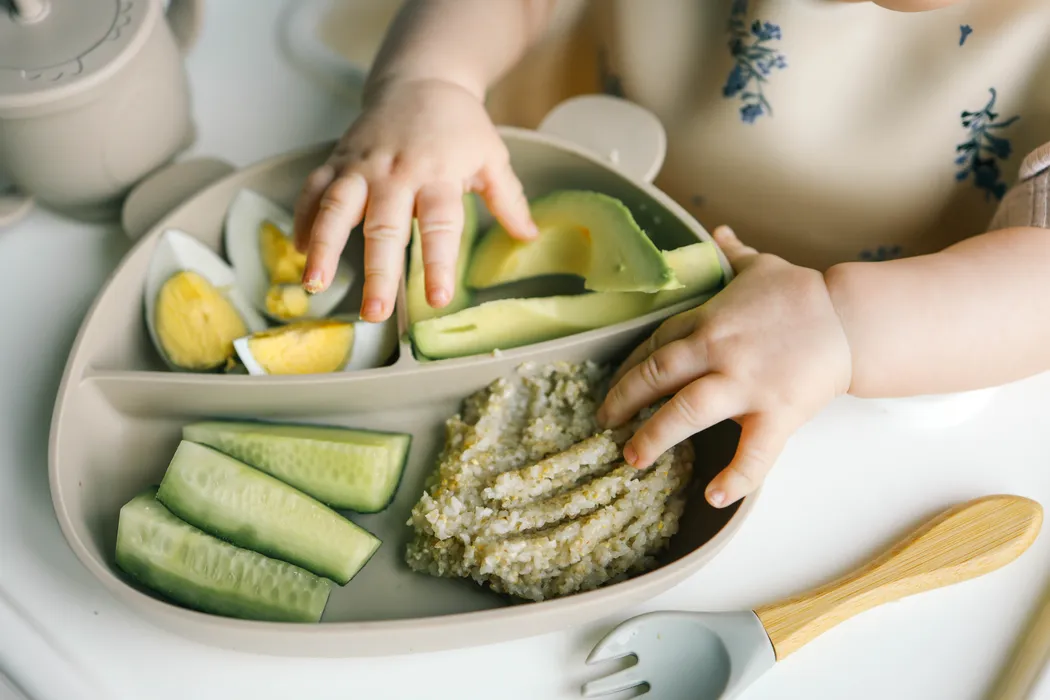
Nutritional Considerations: Iron, Allergens, and Growth Monitoring
A varied complementary diet helps your baby receive the nutrients needed for healthy growth and development.
Focus on Iron-Rich Foods
Iron is particularly important during the complementary feeding period. Offer iron-rich foods regularly, including meat, poultry, fish, eggs, beans, lentils and iron-fortified cereals.
Plant sources of iron can be combined with foods containing vitamin C, such as fruits and vegetables, which can help the body absorb iron.
Introduce Foods That May Cause Allergic Reactions
Foods that may cause allergic reactions can generally be introduced when complementary foods begin around 6 months. Delaying their introduction is not generally recommended as a way to prevent food allergy.
Common examples include egg, peanut and tree nuts, milk, wheat, soya, sesame, fish and shellfish.
Introduce these foods in safe forms and small amounts. Never give whole nuts to babies because they are a choking hazard. Smooth nut butter can be thinned or spread very thinly on suitable food.
When introducing a new food that may cause an allergic reaction, offering a small amount while your baby is well can make it easier to identify a reaction. Once a food is tolerated, continue offering it regularly as part of a varied diet.
Signs of a food allergy can include hives or a rash, swelling, vomiting, coughing or wheezing. Difficulty breathing or swelling of the tongue or throat can indicate a serious allergic reaction and requires emergency medical care.
If your baby has severe eczema, an existing food allergy or another condition that may increase the risk of a serious allergic reaction, speak to a paediatrician before introducing specific foods.
Monitor Growth Over Time
Your baby's growth is best assessed by looking at their overall growth pattern rather than focusing on a single weight or measurement.
Regular health visits can help monitor weight, length and development. Speak to your paediatrician if your baby consistently refuses food, eats very little, has difficulty swallowing, frequently vomits during feeds or is not gaining weight as expected.