logo
0

Baby Sunscreen: Safe Picks by Age for Newborns & Infants

Doctor-reviewed guide to choosing baby sunscreen by age, safe formulations for newborn skin, and application tips. Read expert advice from Apollo Pharmacy.

article image

Dr.Rohini priyanaka

Protecting your baby's skin from the sun feels straightforward until you are standing in a pharmacy aisle staring at dozens of options. Baby sunscreen choices matter more than many parents realise, because infant skin is thinner, absorbs chemicals more readily, and reacts far more easily than adult skin. Parents frequently ask whether sunscreen is safe for babies at all, and the honest answer depends heavily on age and formulation. Getting the right product at the right developmental stage can prevent painful burns, skin sensitisation, and unnecessary chemical exposure.

When Can Babies Start Using Sunscreen?

Paediatric guidelines are clear: sunscreen is generally not recommended for babies under 6 months of age. An infant's skin-to-body-weight ratio is high, which means topical products are absorbed systemically at a greater rate than in older children or adults. Chemical filter ingredients, in particular, have not been studied adequately in this age group.

For newborns and babies under 6 months, the first line of sun protection is always:

  • Shade, especially between 10 a.m. and 4 p.m. when UV is strongest
  • Lightweight, tightly woven full-sleeved clothing and full-length pants
  • A wide-brimmed hat that shades the face, neck, and ears
  • A pram or stroller canopy when outdoors

If brief, unavoidable sun exposure occurs and shade is impossible, a paediatrician may allow a small amount of mineral sunscreen on exposed areas such as the back of the hands or face. This is an exception, not the routine. Always ask your child's doctor before applying any product to a newborn's skin.

For a broader picture of caring for delicate newborn skin and umbilical care basics, Apollo's newborn care guide covers what to apply and what to avoid in the early weeks.

Choosing Age-Appropriate Formulations: 0 to 6 Months vs 6 Months and Beyond

The right sun-protection approach depends largely on your baby’s age, because infants under 6 months need a different strategy from older babies. The following age-based guidance explains when to prioritise physical protection and when a mineral sunscreen may be considered.

Under 6 Months: Physical Protection First 

At this stage, physical barriers are safer than any topical product. Clothing with an ultraviolet protection factor (UPF) rating of 50 or higher, hats, and shade do the job without any absorption risk. If your baby is premature or has a skin condition, consult your paediatrician before using anything beyond plain water.

6 Months and Older: Mineral Sunscreen for Babies 

Once your baby reaches 6 months, mineral sunscreen for babies becomes the recommended choice. Mineral sunscreens use zinc oxide or titanium dioxide as active ingredients. These sit on top of the skin and physically scatter UV rays rather than absorbing into it.

Why mineral over chemical?

  • Zinc oxide and titanium dioxide are not significantly absorbed through intact infant skin.
  • They are less likely to raise concerns about hormonal disruption compared to some chemical filter ingredients.
  • They work immediately on application, with no waiting period.
  • They tend to be gentler on sensitive skin.

Chemical sunscreens containing oxybenzone, avobenzone, or homosalate are better avoided in this age group. These filters absorb into the bloodstream to some extent, and their safety in infants has not been established.

The best sunscreen for infants at 6 months and older is a mineral-only formula with zinc oxide at roughly 10 to 25 percent concentration.

What to Look for on the Label?      

Label claimWhy it matters
SPF 30 to 50SPF 30 blocks around 97% of UVB rays; SPF 50 offers a small additional margin
Broad-spectrumProtects against both UVA (deeper damage) and UVB (burning) rays
Fragrance-freeFragrances are a common cause of contact dermatitis in babies
HypoallergenicReduces likelihood of sensitisation, though a patch test is still essential
Water-resistant (40 or 80 minutes)Important if your baby will be near water or sweating

Avoid products listing oxybenzone, octinoxate, retinyl palmitate, or added fragrances in the ingredients. There is no meaningful benefit to SPF ratings above 50 in everyday use, and very high numbers can create a false sense of extended protection.

Contraindications and When to Avoid Sunscreen

Sunscreen is not appropriate in every situation. Do not apply baby sunscreen if:

  • Your baby is under 6 months old, unless specifically directed by a paediatrician.
  • The skin has open wounds, broken skin, or an active eczema flare. Sunscreen on compromised skin can cause stinging, increased absorption, and sensitisation.
  • Your baby has a known allergy to zinc oxide, titanium dioxide, or any other listed ingredient.
  • The skin shows signs of an existing contact reaction or undiagnosed rash.

If your baby develops redness, blistering, hives, or swelling after sunscreen application, stop using the product immediately. For help with treating minor skin injuries or irritation, Apollo's skin care resource is a useful reference. Contact your doctor if any reaction persists or worsens.

Report adverse events to your healthcare provider or the relevant regulatory authority.

How to Apply Sunscreen Safely on Infant Skin?

Safe sunscreen use involves more than choosing the right formulation. Applying the product correctly and combining it with physical sun protection can help minimise irritation while providing more consistent protection for your baby’s exposed skin.

Patch test first. Apply a small amount to the inside of your baby's wrist or behind the ear and wait 24 hours. Watch for redness, itching, or raised bumps before proceeding to full application.

Apply generously before going outside. Mineral sunscreens work immediately, but applying a few minutes before stepping out allows the product to settle on the skin properly.

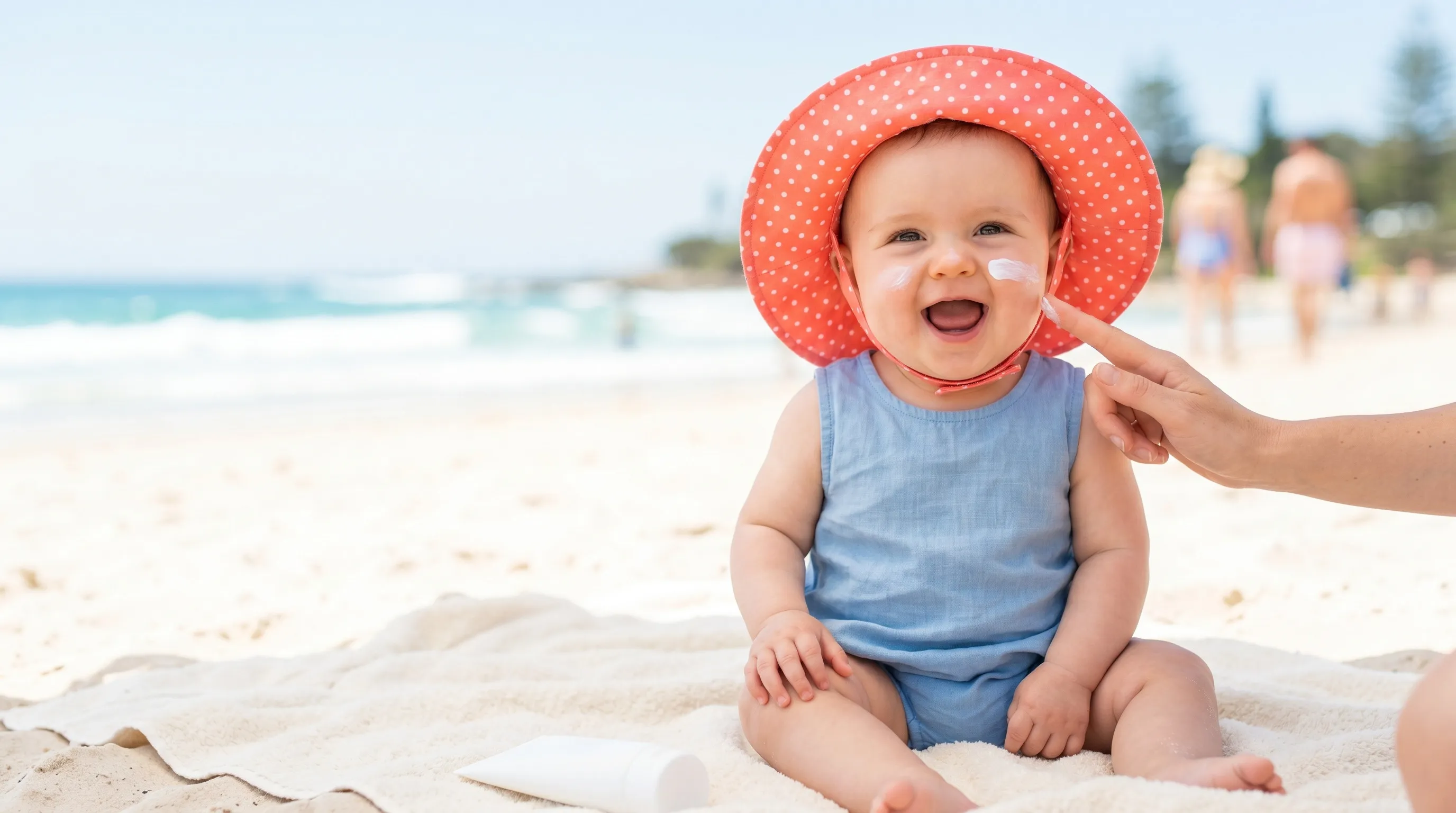
Cover all exposed areas carefully. On the face, apply to the cheeks, nose, forehead, and chin, avoiding the eye area and mouth. Use a soft fingertip rather than rubbing hard.

Reapply every 2 hours and immediately after swimming, towelling off, or heavy sweating, even if the product is labelled water-resistant.

Combine with other protection. Sunscreen is not a standalone solution. A wide-brimmed hat, UV-protective clothing, and shade remain essential, especially during peak sun hours.

Never apply sunscreen to eyelids, directly around the mouth, or to any area with broken skin.

Conclusion

Choosing a baby sunscreen is mainly about matching sun protection to your baby’s age and skin needs. Babies under 6 months should be protected primarily with shade, suitable clothing, and a hat, while babies aged 6 months and older can generally use a broad-spectrum, fragrance-free mineral sunscreen containing zinc oxide or titanium dioxide.

Regardless of the product chosen, sunscreen should complement rather than replace physical protection. Apply it carefully to exposed skin, reapply as needed, and avoid areas that are broken, irritated, or showing an unexplained rash. If your baby develops persistent redness, swelling, hives, or another reaction after using sunscreen, stop the product and consult a paediatrician or dermatologist.

FAQ

Can I use adult sunscreen on my baby?

Adult sunscreens often contain chemical filters, fragrances, and preservatives that are not suitable for infant skin. Always choose a sunscreen formulated specifically for babies, using mineral-only actives and no added fragrance.

How often should I reapply baby sunscreen?

Reapply every 2 hours during outdoor activity, and sooner if your baby has been in water or sweating heavily. Even water-resistant formulas lose effectiveness after repeated exposure.

Is spray sunscreen safe for infants?

Spray sunscreens are generally not recommended for babies. There is a risk of inhalation, and it is difficult to ensure even, adequate coverage on small, wriggling infants. A lotion or cream is easier to control and apply safely.

What is the best natural sunscreen for babies?

A mineral sunscreen for babies containing zinc oxide as the sole active ingredient is the closest option to a "natural" formulation that still provides reliable protection. Look for formulas that are fragrance-free, dye-free, and free from chemical UV filters.
Can sunscreen cause a rash on babies?

Yes. Contact dermatitis or a heat rash can occur, particularly if the formula contains fragrance, preservatives, or chemical filters. Always patch test a new product before full application, and stop use immediately if any skin reaction appears.

Apollo 247 Floating Action Button