logo
0

Baby Sunscreen: UV Protection for Sensitive Skin

Learn when babies can use sunscreen, how to pick safe formulas, and sun safety tips for newborns. Doctor-reviewed guidance from Apollo Pharmacy.

article image

Dr.Yusuf

Every parent knows that sinking feeling when a sunny outing turns into a red, irritated baby. Baby sunscreen matters because infant skin is still developing and early sun exposure can contribute to cumulative UV damage. Choosing the right protection and knowing when to use it can help prevent sunburn and reduce long-term skin damage risk.

Why Do Newborn Skin Need Special UV Protection?

A baby's skin is thinner and still developing its protective barrier. Research on infant skin physiology shows that infant skin has a thinner epidermis and stratum corneum than adult skin, although the degree of barrier difference varies with age and gestational maturity.

Newborns also have less developed skin pigmentation and are particularly vulnerable to sunburn. The American Academy of Pediatrics recommends keeping babies younger than 6 months out of direct sunlight and using shade and protective clothing as the primary forms of protection.

Key differences that make early skin especially vulnerable:

  • The outer skin layer, or stratum corneum, is thinner during infancy than in adulthood
  • Temperature regulation is immature, making overheating in the sun a real risk
  • The surface-area-to-body-weight ratio is relatively large in infants
  • Infant skin is still developing and may be more susceptible to irritation from some topical products

Because young infants are particularly vulnerable to both sunburn and heat, the approach to sun protection is deliberately different from that for older children.

When Can You Start Using Sunscreen on Babies?

The short answer: sun protection should begin from birth, but sunscreen is not the first line of protection for babies under 6 months.

The American Academy of Pediatrics recommends keeping babies younger than 6 months out of direct sunlight and using shade and protective clothing. If adequate shade and clothing are not available, sunscreen may be applied to small exposed areas, such as the face and backs of the hands. This means the commonly stated “no sunscreen before six months” rule is not absolute.

For babies under 6 months:

  • Keep them out of direct sunlight, particularly when UV levels are high
  • Use a pram canopy, shade tent, umbrella, or other suitable shade
  • Dress them in lightweight clothing that covers the arms and legs and use a wide-brimmed hat

For babies 6 months and older:

Sunscreen becomes a practical part of sun protection from six months onwards, but it should complement clothing and shade, not replace them. Parents can apply a broad-spectrum sunscreen to exposed areas such as the face and hands, taking care around the eyes and mouth.

Routine patch testing 24 hours before full application is not necessary for every baby. If your baby has sensitive skin, eczema, or a history of reactions to topical products, ask your paediatrician about the most suitable formulation and stop using a product if it causes irritation.

For a broader look at newborn care basics beyond skin protection, Apollo's newborn care guides cover common early-life questions.

How to Choose a Safe Baby Sunscreen?

When choosing the best sunscreen for infants, formulation and broad-spectrum protection matter more than the brand name.

Mineral vs Chemical Filters

Two broad categories of sunscreen filters exist:

  • Mineral filters: Zinc oxide and titanium dioxide are mineral sunscreen ingredients. The American Academy of Pediatrics recommends mineral-based sunscreens for babies because they are generally less irritating and are suitable for sensitive skin.
  • Chemical filters: These sunscreen ingredients absorb UV radiation. Some may cause irritation or sensitisation in susceptible individuals, but it is not accurate to assume that all chemical filters are unsuitable for babies or that they are necessarily absorbed into the bloodstream at harmful levels.

Mineral sunscreen can be a suitable starting point for babies, particularly those with sensitive skin. The most important considerations are broad-spectrum protection, appropriate SPF, tolerability and correct application.

What to Look For?

When choosing a sunscreen for your baby, consider the level of UV protection, formulation and how well your baby's skin tolerates the product.

  • SPF 30 or higher: The American Academy of Pediatrics recommends sunscreen with an SPF of at least 30 for children. SPF primarily indicates the level of protection against UVB-induced sunburn, so it should be combined with broad-spectrum labelling for UVA protection.
  • Broad-spectrum labelling: This indicates protection against both UVA and UVB radiation.
  • Fragrance-free formulas: These may be preferable for babies with sensitive skin because fragrances can cause irritation or allergic contact reactions.
  • Water resistance: This is useful for outdoor activities involving swimming or sweating, but no sunscreen is completely waterproof. Always follow the product's water-resistance instructions.
  • Zinc oxide or titanium dioxide: These are commonly used mineral sunscreen ingredients and may be particularly suitable for sensitive skin.

What to Avoid?

Alcohol-based sprays can sting sensitive skin. Aerosol sprays can also make it difficult to control how much product reaches the face and may create an inhalation risk. A cream, lotion or stick is generally easier to apply accurately to a baby.

Contraindications and When to Avoid Sunscreen Use

Even after six months, there are situations where a particular sunscreen may not be suitable.

Do not apply a sunscreen product:

  • To open cuts, sores, or significantly damaged skin unless a healthcare professional advises it. For context on treating minor skin injuries in children, see this Apollo guide.
  • If your baby has previously reacted to an ingredient in that product
  • Around the eyes or mouth where the product could easily be rubbed or swallowed
  • To any area where the product causes persistent irritation

A baby with eczema or another skin condition may still need sun protection, but the choice of sunscreen should be discussed with a healthcare professional if the skin is actively inflamed or highly sensitive.

If a reaction occurs after applying sunscreen, gently remove the product and stop using it. Seek medical advice if your baby develops significant swelling, widespread hives, breathing difficulty, or a severe or persistent rash.

Application Tips and Sun Safety Guidelines

Knowing when babies can wear sunscreen is only part of the picture. How you apply it matters just as much.

Application Method

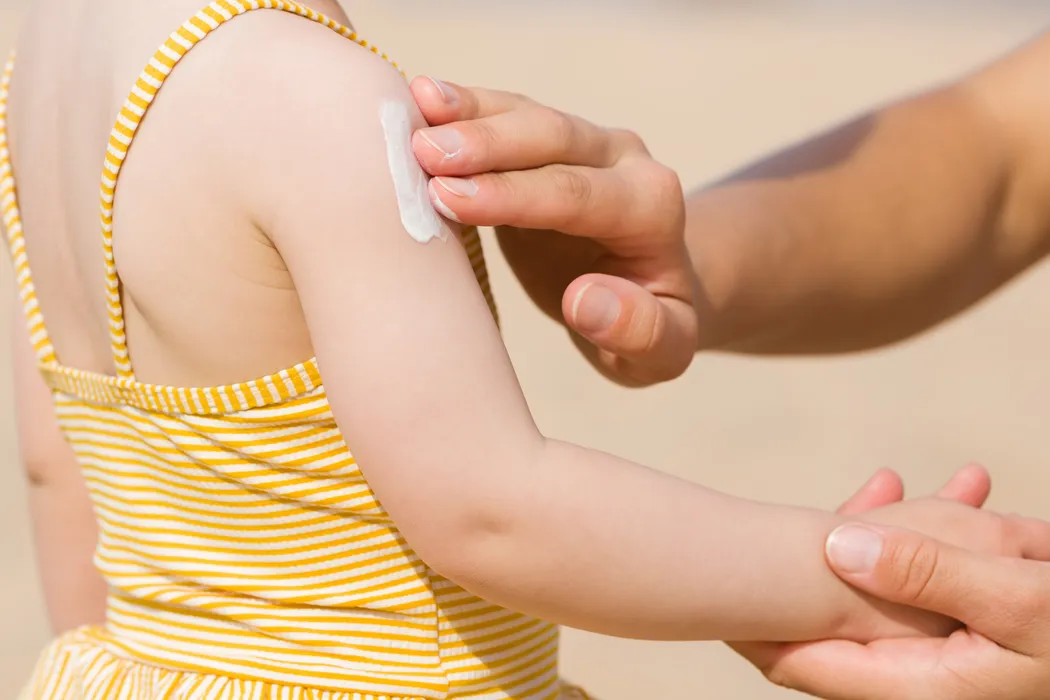
Apply sunscreen carefully to exposed skin, while continuing to prioritise shade and protective clothing.

  • Apply sunscreen about 15 to 30 minutes before going outside if this is recommended by the product instructions. The American Academy of Pediatrics also advises applying sunscreen before outdoor exposure.
  • Use enough product to cover all exposed areas adequately. A thin smear may not provide the SPF stated on the label. Avoid the eyes and mouth.
  • Blend thoroughly according to the product instructions. Mineral formulas can leave a white cast, particularly on darker skin tones.

Reapplication and Timing

Reapply sunscreen about every two hours, and after swimming, sweating or towelling dry, following the product instructions. The American Academy of Pediatrics recommends reapplying every two hours and after swimming, sweating or drying with a towel.
Try to schedule outdoor time when UV exposure is lower and seek shade during peak UV hours. The American Academy of Pediatrics identifies roughly 10 am to 4 pm as a period when UV rays are particularly strong. Shade and protective clothing remain important throughout the day.

Other practical steps:

  • Wide-brimmed hats protect the face, ears, and back of the neck
  • UV-protective clothing can reduce the total skin area needing sunscreen coverage
  • Keep babies comfortable and well hydrated in hot weather, and watch for signs of overheating

These baby sun protection tips apply throughout childhood, not just in the infant stage.

Conclusion

Protecting a baby's skin from UV exposure starts with shade, protective clothing and avoiding direct sunlight, particularly during the first six months. For babies 6 months and older, a broad-spectrum sunscreen with an SPF of at least 30 can be added to exposed areas as part of a wider sun-protection routine. Choosing a suitable formulation, applying enough product and reapplying it as directed can help reduce the risk of sunburn and cumulative UV damage.

FAQs

Is sunscreen safe for babies?

Babies younger than 6 months should primarily be protected with shade and clothing rather than routine sunscreen use. If adequate shade and protective clothing are unavailable, the American Academy of Pediatrics says sunscreen may be used on small exposed areas. For babies 6 months and older, sunscreen can be used as part of a broader sun-protection routine.

What SPF is best for babies?

The American Academy of Pediatrics recommends sunscreen with an SPF of at least 30 for children. Choose a broad-spectrum product so that it provides protection against both UVA and UVB radiation.

Can I use adult sunscreen on my baby?

Adult sunscreen is not automatically unsuitable for babies, but products formulated for sensitive skin may be easier for infants to tolerate. A fragrance-free, broad-spectrum sunscreen containing zinc oxide or titanium dioxide can be a suitable option, particularly for babies with sensitive skin.

How do I protect my newborn from sun without sunscreen?

Keep newborns in shade using a pram canopy, umbrella, or other suitable shade. Dress them in lightweight clothing that covers the arms and legs and use a wide-brimmed hat. Avoid direct sunlight and take particular care during periods of strong UV exposure.

What are signs of sunscreen allergy in babies?

Watch for redness, itching, hives, swelling, or a persistent rash after applying sunscreen. Stop using the product and seek medical advice if a reaction occurs, particularly if there is significant swelling or any difficulty breathing.

Apollo 247 Floating Action Button