logo
0

How Much Weight Should a Newborn Gain in a Month?

Learn how much weight newborns typically gain, normal weight loss after birth, feeding factors, signs of poor weight gain and when to see a paediatrician.

article image

Dr.Kamran

Knowing how much weight a newborn should gain in a month is one of the first things new parents worry about, and for good reason. Weight gain is the clearest early signal that a baby is feeding well, absorbing nutrients, and growing as expected. Understanding what is normal and what warrants a call to your paediatrician can help you feel more confident in those early weeks.

How Much Weight Gain Is Normal in the First Month?

After the initial dip in the first few days, most newborns gain roughly 150 to 200 grams per week once feeding is established. Over a full month, that adds up to about 600 to 900 grams above birth weight by four weeks.

Newborn weight gain per week can vary slightly from baby to baby, but the 150 to 200 gram range is the benchmark most paediatricians use. By the end of the first month, many babies weigh somewhere between 3.5 and 4.5 kg, depending on their starting point.

Key markers for normal weight gain for newborn babies in the first month:

  • Birth weight regained by day 10 to 14
  • Steady weekly gain of 150 to 200 g from week 2 onward
  • Doubling of birth weight expected around 4 to 5 months, not in the first month

Growth charts used by your paediatrician will help put these numbers in context against your baby's own curve over time, which matters more than any single reading.

Why Newborns Lose Weight Before They Gain?

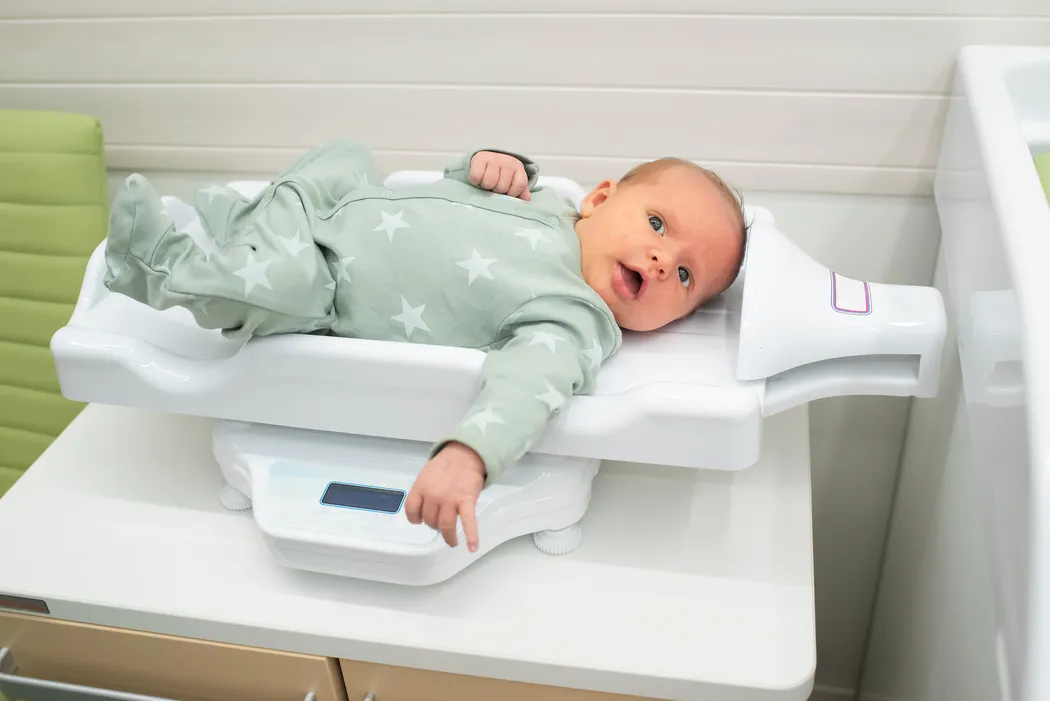
Almost every newborn loses weight in the first few days, and this is completely normal. Babies are born with extra fluid and pass it through urine and stool while feeding gets established. This newborn weight loss after birth typically amounts to 5 to 10% of birth weight.

For example, a baby born at 3 kg may drop to around 2.7 to 2.85 kg by day 3 to 5. This can look alarming on the scale, but it does not mean anything is wrong with feeding.

Most babies regain their birth weight by day 10 to 14. Babies born by caesarean section may take slightly longer because extra IV fluids given during delivery can inflate the recorded birth weight. If your baby has not returned to birth weight by two weeks, that is worth discussing with your doctor promptly.
How Feeding Type and Other Factors Affect Weight Gain?

Average baby weight gain in the first month is not identical for every infant. Several things influence the pace:

  • Feeding type: Breastfed babies and formula-fed babies often follow slightly different curves in early weeks. Breastfed newborns may gain a little more slowly at first while milk supply is being established, then catch up fully once feeding is well underway.
  • Latch and feeding frequency: A poor latch or infrequent feeds directly reduces milk transfer, which slows weight gain regardless of how much milk the mother produces.
  • Prematurity: Preterm babies have different growth expectations and are tracked on specialist charts. They often have a longer initial weight loss phase and slower early gain.
  • Illness or infection: Even a mild illness can suppress appetite and slow weight gain temporarily.
  • Genetics: Smaller parents tend to have smaller babies, and birth weight plus early gain are partly heritable.

Breastfeeding absolutely can support healthy newborn weight gain, but feeding frequently matters. Most newborns need 8 to 12 feeds in 24 hours during the first month. If feeding feels painful, your baby seems unsatisfied after most feeds, or is very sleepy and hard to rouse, those are signals worth discussing with a lactation consultant or your paediatrician sooner rather than later.

Signs Your Newborn Is Not Gaining Enough Weight

Recognising the signs of poor weight gain in infants early gives you the best chance to correct the problem quickly. Watch for:

  • Fewer than 6 wet diapers per day after day 4 to 5, which suggests inadequate fluid intake
  • Very infrequent or absent stools in the first few weeks
  • Persistent lethargy, difficulty waking for feeds, or noticeably weak sucking
  • Baby seems unsatisfied after most feeds and cries frequently.
  • No measurable weight change over two weeks
  • Skin that looks loose, or a fontanelle (soft spot on the head) that appears sunken

A newborn not gaining weight over two or more consecutive weeks needs prompt review. Signs of poor weight gain in infants can reflect a feeding technique issue, a supply problem, or occasionally an underlying medical condition, all of which are easier to address when caught early.

When to Consult a Paediatrician About Newborn Weight Gain?

How much weight a newborn should gain in a month is not always a question parents can answer by observation alone. Contact your paediatrician promptly if:

  • Your baby has not regained birth weight by 14 days.
  • Weight is not increasing at two consecutive checks.
  • You notice the red flags listed above.
  • Breastfeeding feels painful, or your baby struggles consistently at the breast.
  • Your baby is very sleepy and difficult to rouse for feeds

Most paediatricians schedule a weight check around day 5, again at two weeks, and then at one month. If you are worried between appointments, do not wait for the next scheduled visit. A simple weight check at a clinic can provide immediate reassurance or identify a problem early.

This article offers general guidance and is not a substitute for a clinical assessment. Only a healthcare professional examining your baby can determine whether growth is truly on track.

Contraindications and Precautions for Weight-Related Interventions

Never start any supplement, herbal product, additional formula, or dietary change for your newborn without discussing it with your paediatrician first.

Specific situations where extra caution applies:

  • Adding formula top-ups without guidance can reduce breastfeeding frequency and affect milk supply in ways that are hard to reverse.
  • Vitamin or mineral supplements for newborns are only recommended when a doctor identifies a clear clinical need.
  • "Appetite stimulants" or home remedies have no proven benefit in newborns and may carry real risks.
  • If your baby has a diagnosed condition affecting feeding or absorption, any change to feeding must be directed by your care team.

Report adverse events to your healthcare provider or the relevant regulatory authority.

Conclusion

Newborns normally lose some weight during the first few days after birth before beginning to gain steadily. Most babies regain their birth weight within the first 2 to 3 weeks, although the exact rate of gain varies between babies. Regular feeding, adequate wet nappies and tracking growth on an appropriate growth chart can help assess whether your baby is growing well. If your baby is not regaining birth weight, is feeding poorly, is unusually sleepy or has other concerning symptoms, speak with a paediatrician or healthcare professional.

FAQS

How much weight should a newborn gain in the first month?

After regaining birth weight by around day 10 to 14, most newborns gain 150 to 200 grams per week, reaching roughly 600 to 900 grams above birth weight by four weeks. Individual variation is normal, so your paediatrician will assess gain alongside your baby's overall growth curve.

Is it normal for a newborn to lose weight after birth?

Yes. Newborn weight loss after birth of 5 to 10% of birth weight in the first three to five days is expected and is not a sign of a feeding problem. Most babies regain this weight and return to their birth weight by day 10 to 14.

What if my breastfed baby is not gaining weight fast enough?

Check feeding frequency (aim for 8 to 12 feeds per 24 hours) and consult a lactation consultant to assess latch and milk transfer. If weight gain remains slow after two weeks, your paediatrician may recommend a supplementary feeding plan.

How often should a newborn be weighed in the first month?

A weight check around day 5, at two weeks, and at one month is standard. If your baby was premature, had a low birth weight, or if there are feeding concerns, your doctor may schedule more frequent checks.

Can overfeeding cause too much weight gain in newborns?

Significant overfeeding is uncommon in breastfed babies because they regulate intake well. With formula feeding, consistently offering more than the baby needs can lead to faster than expected weight gain, so follow your pediatrician's guidance on feed volumes.

Apollo 247 Floating Action Button