What Factors Affect a Newborn's Weight Gain?
Your baby's growth can vary because of several factors. Your paediatrician considers these factors when assessing weight gain.
Feeding
How well your baby feeds and takes in milk has an important role in early growth. Breastfed newborns commonly feed frequently, often around 8 to 12 times in 24 hours. Your baby's feeding pattern can vary, so look at feeding alongside weight, wet diapers and your baby's behaviour.
If breastfeeding is painful, your baby struggles to latch, feeds poorly or seems unusually sleepy during feeds, seek help from your paediatrician, midwife or lactation professional.
If you use infant formula, prepare it exactly according to the manufacturer's instructions. Do not add extra powder or dilute the formula to change your baby's weight gain.
Birth weight
Your baby's birth weight provides a starting point for monitoring growth. However, you do not need to compare your baby's weekly weight gain with another baby's.
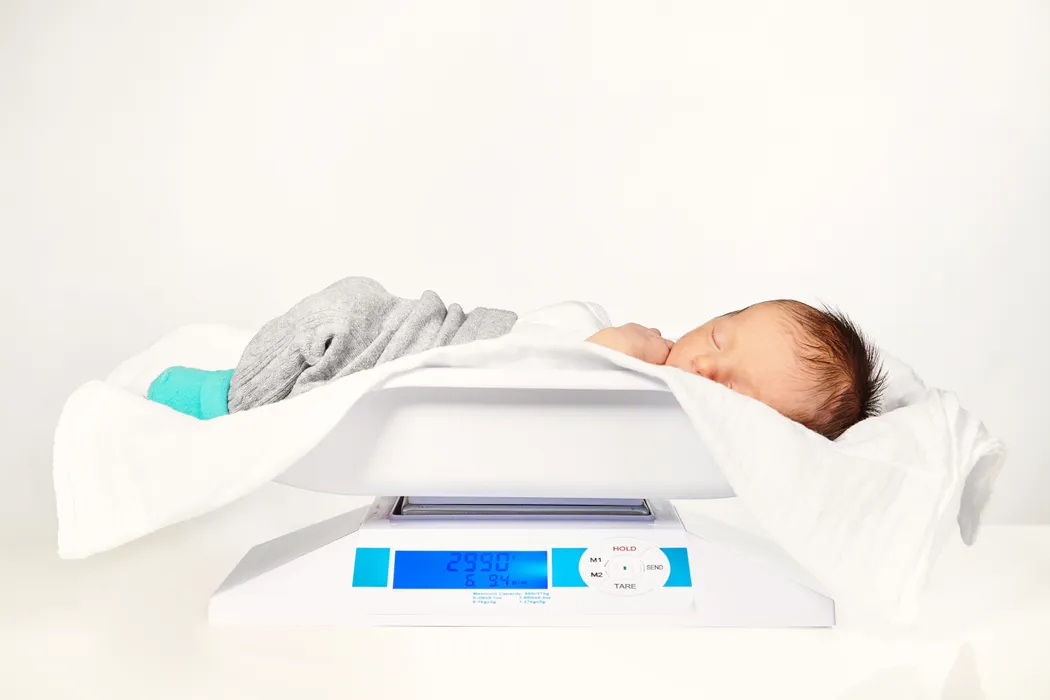
Your paediatrician will plot your baby's measurements on a growth chart and assess how the weight changes over time. WHO growth standards include weight-for-age and weight-velocity standards for monitoring growth.
Prematurity
Babies born prematurely may follow a different growth pattern from babies born at term. Your paediatrician may use corrected age and a growth chart designed for premature babies when assessing growth.
If your baby was born prematurely or had a low birth weight, follow the growth-monitoring plan recommended by your healthcare team rather than comparing your baby's weight with term newborns.
Other factors
Feeding difficulties, poor latch, jaundice, tongue-tie, illness and other medical conditions can affect weight gain.
If your baby is not feeding well or is not gaining weight as expected, your paediatrician can assess the possible cause and recommend appropriate support.