logo
0

Best Baby Shampoo for Newborn Scalp and Hair Care

Learn how to choose a gentle baby shampoo for newborn scalp and hair care, including ingredients to look for and avoid, washing tips, cradle cap care and when to seek medical advice.

article image

Dr.Nallapu Siri

Choosing a baby shampoo can feel confusing when products make different claims about being gentle, natural, tear-free or suitable for sensitive skin. Newborn skin is delicate, so choosing a mild shampoo and using it correctly can help keep the scalp clean without causing unnecessary dryness or irritation.

This guide explains what to look for in a baby shampoo, which ingredients may irritate sensitive skin, how to choose a product for your baby's needs and how to wash newborn hair safely.

What Makes a Baby Shampoo Safe for Newborns?

A suitable baby shampoo should clean the scalp gently without leaving it feeling dry, tight or irritated. For most newborns, a simple hair-care routine with a mild baby shampoo when needed is enough.

Formulation basics to look for:

  • Mild cleansing formula: Choose a shampoo designed specifically for babies. Some cleansing agents can be drying or irritating, particularly when used frequently.
  • Fragrance-free: Fragrance can irritate sensitive skin and may trigger reactions in some babies. Fragrance-free is preferable to simply "unscented", as an unscented product may still contain fragrance used to mask other smells.
  • Gentle around the eyes: A shampoo labelled "tear-free" may be formulated to reduce eye discomfort, but it can still irritate the eyes. Keep shampoo away from the eyes and rinse promptly if it gets in.
  • Clear ingredient labelling: Check the full ingredient list, particularly if your baby has sensitive skin or has reacted to a skincare product before.
  • Baby-specific instructions: Follow the manufacturer's directions for the amount and frequency of use.

Claims such as "natural", "hypoallergenic", "dermatologist-tested" or "paediatrician-tested" do not guarantee that a shampoo will suit your baby's skin. Focus on the formulation, any known sensitivities and how your baby's skin responds.

Ingredients to Avoid

Some ingredients can irritate sensitive skin or cause an allergic reaction in susceptible babies. A simple, fragrance-free product can help reduce exposure to potential irritants.

  • Fragrance or parfum: Fragrance can irritate sensitive skin and may trigger allergic reactions.
  • Strong or drying cleansing agents: Some surfactants can remove too much of the skin's natural oil and leave the scalp dry or tight. More lather does not necessarily mean better cleansing.
  • Dyes: Colour is not needed for cleansing, so a dye-free product can be a simple option for sensitive skin.
  • Known allergens: If your baby has previously reacted to a particular ingredient, check the label carefully and avoid the known trigger.
  • Essential oils: Concentrated essential oils can irritate sensitive skin and are unnecessary for routine newborn hair care.

Preservatives are commonly used in water-based shampoos to prevent microbial contamination. Their presence does not automatically make a product unsafe. If your baby has a known sensitivity to a particular preservative, discuss the ingredient with your doctor or pharmacist.

Is Adult Shampoo Safe for Babies?

Adult shampoo is not the preferred choice for newborns. It may contain fragrances, cleansing agents or other ingredients that can be drying or irritating to delicate infant skin.

Use a mild shampoo formulated for babies when shampoo is needed. If you accidentally use a small amount of adult shampoo, rinse your baby's hair thoroughly and watch for irritation. Consult your doctor if your baby develops persistent redness, swelling or another concerning reaction.

How to Choose the Best Baby Shampoo for Your Newborn

Once you know what makes a shampoo gentle, choosing a product becomes easier. Read the label carefully and consider your baby's skin rather than choosing a product based only on marketing claims.

Buying checklist:

  • Choose fragrance-free: This is particularly useful if your baby has sensitive or eczema-prone skin.
  • Check the ingredient list: Look for known allergens or ingredients that have caused a reaction in your baby before.
  • Consider a mild, soap-free cleanser: This can be a suitable option for babies with dry or sensitive skin.
  • Do not rely on "natural" claims: Natural or herbal ingredients can still irritate the skin or cause an allergic reaction.
  • Consider buying a smaller pack first: This can be useful when trying a new product until you know that your baby's skin tolerates it.
  • Introduce one new product at a time: This makes it easier to identify a possible cause if your baby develops irritation.

If your baby has eczema or very sensitive skin, ask your doctor or pharmacist about suitable skincare products. Keeping the routine simple and using mild, fragrance-free products can help minimise irritation.

What About Cradle Cap?

Cradle cap, also called infantile seborrhoeic dermatitis, causes greasy or scaly patches on a baby's scalp. It is common and usually harmless, and it often clears on its own.

For mild cradle cap, gently washing the hair with an unperfumed baby shampoo and using a soft brush to loosen scales can help. If the scales are firmly attached, a small amount of an appropriate emollient or coconut oil can be gently massaged onto the scalp before washing. Do not pick or scrape the scales, as this can damage the skin.

Avoid olive oil, peanut oil, soap, adult shampoos and fragranced products when caring for cradle cap. If the condition is widespread, swollen, bleeding, leaking fluid or not improving after a few weeks, consult your doctor.

A medicated cradle-cap shampoo may sometimes be recommended when simple measures are not enough. Do not choose or use a medicated product for a newborn without appropriate medical advice.

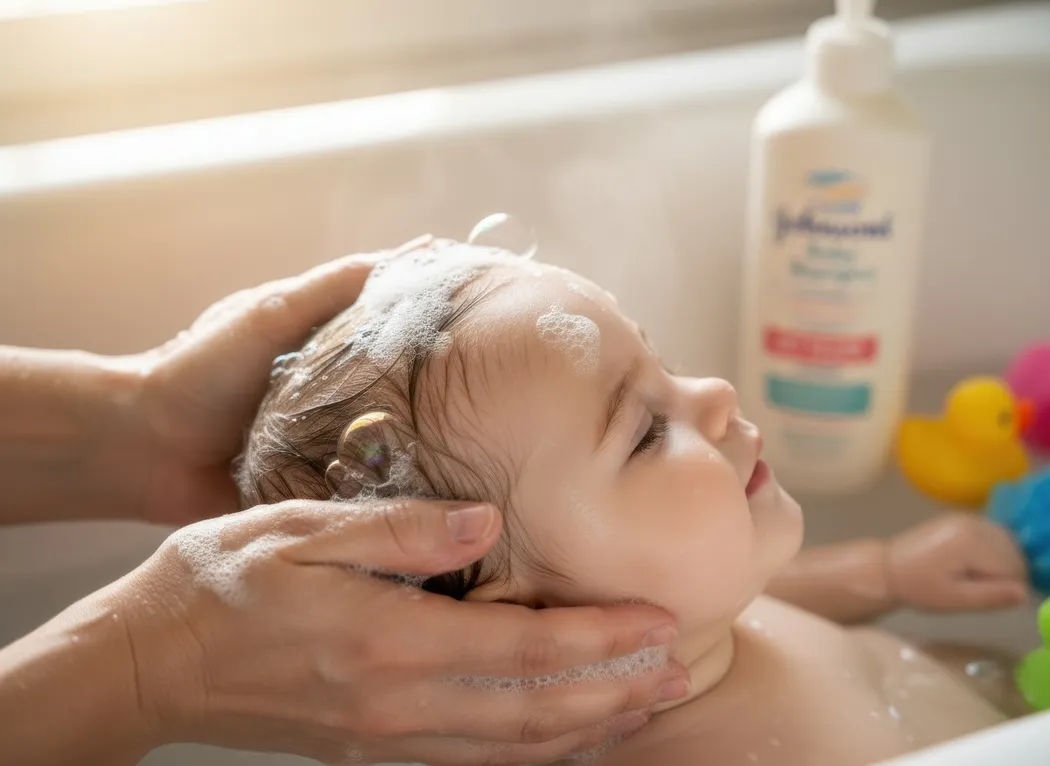
Step-by-Step: Washing Your Newborn's Hair Safely

A gentle routine can make hair washing more comfortable for you and your baby while reducing the chance of irritation.

  • Prepare everything first: Keep the towel, clean clothes, shampoo and other bathing supplies within reach before you begin.
  • Use warm water: The water should feel warm rather than hot. Test it with your wrist or elbow before bathing your baby.
  • Support your baby's head and neck: Keep your baby's head supported throughout the wash.
  • Wet the scalp gently: Use your hand or a small cup to wet the hair and scalp.
  • Apply a small amount of shampoo: Use enough to cleanse the scalp without excessive lather. Massage gently with your fingertips rather than rubbing vigorously.
  • Rinse thoroughly: Keep shampoo away from your baby's eyes and face as much as possible. Rinse carefully until all the shampoo has been removed.
  • Dry gently: Wrap your baby in a soft towel and pat the scalp and hair dry. Avoid vigorous rubbing.

Never leave your baby unattended during bathing, even for a moment. Prepare everything you need before placing your baby in the bath.

How Often Should You Wash Your Newborn's Hair?

Newborn hair does not usually need to be shampooed every day. Washing the hair once or twice a week is generally enough for routine care. Plain warm water can be used during other baths.

If your baby's hair or scalp becomes visibly dirty, you can wash it as needed. Babies with cradle cap may need more frequent shampooing for a short period to help loosen the scales.

If shampooing leaves your baby's scalp dry or irritated, reduce how often you use it and consult your healthcare professional if the problem continues.

When to Consult a Doctor About Scalp or Hair Issues

Most newborn scalp concerns can be managed with gentle care, but some symptoms need medical assessment.

Contact your doctor if you notice:

  • Cradle cap that spreads: Especially if the rash extends beyond the scalp or becomes widespread.
    Swelling, bleeding or leaking fluid: These may indicate infection or another skin condition.
  • Significant redness or irritation: Particularly if it continues after stopping a suspected skincare product.
  • Persistent itching or discomfort: Significant scratching or apparent discomfort should be assessed.
  • Patchy or unusual hair loss: Some hair may come away with cradle-cap scales, but persistent or unusual hair loss needs assessment.
  • A rash after using a new product: Stop using the suspected product and seek advice if the reaction persists or is severe.
  • Cradle cap that does not improve: Consult your doctor if it has not improved after a few weeks of gentle care.

Consult your doctor right away if your baby develops swelling of the face or lips, difficulty breathing or other signs of a severe allergic reaction.

Contraindications and Precautions

Some babies may need additional care when choosing or using a shampoo.

When to be extra cautious:

  • Sensitive or eczema-prone skin: Choose a mild, fragrance-free shampoo and avoid known triggers. If your baby's eczema is difficult to control, ask your doctor about suitable skincare products.
  • Known ingredient allergy: Avoid products containing an ingredient that has previously caused a confirmed reaction. Check the full ingredient list before trying a new shampoo.
  • Irritated or broken scalp skin: Avoid vigorous rubbing and products that sting or irritate the affected area. If the scalp is significantly damaged, oozing or appears infected, consult your doctor.
  • Medicated shampoos: Do not use medicated shampoos containing ingredients such as antifungals, salicylic acid or coal tar on a newborn unless specifically recommended by your doctor.
  • Essential oils: Avoid adding concentrated essential oils such as tea tree, eucalyptus or peppermint oil to your baby's shampoo or applying them directly to the scalp.
  • Premature or medically fragile babies: Follow the skincare and bathing advice provided by your neonatal or paediatric team.

If you notice redness, swelling, hives, persistent irritation or unusual distress during or after shampooing, stop using the product and seek medical advice.

If you suspect that a baby-care product has caused an adverse reaction, stop using the product and inform your healthcare professional. You can also report suspected adverse reactions through the appropriate pharmacovigilance reporting system or regulatory authority available in your region.

Conclusion

Choosing a baby shampoo does not need to be complicated. Look for a mild, fragrance-free product designed for babies, check the ingredient list and use the shampoo only when needed. If your baby has sensitive or eczema-prone skin, keeping the skincare routine simple can help minimise irritation.

Newborn hair usually needs only gentle, occasional washing. Keep shampoo away from the eyes, rinse it thoroughly and avoid vigorous rubbing of the scalp. If your baby develops persistent irritation, significant swelling, unusual hair loss or cradle cap that does not improve with gentle care, consult your doctor.

FAQS

What is the best baby shampoo for newborns in India?

Choose a mild, fragrance-free shampoo designed for babies. Check the ingredient list for known allergens or ingredients that have previously caused a reaction. If your baby has eczema, very sensitive skin or a persistent scalp problem, ask your doctor or pharmacist which type of shampoo is suitable.

Can I use normal shampoo on my baby?

It is better to use a mild shampoo formulated specifically for babies. Adult shampoos may contain cleansing agents, fragrances or other ingredients that can be drying or irritating to delicate infant skin. If you accidentally use adult shampoo once, rinse it thoroughly and watch for any reaction.
How often should newborns get their hair washed?

Most newborns do not need shampoo every day. Washing the hair once or twice a week is generally enough for routine care, although you can wash it when it becomes visibly dirty. Plain warm water can be used during other baths.

Does baby shampoo help with cradle cap?

Gentle washing with an unperfumed baby shampoo can help loosen and remove cradle-cap scales. A soft brush can also be used gently to remove loose scales. Do not pick or scrape the scales. Consult your doctor if cradle cap is widespread, swollen, bleeding, leaking fluid or does not improve after a few weeks.

Is tear-free shampoo actually safer for eyes?

"Tear-free" generally means that a shampoo has been formulated to reduce eye discomfort, but it does not mean that the product cannot irritate the eyes. Keep shampoo away from your baby's eyes and rinse promptly with clean water if it gets into them.

Apollo 247 Floating Action Button