logo
0

Best Baby Soap for Newborns: Safety & Gentleness Guide

Compare top baby soaps for newborn skin safety. Ingredients to avoid, pH tips, dermatologist-reviewed picks, and precautions before you buy.

article image

Dr.Mayank

Choosing the right baby soap is one of the first decisions new parents face, and it matters more than many realise. Newborn skin is not simply smaller adult skin; it is structurally different, far more vulnerable to irritants, and requires a product chosen with genuine care. This guide brings together dermatology-informed guidance to help you pick a soap or body wash that protects your baby while keeping them clean.

Why Newborn Skin Needs Special Soap?

A newborn's skin is roughly 20 to 30 per cent thinner than adult skin. The outermost layer, called the stratum corneum, is still maturing in the weeks after birth, which means moisture escapes faster and irritants penetrate more easily.

Adult skin sits at a mildly acidic pH of around 4.5 to 5.5. Newborn skin starts closer to neutral (pH 7) at birth and gradually acidifies over the first few weeks of life. This "acid mantle" is a protective barrier against bacteria and fungi. Using regular adult soap on a baby disrupts this fragile system because most adult soaps are alkaline enough to strip that barrier entirely.

Even products marketed as "gentle" for adults may contain fragrances, preservatives, or sulfates that mature skin tolerates but newborn skin cannot. This is why soap for newborn skin must meet a different standard altogether.

What to Look for in a Baby Soap or Body Wash?

When reading a label for the best soap for newborn baby use, four properties matter most:

  • A pH between 5.5 and 7.0 to avoid disturbing the developing acid mantle.
  • A tear-free formulation that will not sting delicate eyes.
  • Fragrance-free or containing only minimal, clinically tested fragrance, since synthetic scents are among the most common causes of skin sensitisation in infants.
  • Hypoallergenic testing, indicating the product was assessed for common allergen triggers.

A pH-balanced baby soap is especially important in the first three months. Some baby body wash for sensitive skin products carry dermatologist-tested or paediatrician-approved labels. These are not legal guarantees, but they do indicate the manufacturer submitted the product for professional review.

Moisturising ingredients such as glycerin or colloidal oatmeal are helpful additions for babies showing early signs of dryness or eczema-prone tendencies.

Baby Soap Ingredients to Avoid

Knowing which baby soap ingredients to avoid is just as important as knowing what to look for. The following are commonly found in adult or low-quality baby products and should be skipped:

  • Sodium lauryl sulfate (SLS) and sodium laureth sulfate (SLES) are harsh foaming agents that strip natural oils and worsen dryness.
  • Parabens (methylparaben, propylparaben) are preservatives flagged for potential hormonal effects; most paediatricians advise choosing paraben-free products for newborns.
  • Synthetic fragrance listed as "parfum" or "fragrance" can contain dozens of undisclosed chemicals, several of which are known sensitisers.
  • Artificial dyes (FD&C or D&C colours on the label) add no benefit and increase the risk of skin irritation.
  • Formaldehyde-releasing preservatives such as DMDM hydantoin or quaternium-15, found in some older formulations, can trigger contact dermatitis.

A chemical-free baby soap, or one that avoids all of the above categories, is generally the safest starting point for healthy newborns.

Categories of Baby Soap and Body Wash Formats

Rather than ranking specific brands, it is more useful to understand the main product formats so you can apply these criteria to whatever is available to you.

Syndet Bars

Syndet (synthetic detergent) bars look like traditional soap but are formulated to be pH-neutral. They clean effectively without the alkalinity of regular soap, making them one of the most dermatologist-recommended formats for infant skin. They lather mildly, rinse cleanly, and are far less likely to disturb the developing acid mantle than conventional bar soap.

Herbal and Plant-Based Washes

Products featuring ingredients like calendula, chamomile, or aloe vera are popular with parents seeking a more natural option. These can be gentle, but "natural" does not automatically mean non-allergenic. Always check that a herbal baby wash is still fragrance-free and pH-appropriate. Some plant extracts are mildly photosensitising or irritating in concentrated form.

Liquid Baby Body Wash for Sensitive Skin

Liquid formats are often easier to dispense in controlled amounts and are less likely to harbour bacteria between uses compared to a shared bar. For baby body wash for sensitive skin in particular, look for a soap-free, surfactant-mild liquid that specifies a low pH and lists no dyes or added fragrance. These are widely available at pharmacies and are a practical choice for most families.

Medicated Baby Soaps

Medicated washes containing antifungal or antibacterial agents are sometimes recommended by paediatricians for specific conditions such as cradle cap or neonatal skin infections. These should only be used under medical guidance and are not appropriate for routine bathing of a healthy newborn.

How to Bathe a Newborn Safely?

Bathing does not need to be complicated, but a consistent routine reduces the risk of skin irritation.

  • Keep water temperature lukewarm, ideally 37 to 38 degrees Celsius. Check with your elbow or a bath thermometer.
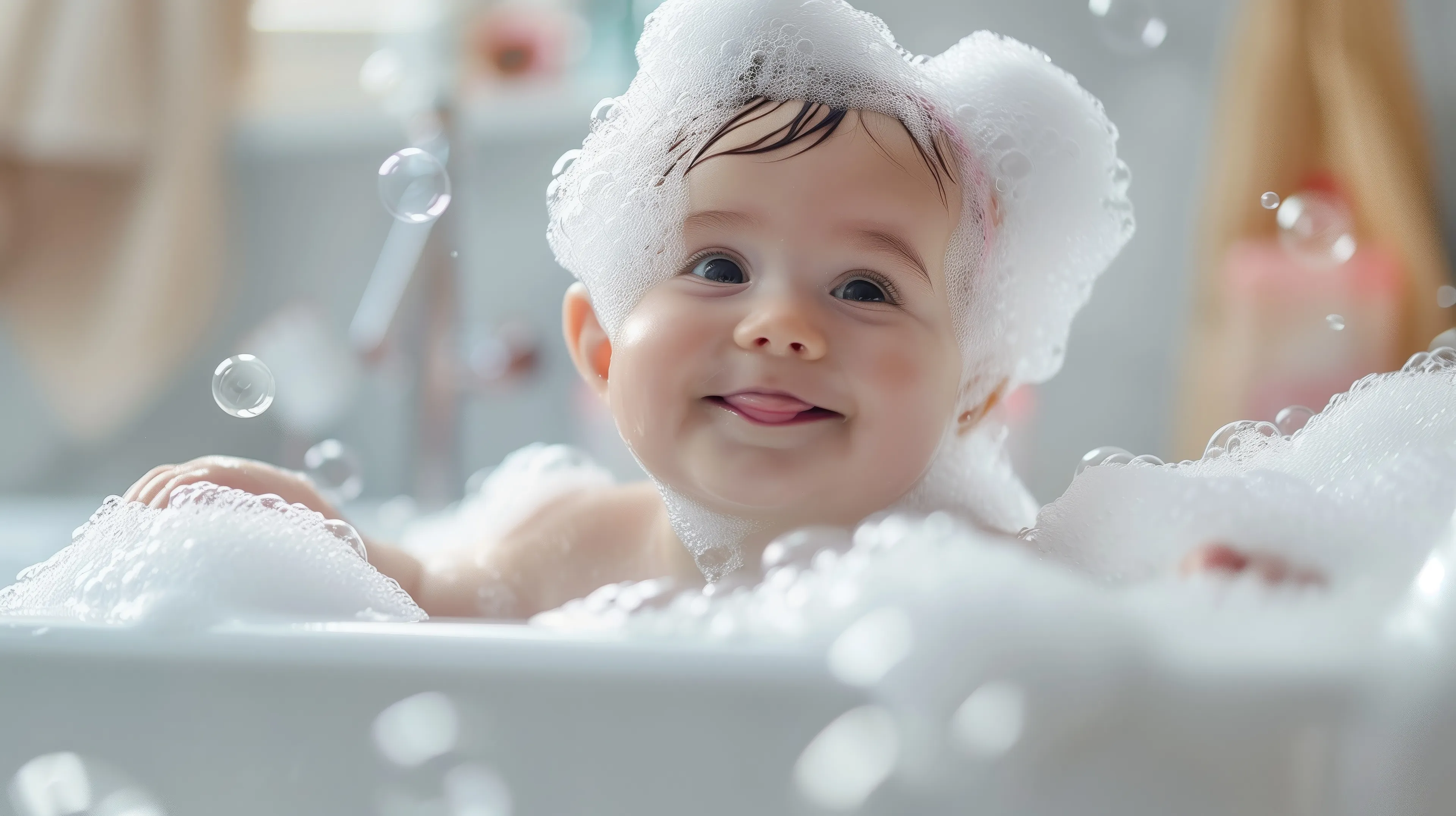
  • Limit baths to two to three times per week in the first month. Daily bathing tends to worsen dryness in newborns.
  • Use a pea-sized drop of baby soap or liquid wash. More product does not mean cleaner skin.
  • Avoid soaking the umbilical cord stump. Sponge-bathe your baby until the cord falls off, usually within one to three weeks. For detailed guidance on keeping that area clean and infection-free, read how to care for your newborn's belly button during bathing.
  • Pat the skin dry gently with a soft towel rather than rubbing.
    Apply a fragrance-free baby moisturiser immediately after drying while the skin is still slightly damp.

When to Consult a Doctor?

Mild redness after a bath can be normal, but some signs should prompt a call to your paediatrician:

A rash that spreads, blisters, or does not clear within 24 to 48 hours.
Persistent dry, scaly patches that worsen despite gentle moisturising.
Swelling, oozing, or crusting around a bathed area.
Any sign of an allergic reaction such as hives, facial swelling, or unusual crying after product use.

If your newborn develops broken or cracked skin during a reaction, take care when cleaning the area. General guidance on treating minor skin cuts or wounds safely can help while you wait to speak with a doctor.

Report adverse events to your healthcare provider or the relevant regulatory authority.

Contraindications and Precautions

Not every baby soap format suits every situation. Do not apply any soap, including a gentler syndet bar, to areas of broken, cracked, or actively inflamed skin without medical advice. If your baby has a confirmed allergy to a plant extract (such as latex-related sensitisation to certain botanical ingredients), avoid herbal formulations unless cleared by your doctor.

Medicated baby washes must never be used without a paediatrician's recommendation. Using an antifungal or antibacterial wash on healthy skin can disrupt the skin's normal microbial balance. If your baby was born prematurely or has a diagnosed skin condition, consult your neonatologist or dermatologist before introducing any new soap product.

If a product causes redness, rash, or irritation, discontinue use immediately and consult a healthcare provider before trying another product.

Conclusion

Selecting the right soap for your newborn requires protecting their thin, maturing skin barrier and developing acid mantle. Prioritise pH-balanced (5.5–7.0), fragrance-free, and sulfate-free liquid washes or syndet bars while strictly avoiding harsh cleansers containing SLS, parabens, synthetic perfumes, or artificial dyes. Limit baths to two or three times weekly using lukewarm water, apply minimal cleanser, and moisturise immediately after patting the skin dry. If your infant displays spreading rashes, weeping sores, or signs of an allergic reaction, stop using the product and consult your paediatrician promptly.

FAQS

What is the safest soap for a newborn baby?

A fragrance-free, pH-balanced baby soap with no sulfates, parabens, or artificial dyes is the safest choice. Syndet bars and mild liquid baby body wash for sensitive skin are both well-tolerated formats. Always do a small patch test before the first full bath.

Is it okay to use adult soap on a baby?

No. Adult soaps are usually alkaline and contain fragrances or preservatives that can strip a newborn's fragile acid mantle, leading to dryness, irritation, or infection. Always choose a product specifically formulated as soap for newborn skin.

How often should newborns be bathed?

Two to three times per week is enough in the first month. More frequent bathing removes natural skin oils and can worsen newborn dryness. Spot-clean the face, neck folds, and nappy area daily.

What ingredients should be avoided in baby soap?

Avoid SLS, SLES, parabens, synthetic fragrance (listed as "parfum"), artificial dyes, and formaldehyde-releasing preservatives. A chemical-free baby soap that skips these ingredients is the safer option for newborn skin.

Can baby soap cause allergic reactions?

Yes, even products labelled hypoallergenic can trigger a reaction in sensitive babies. Signs include redness, hives, or a spreading rash. Stop using the product immediately and consult your paediatrician if symptoms appear or worsen.

Apollo 247 Floating Action Button