logo
0

How to Choose the Right Baby Soap for Newborn Skin?

Confused about which baby soap suits your newborn? Learn what makes a soap safe, ingredients to avoid, and how to spot mild formulas for delicate skin.

article image

Dr.Kamran

Bringing a newborn home comes with hundreds of small decisions, and choosing the right baby soap is one that genuinely matters. A newborn's skin is thinner, more porous, and far more reactive to harsh ingredients than adult skin. Picking the wrong product can strip moisture, trigger rashes, or disrupt the skin's natural balance. This guide covers how to choose baby soap wisely, what to avoid, and when to call a doctor.

Why Newborn Skin Needs Special Soap?

A baby's skin barrier is still maturing in the first few months of life. The outermost layer, called the stratum corneum, is thinner than an adult's and loses water much faster, making newborns prone to dryness and irritation that adults would barely notice.

Skin pH is another key difference. Adult skin sits at a mildly acidic pH of around 5, which helps protect against bacteria and environmental irritants. A newborn's skin starts closer to neutral and takes weeks to months to reach that protective acidic level. Ordinary soaps are typically alkaline, which can disrupt this delicate balance and further compromise the skin barrier.

Using regular adult soap on a newborn is not a good idea. Even products marketed as "gentle" for adults can contain fragrances, sulfates, and preservatives at concentrations a baby's skin cannot handle.

What Makes a Baby Soap 'Mild'?

Not every product labelled "baby soap" is genuinely mild. A few features separate good options from marketing claims when thinking about how to choose baby soap.

  • A pH-balanced formula, roughly pH 5 to 6, supports the skin's developing acid mantle rather than stripping it.
  • Tear-free means the formula causes minimal stinging if it reaches the eyes, which matters at every wash.
  • Fragrance is one of the most common skin sensitizers. Fragrance-free is the safer choice for the best soap for newborn skin.
  • Shorter ingredient lists are generally better. Fewer ingredients means fewer chances for a reaction.

For soap for baby sensitive skin, look for soothing additions like oat extract, aloe vera, or glycerin, which help maintain moisture rather than draw it away.

Ingredients to Avoid in Baby Soaps

Reading a label can feel overwhelming, but a few categories deserve close attention when choosing newborn skin care products.

Sulfates such as sodium lauryl sulfate (SLS) and sodium laureth sulfate (SLES) are foaming agents that strip the skin's natural oils and worsen dryness.

Synthetic fragrances, listed simply as "fragrance" or "parfum," can contain dozens of undisclosed chemicals and are a leading cause of contact dermatitis in babies.

Parabens (methylparaben, propylparaben, and similar compounds) are preservatives that most paediatric dermatologists recommend avoiding in products for very young babies.

Alcohol in the form of ethanol or isopropyl alcohol dries and irritates immature skin quickly.

Formaldehyde-releasing preservatives such as DMDM hydantoin and quaternium-15 can cause sensitisation over time.

When a product is marketed as a chemical-free baby soap, no cosmetic is entirely free of chemicals, but the term generally signals that harsh synthetic additives like those above have been left out. Check the ingredient list anyway rather than relying solely on front-label claims.

Soap vs Body Wash vs Syndet Bars: What's Best for Newborns

There are three main formats to consider:

Traditional bar soap is made through saponification, an alkaline process that often produces a pH well above 9. This is generally too harsh for newborn skin.

A mild baby body wash in liquid form is convenient and easy to control. Many are pH-balanced and come with pumps that reduce the risk of using too much product, making them the most common choice for new parents.

Syndet bars (short for synthetic detergent bars) look like traditional soap but are made with synthetic surfactants at a controlled, skin-friendly pH. They clean effectively without the alkalinity of regular bar soap and are among the gentlest options for very young or sensitive skin.
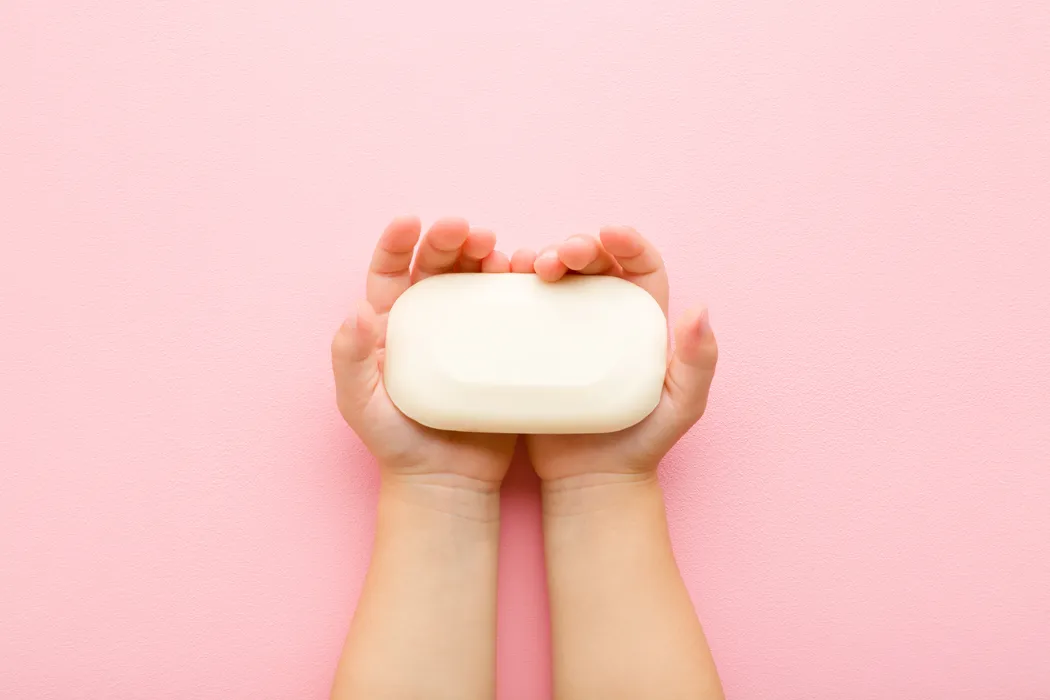
For a newborn, either a well-formulated mild baby body wash or a syndet bar is preferable to a traditional bar soap. Syndet bars have an edge for sensitive or eczema-prone skin, but a good liquid wash is perfectly suitable for most healthy newborns.

When to Consult a Doctor: Skin Conditions and Contraindications

There are situations where using any soap, even a gentle one, requires medical guidance first.

  • Broken or cracked skin: Cleansers can enter broken skin and cause stinging, increased infection risk, or further damage. For guidance on treating minor skin cuts or wounds safely, check with your doctor before applying any product.
  • Eczema flare-ups: During an active flare, soap can worsen inflammation. A pediatric dermatologist may recommend soap-free cleansing only.
  • Known allergies: If a parent has plant allergies (to oats, coconut, or specific botanicals), products containing those extracts need to be introduced carefully.
  • Neonatal conditions: Premature babies or those with jaundice, skin infections, or other medical conditions should have their bathing routine confirmed with the treating doctor.

Report adverse events to your healthcare provider or the relevant regulatory authority if your baby develops an unexpected reaction to any skincare product. If you notice redness, hives, excessive dryness, or swelling after using a new product, stop immediately and seek medical advice.

How to Bathe a Newborn Safely?

Bath time should be calm and brief, especially in the early weeks.

  • Keep water warm but not hot. Test the temperature on your inner wrist; it should feel comfortable, not hot.
  • Newborns do not need a daily bath. Two to three times a week is enough until the umbilical cord stump falls off, after which you can move to a shallow tub bath.
  • Use a small amount of baby soap and rinse thoroughly. Residue left on the skin can cause irritation.
  • Pat skin dry gently with a soft towel. Do not rub.
  • Avoid soaking or washing directly around the navel while the cord stump is still attached. Read more about caring for your newborn's belly button during bath time to keep this area clean and safe.

A plain water sponge bath is perfectly adequate for the first week or two while the cord stump heals.

Conclusion

Choosing the right baby soap means prioritising the needs of your newborn's developing skin rather than relying on labels such as “natural”, “herbal”, or “gentle”. A mild, fragrance-free, pH-balanced cleanser with a simple formulation can help minimise dryness and irritation, while plain warm water may be sufficient for much of the body during the early weeks. Using a small amount, rinsing thoroughly, and keeping baths brief can further reduce unnecessary stress on the skin barrier.

If your baby develops persistent redness, hives, swelling, excessive dryness, or other signs of irritation after using a new cleanser, stop the product and seek medical advice. Babies with eczema, broken or inflamed skin, known allergies, prematurity, or other neonatal conditions may need an individualised bathing routine. Keeping newborn skincare simple and introducing products cautiously can help maintain healthy skin while allowing you to identify and avoid products that do not suit your baby.

FAQS

Is baby soap necessary or is water enough?

For the first few weeks, plain warm water is sufficient for most of the body. A small amount of mild baby soap can be introduced gradually once the skin barrier has begun to mature, starting with two to three baths per week.

Can I use adult soap on my newborn?

Adult soaps, including those labelled "gentle" or "natural," are typically too alkaline and contain ingredients at concentrations that can irritate a newborn's skin. Stick to products specifically formulated for newborns until your baby is older.

How do I know if a soap is causing irritation?

Look for redness, dry patches, hives, or unusual fussiness during or after bathing. If any of these appear after introducing a new product, stop using it and consult your paediatrician before trying another option.

Is herbal or ayurvedic baby soap safer?

Herbal or ayurvedic products can be suitable, but "natural" does not automatically mean gentle or allergen-free. Check the ingredient list just as carefully as you would with any other product, and choose formulas that are pH-balanced and free from synthetic fragrances and sulfates.

What age can babies start using regular soap?

Most paediatric dermatologists suggest waiting until at least one year of age before introducing adult or regular soap. Until then, use products specifically designed for infant skin to protect the developing skin barrier.

Apollo 247 Floating Action Button