logo
0

Best Lotion for Newborn: How to Choose and Apply Safely

Find the best lotion for newborn skin with our pediatric-reviewed guide covering ingredients, application steps, and safety precautions.

article image

Dr. Kamran

Choosing the best lotion for newborn skin is one of those small decisions that can feel surprisingly stressful. A newborn's skin is genuinely different from older skin, not just softer. It absorbs and loses moisture faster, reacts more readily to unfamiliar ingredients, and has far less tolerance for the fragrances and preservatives found in most adult products. Getting the choice right from day one protects that fragile barrier and helps prevent dryness, flaking, and irritation.

Why Newborn Skin Needs Special Care?

A newborn's skin is structurally thinner than adult skin, and the outermost layer, called the stratum corneum, is still maturing through the first several weeks of life. This means the skin barrier does not yet regulate water loss efficiently. Transepidermal water loss (TEWL) is measurably higher in newborns, leaving skin prone to dryness and increased sensitivity to irritants.

Babies born full-term arrive coated in vernix caseosa, a waxy protective layer that the skin naturally absorbs over the first few days. Washing it away early or applying products before the skin matures can disrupt this natural process. Many pediatric dermatology guidelines recommend delaying non-essential product use until the skin has had time to settle, typically after the first two to four weeks, except in cases of visible dryness or a condition a doctor has identified.

What to Look for in a Newborn Skin Care Lotion?

When you are scanning labels in a pharmacy, the ingredient list matters far more than the packaging design. Here is what to prioritise:

  • Fragrance-free formulation. "Unscented" and "fragrance-free" are not the same. Fragrance-free means no fragrance compounds were added; unscented may still contain masking agents.
  • Hypoallergenic labelling. This reduces the likelihood of sensitisation, though no product can claim zero allergy risk.
  • pH-balanced to match newborn skin, which is slightly acidic.
  • Free from parabens, artificial dyes, and sulphates.
  • Dermatologist or paediatrician-tested certification on the label.

A baby moisturiser for sensitive skin should have a short, readable ingredient list. If you need a dictionary to understand most of it, that is a reason to pause.

Ingredients and Formulations to Prefer vs. Avoid

The table below covers the most commonly found ingredients in baby lotions.

CategoryIngredients to PreferIngredients to Avoid
MoisturisersGlycerin, ceramides, shea butterAlcohol (denat.), propylene glycol
EmollientsPetrolatum, mineral oil (cosmetic grade)Essential oils (lavender, eucalyptus)
PreservativesPhenoxyethanol (low concentration)Parabens, formaldehyde-releasing agents
FragranceNoneSynthetic fragrance, "parfum"
OtherColloidal oatmeal (for dry/eczema-prone skin)Artificial dyes, sodium lauryl sulphate

Is coconut oil safe for newborn skin?

Coconut oil is popular in many households, and while it is natural, research on its use for newborns is mixed. Some studies suggest it may disrupt the skin barrier in very young infants, particularly those with eczema-prone skin, because its fatty acid profile can affect the ceramide content of immature skin. It is best to speak with your paediatrician before using coconut oil as a newborn dry skin remedy rather than reaching for it as a first-line option.

Contraindications and When to Avoid a Product

Not every situation calls for a lotion application. There are clear circumstances where you should hold off or seek medical advice first.

Do not apply lotion if:

  • The skin is broken, cracked, bleeding, or shows signs of infection such as redness, warmth, pus, or crusting.
  • There is an active eczema flare that has not been assessed by a doctor. Some standard moisturisers can worsen flares; your paediatrician may prescribe a specific formulation.
  • Your baby has a known allergy to any listed ingredient, including lanolin, oats (colloidal oatmeal), or nut-derived oils.
  • The umbilical stump has not yet separated. Keep lotions, powders, and oils away from this area entirely. For guidance on keeping this area clean and dry, see how to care for a newborn's belly button.
  • A rash appears after using a product. Stop immediately and consult your doctor before restarting.

If you notice any skin reaction after applying a new lotion, including hives, redness, or excessive crying that suggests discomfort, report adverse events to your healthcare provider or the relevant regulatory authority.

For any minor skin irritation or small breaks in the skin caused by scratching, it helps to understand the basics of treating minor skin cuts or irritation before a rash becomes infected.

How to Apply Lotion on a Newborn Safely

Good technique makes a real difference, both for your baby's comfort and for how well the product works.

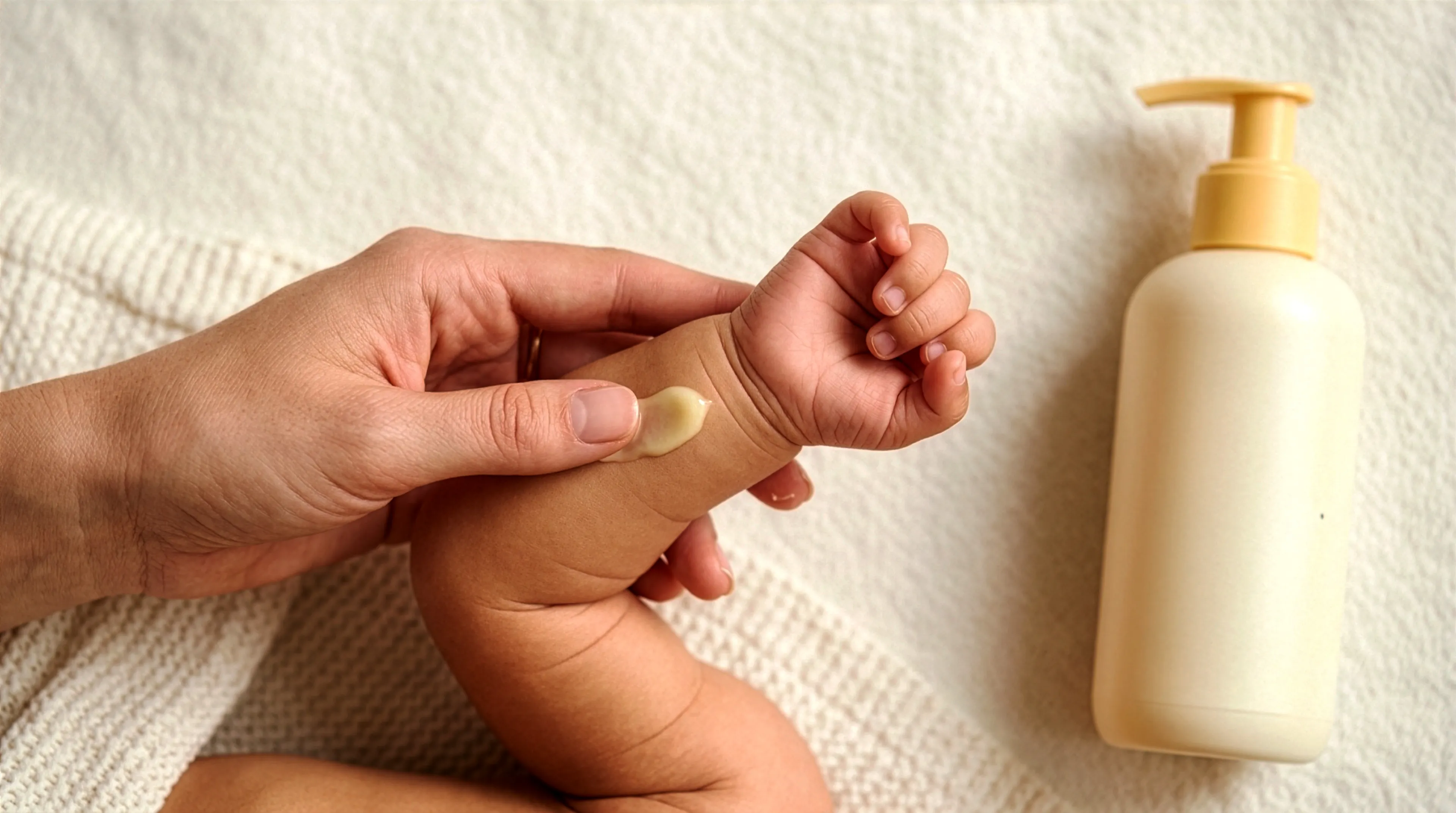
  • Step 1: Patch test firstApply a small amount of the lotion to the inside of your baby's wrist or behind the ear. Wait 24 hours. If no redness or reaction appears, it is safer to proceed.
  • Step 2: Warm your handsCold hands on newborn skin cause startling. Rub a small amount of lotion between your palms for a few seconds before applying.
  • Step 3: Use gentle, circular strokesWork from the trunk outward to the limbs. Use the lightest pressure. You are not massaging muscle; you are coating the surface.

Step 4: Avoid these areas

  • The face, especially around the eyes and mouth
  • The umbilical stump until it has fully separated and healed
  • Any area with a rash or broken skin

Step 5: Choose the right timingThe best moment to apply lotion is within a few minutes of a bath, while skin is still slightly damp. This seals in moisture rather than simply sitting on dry skin.

How often should you moisturise a newborn?

Once daily is usually enough for healthy newborn skin. If your baby has visible dry patches or your paediatrician has diagnosed a skin condition, you may be advised to apply lotion twice daily. More frequent application is rarely necessary and can clog pores or cause heat rash in warmer climates.

Prescribing and Product Information Disclaimer

The information in this article is written for general educational purposes about newborn skin care lotion choices and application methods. It is not a substitute for the prescribing information, package insert, or patient information leaflet that accompanies any specific product. Always read the product label fully before use.

If your newborn has an existing skin condition, was born prematurely, or you have any doubt about whether a particular product is safe, consult your paediatrician before use. Medication and product suitability for individual patients can only be assessed by a qualified healthcare professional.

Conclusion

Choosing the right lotion for newborn skin is mainly about protecting the skin barrier while minimising exposure to unnecessary ingredients. A fragrance-free, gentle moisturiser with ingredients such as glycerin, ceramides, or petrolatum may help manage dryness when moisturising is needed. Parents should avoid applying products to broken, infected, or irritated skin and should keep lotions away from the umbilical stump until it has healed. Introducing one product at a time and watching for redness, swelling, or other signs of irritation can also help identify sensitivity early. If your baby has persistent dryness, eczema, a rash, or was born prematurely, it is best to ask a paediatrician which product and skincare routine are appropriate.

FAQS

What is the best lotion for newborn baby skin?

The best lotion for newborn skin is one that is fragrance-free, hypoallergenic, free from parabens and dyes, and tested for sensitive skin. Look for active moisturising ingredients like glycerin or ceramides. A short, clean ingredient list and a paediatrician-tested label are the most reliable markers of safety.

Is it safe to use adult lotion on a newborn?

Adult lotions typically contain fragrances, preservatives, and pH levels that are not suitable for newborn skin. The risk of irritation and sensitisation is meaningfully higher. Stick to products formulated specifically for infants, and check with your paediatrician if you are unsure.

How soon after birth can I use lotion on my baby?

Most paediatric guidelines suggest waiting at least two to four weeks after birth before introducing any lotion unless dryness or a skin condition requires earlier treatment. In the first days, the skin is still absorbing vernix and adjusting to the environment outside the womb.

Can newborn lotion cause allergic reactions?

Yes, even hypoallergenic baby lotion can cause a reaction in some infants. Common triggers include lanolin, oats, and certain preservatives. A patch test before full application significantly reduces this risk. Stop use immediately and consult your doctor if any redness, hives, or swelling appears.
Do pediatricians recommend daily moisturizing for newborns?

Paediatricians generally recommend moisturising only when there is visible dryness or a diagnosed skin condition. For healthy newborns with normal skin, daily lotion is not always necessary. In dry climates or during winter months, a light daily application after bathing is considered reasonable and safe.

Apollo 247 Floating Action Button