logo
0

Best Newborn Lotion: Guide to Safe Baby Moisturizers

Confused about the best newborn lotion? Learn how to pick safe moisturizers by skin type, ingredients to avoid, and pediatrician-backed tips.

article image

Dr.J.T.Hema Prathima

Choosing the best newborn lotion can feel overwhelming when you're surrounded by dozens of products claiming to be gentle, natural, or dermatologist-tested. The stakes feel high because they are: a newborn's skin is genuinely different from older skin, and what you put on it matters. This guide breaks down what to look for, what to avoid, and how to moisturise your baby safely.

Why Newborn Skin Needs Special Moisturising Care?

A newborn's skin barrier is thinner and less developed than an adult's. It loses water more quickly, making babies prone to dryness, flakiness, and irritation in the first weeks of life. This is especially true after the vernix (the protective white coating present at birth) naturally sheds in the first few days.

Because the barrier is still maturing, skin absorbs substances more readily. That means ingredients that are harmless for adults can cause reactions in newborns. Dermatologists generally recommend keeping skincare simple and fragrance-free in the first months for this reason.

Do all newborns need moisturiser? Not necessarily from day one. Many healthy, full-term babies manage well without one initially. But if you notice dryness, flaking, or tightness, a gentle newborn skin moisturiser can help restore comfort and support the barrier.

How to Choose the Best Lotion for Your Newborn's Skin Type?

Skin type matters even in newborns. A one-size-fits-all approach can leave dry skin still parched or push oily, normal skin toward irritation.

  • Dry or flaky skin: Look for a newborn skin moisturiser with humectants like glycerin, which draw moisture into the skin, and emollients like shea butter or colloidal oatmeal that smooth and soften. A slightly thicker lotion or cream tends to work better than a light, watery formula.
  • Normal skin: A lightweight lotion applied after baths is usually enough. You don't need a heavy formulation if there's no visible dryness.
  • Eczema-prone skin: Babies with a family history of eczema or atopic dermatitis benefit from a fragrance-free, hypoallergenic cream or ointment. Look for products that specifically support the skin barrier, such as those containing ceramides. Always confirm the choice with your pediatrician or dermatologist.

Ingredients to Seek

  • Glycerin (draws moisture into the skin)
  • Colloidal oatmeal (soothes irritation)
  • Shea butter (softens and protects)
  • Ceramides (support the skin barrier)
  • Aloe vera (calming, in well-formulated products)

Ingredients to Avoid

  • Fragrance or parfum (a leading cause of contact reactions in babies)
  • Alcohol (drying and potentially irritating)
  • Parabens (preservatives; many parents and clinicians prefer to avoid them for infants)
  • Dyes and artificial colourants
  • Essential oils in high concentrations (can trigger sensitivity)

Baby lotion for dry skin should rely on gentle humectants and emollients rather than heavy synthetic additives. If the ingredient list is long and includes names you cannot pronounce, that's worth pausing on.

Lotion vs Cream vs Oil: What's Right for Newborns

These three formats behave quite differently on the skin.

Format

Texture

How It Works

Best For

Lotion

Light, spreadable

Absorbs quickly

Daily use on normal or mildly dry skin

Cream

Thicker, richer

Creates a longer-lasting barrier

Dry patches, eczema-prone skin

Oil

Liquid, occlusive

Seals moisture in

Massage; not ideal as a stand-alone moisturizer for very dry skin

A best cream for newborn baby with dry or sensitive skin will generally outperform a lotion because it delivers more emollient content per application. Lotions are convenient for daily use when dryness is mild.

Baby oil is a point of confusion for many parents. Oils can be soothing for massage, but they are not the same as moisturisers. Some plant-based oils, including olive oil and sunflower oil, have been studied in newborns with mixed results. Olive oil in particular has been shown in some research to disrupt the skin barrier in babies with a genetic predisposition to eczema. If you use oil, choose one formulated for infants and use it sparingly. Consult your paediatrician before making oil a regular part of your newborn's skincare routine.

How and When to Apply Moisturiser on a Newborn?

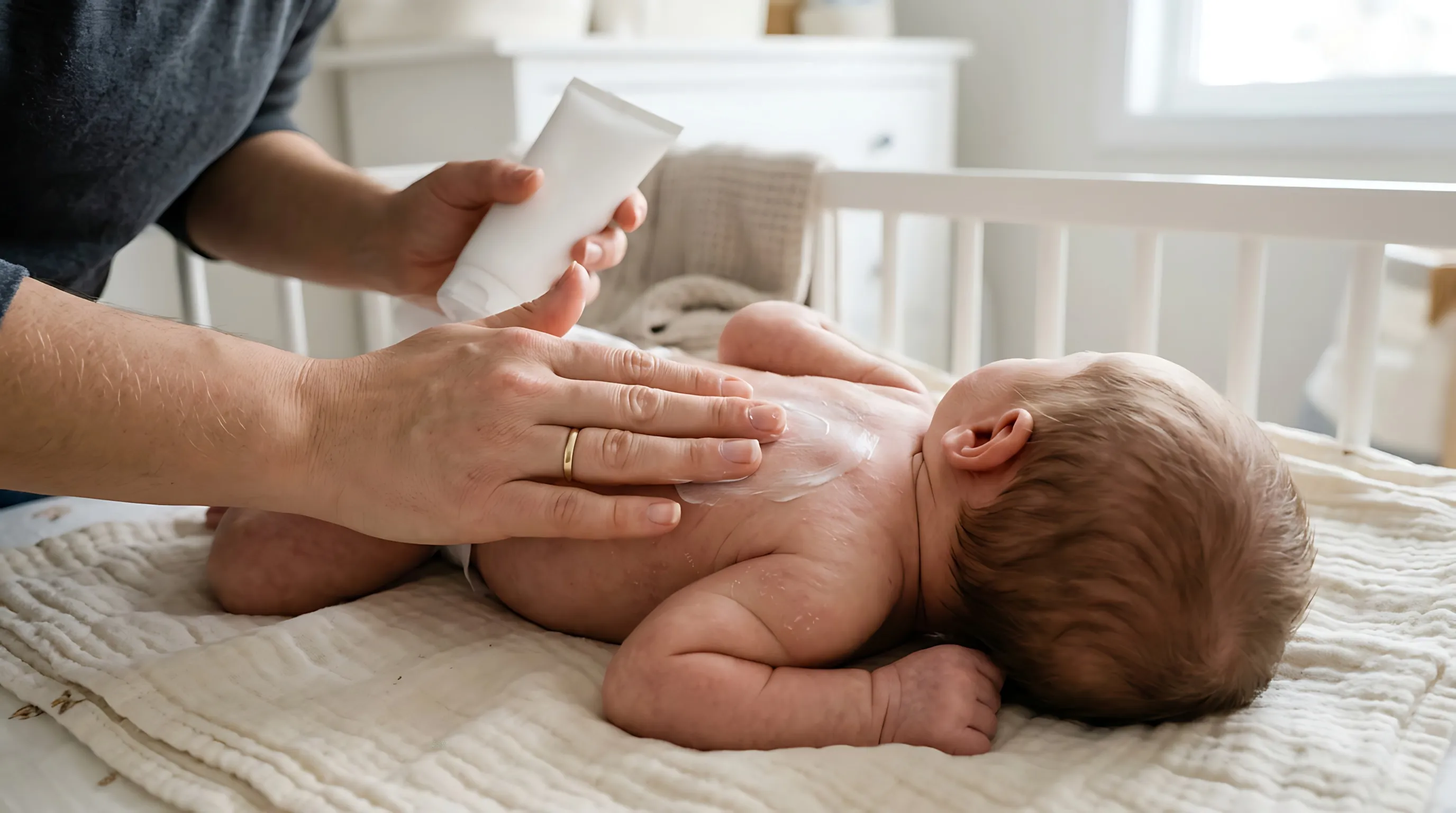
The best time to apply a newborn sensitive skin lotion is within a few minutes of a bath, while the skin is still slightly damp. This helps seal in moisture rather than applying to completely dry skin.

A few practical tips:

  • Warm a small amount of lotion between your palms before applying. Cold product can startle a newborn.
  • Use gentle, circular strokes. This doubles as a calming massage.
  • Focus on areas prone to dryness: shins, feet, forearms, and the back.
  • Avoid the face and eye area unless your pediatrician has specifically recommended a product for the face.
  • Keep lotion away from open skin around the umbilical cord stump. For guidance on that area specifically, see our newborn belly button care guide.

How Often to Moisturise?

For most newborns, once daily after bathing is sufficient. If you notice persistent dryness, twice a day (morning and after bath) is reasonable. Over-moisturising is rarely harmful, but keep an eye on any areas where product may be collecting in skin folds, as these can become warm and moist enough to encourage irritation.

Patch Testing

Before using any new product all over your baby's body, apply a small amount to the inner wrist or behind the knee. Wait 24 hours and check for redness, bumps, or swelling. This simple step can help catch a sensitivity before it becomes a widespread rash.

Contraindications and When to Avoid or Stop a Product

There are situations where applying lotion is not the right first step, and some where it should be stopped immediately.

Do not apply lotion to:

  • Broken, blistered, or actively infected skin. Moisturiser on broken skin can trap bacteria or worsen infection. If your baby has a cut or skin injury, follow guidance on treating minor cuts and skin injuries before considering skincare.
  • A rash you haven't identified. Some rashes (fungal, viral, bacterial) are worsened by occlusive products.
  • Premature infants or NICU babies without explicit guidance from a neonatologist. Premature skin is even more permeable and fragile; standard moisturisers are not automatically safe.

Stop the product if you notice:

  • New redness, hives, or swelling after application
  • Your baby becoming unusually fussy during or after application to the skin
  • Worsening dryness or peeling despite regular use

Any suspected allergic reaction should be reported to your paediatrician promptly. Report adverse events to your healthcare provider or the relevant regulatory authority.

If your baby has known allergies, a family history of severe atopic dermatitis, or any diagnosed skin condition, always confirm your moisturiser choice with a doctor before starting.

Conclusion

Choosing the best newborn lotion is less about finding the most popular product and more about choosing a gentle formula that suits your baby's skin. For most newborns, a fragrance-free, hypoallergenic moisturiser with simple barrier-supporting ingredients can help manage dryness without unnecessarily exposing delicate skin to potential irritants. Apply it gently to slightly damp skin after bathing, and avoid using products on broken, infected, or unexplained rashes without medical advice.

Remember that newborn skin does not always need extensive skincare. If your baby's dryness persists, becomes severe, or is accompanied by redness, swelling, oozing, or significant irritation, consult your paediatrician or dermatologist rather than trying multiple products at home. A simple, consistent routine is usually the safest approach for keeping your baby's skin comfortable, soft, and healthy.

FAQS

What is the best lotion for newborn baby skin?

The best newborn lotion is one that is fragrance-free, hypoallergenic, and formulated specifically for infant skin. Look for gentle ingredients like glycerin, colloidal oatmeal, or ceramides, and confirm the choice suits your baby's skin type.

Is it safe to use adult lotion on a newborn?

Adult lotions often contain fragrances, preservatives, and active ingredients that are too strong for newborn skin. It is best to use a product specifically formulated and tested for infants.

How do I treat newborn dry skin naturally?

Shortening bath time, using lukewarm (not hot) water, and patting skin dry rather than rubbing can all reduce moisture loss. A fragrance-free natural lotion for babies with ingredients like shea butter or colloidal oatmeal can then help restore softness.

Can I use coconut oil instead of lotion for my baby?

Coconut oil is popular, but evidence on its safety for newborn skin is limited, and it may not suit every skin type. Speak with your paediatrician before using it regularly, especially if there is any family history of eczema.

When should I start using lotion on my newborn?

Most healthy full-term newborns do not need moisturiser immediately after birth. If dryness or flaking appears in the first few weeks, a gentle, fragrance-free product can be introduced. Your paediatrician can advise on the right timing for your baby.

Apollo 247 Floating Action Button