logo
0

Best Oil for Newborn Hair Growth: Safe Oils & Massages

Discover the best oil for newborn hair, safe massage techniques, and pediatrician-backed tips for healthy hair development in babies.

article image

Dr.Bhanu Prakash

Choosing the best oil for newborn hair is one of those small decisions that feel bigger when you are holding a fragile, days-old baby for the first time. The good news is that a gentle touch and a suitable, plain carrier oil are really all you need. This guide walks you through safe oil choices, what to avoid, how to massage your baby's scalp without harm, and when to call your doctor.

Why Newborn Hair and Scalp Need Gentle Care

A newborn's skin barrier is still maturing. The outer layer of the scalp is thinner than adult skin, absorbs substances more easily, and loses moisture faster. Anything applied to it, including oil, can penetrate more deeply than you might expect.

One common early concern is cradle cap (seborrhoeic dermatitis): a greasy, scaly patch that appears on many babies' scalps in the first weeks of life. It is not caused by poor hygiene and is rarely harmful, but the wrong product can occasionally make it worse.

Oiling a newborn's hair is not medically necessary for hair growth. Hair development is driven by genetics and nutrition, not by what you apply to the surface. That said, a brief, gentle scalp massage with a safe oil can support bonding, help a baby settle, and keep the scalp from drying out, which is why many families choose to do it.

Best Oils for Newborn Hair Development

When choosing safe oils for infant scalp use, simpler is better. Pick plain, cold-pressed, unrefined oils with no added fragrance, preservatives, or essential oil blends. The three most commonly used options are:

  • Coconut Oil: The most thoroughly studied option for infant skin. High in lauric acid, it has mild antimicrobial properties and spreads easily without feeling heavy. Widely recommended as a first-line choice because it is less likely to disrupt the skin barrier than some alternatives.
  • Sweet Almond Oil: Lightweight, absorbs relatively well, and is gentle enough for most newborn scalps. Avoid it if there is a family history of tree-nut allergy.
  • Olive Oil: Used for generations and remains a reasonable option, though some research suggests it may slightly alter the skin barrier with prolonged use. Keep applications infrequent if you choose it.

A few practical points before you start:

  • Patch Testing: Always do a patch test 24 hours before full application. Apply a small amount to the inner wrist or behind the ear and watch for redness or a rash.
  • Product Selection: Buy products labelled for infant use, or choose a single-ingredient oil with no additives.
  • Temperature Check: Warm the oil to body temperature (test on your wrist) before applying it to your baby's head.

There is no strong clinical evidence that any particular oil actively stimulates hair follicles or speeds up hair growth at this age. Newborn hair is on its own developmental timeline.

Oils and Ingredients to Avoid

Some traditional practices and products are not safe for newborn scalps.

  • Mustard Oil: Commonly used across South Asia, but high in erucic acid, which can irritate delicate infant skin and cause contact dermatitis. Paediatric dermatology guidance generally advises against it for newborns.
  • Essential Oils: Options such as lavender, tea tree, and eucalyptus are too concentrated for infant skin even when diluted, and some carry risks of respiratory irritation or hormonal disruption with repeated exposure.
  • Fragranced Baby Oils: Often contain alcohols and synthetic preservatives that can dry the scalp or trigger sensitisation over time.
  • Petroleum-Based Products: Used heavily, these can block pores and are not ideal as a hair oil for regular newborn hair care.

A useful rule: if the ingredient list runs longer than two or three items, look for a simpler option.

Safe Massage Technique Step-by-Step

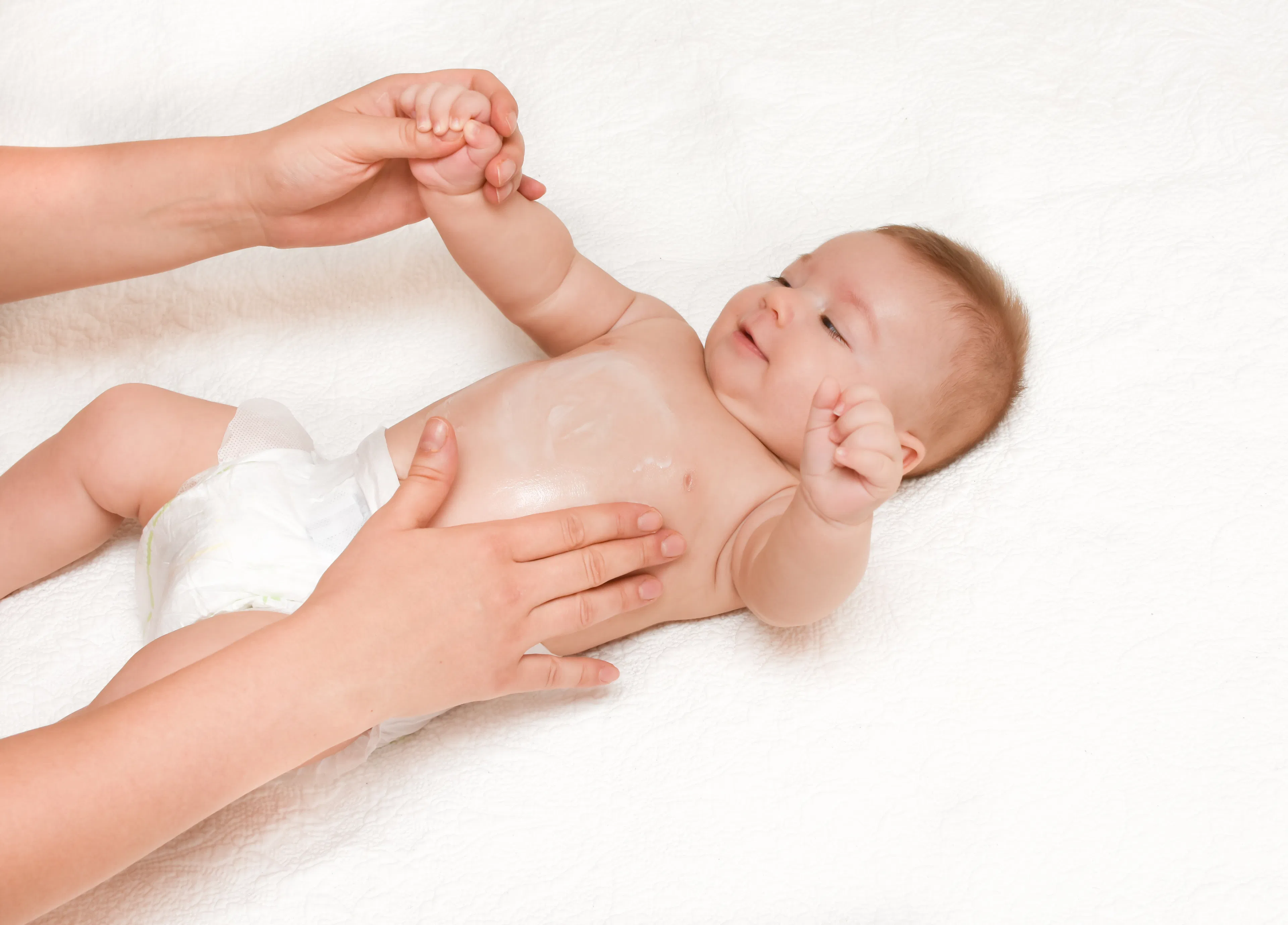
A good newborn hair oil massage does not need to be long. Five minutes is plenty. Follow this baby head massage technique sequence:

  • Environment Setup: Choose a warm, draught-free room. Lay your baby on a firm, flat surface or hold them in your lap facing you.
  • Oil Warming: Pour a few drops of your chosen oil into your palm and rub your hands together until the oil reaches body temperature.
  • Gentle Circular Strokes: Using the pads of two or three fingers (never your nails), apply gentle, slow circular movements to the scalp. Start at the top and work outward toward the sides.
  • Light Touch: Keep pressure very light. This is a touch massage, not a deep-tissue technique.
  • Fontanelle Safety: Avoid pressing into the fontanelle (the soft spot at the top of the skull). You can gently pass a flat, open hand over it, but never press down into it.
  • Duration and Cues: Limit the session to 5 to 10 minutes. If your baby becomes fussy or turns their head away, stop immediately.

For frequency, two to three times a week is sufficient. Daily oiling is not necessary and can lead to product build-up on the scalp, which may worsen cradle cap.
Contraindications and When to Avoid Oiling

Good newborn hair care tips always include knowing when to hold back. Do not apply oil to your baby's scalp if:

  • Broken or Inflamed Skin: There is broken, cracked, or inflamed skin on the scalp or forehead.
  • Active or Infected Cradle Cap: Your baby has active cradle cap that looks red, weeping, or infected. Cradle cap oil treatment should only begin after a paediatrician rules out infection.
  • Prematurity: Your baby was born prematurely. Preterm skin is significantly more permeable, and topical products should only be used under medical guidance.
  • Known Nut or Seed Allergies: There is a known or suspected allergy to nuts or seeds (rules out almond oil in particular).
  • Eczema or Pre-existing Conditions: Your baby has eczema or a confirmed skin condition. A paediatric dermatologist should guide product choice in these cases.

Report adverse events such as rashes, redness, swelling, or unusual irritation to your healthcare provider or the relevant regulatory authority.

Just as you would check your baby's scalp before oiling, gentle daily routines in other areas, like following a newborn belly button care guide for cord stump hygiene, build the same habit of watchful, gentle care.

When to Consult a Paediatrician

Most newborn hair changes are completely normal. Babies often lose their birth hair in the first few months, and this is not a cause for concern. However, speak to your paediatrician if you notice:

  • Spreading Cradle Cap: Cradle cap that spreads beyond the scalp to the face, neck, or ears.
  • Infection Signs: Redness, oozing, or a smell from the scalp that suggests infection.
  • Localised Patchy Loss: Distinct bald patches that are not explained by the baby lying in one position.
  • Delayed Regrowth: No new hair growth by 6 months, alongside other developmental concerns.

Early reassurance from a doctor saves a lot of worry, and some scalp conditions do need medicated treatment rather than a home remedy.

Conclusion

Caring for your newborn's scalp does not require an elaborate routine or miracle claims. While hair growth, density, and texture are determined by genetics and nutritional intake rather than topical products, incorporating a gentle scalp massage two to three times a week can prevent dryness, help loosen mild cradle cap scales, and provide a calming bonding ritual. When oiling your baby's scalp, simplicity and safety should always guide your choices. Stick to single-ingredient, cold-pressed carrier oils like pure coconut oil, always perform a 24-hour patch test, and steer clear of harsh irritants such as mustard oil, synthetic fragrances, and essential oils. Keep pressure feather-light, avoid applying force over the delicate fontanelle, and never pick at persistent flakes. If you notice signs of infection, spreading redness, oozing, or cracked skin, consult your paediatrician or a paediatric dermatologist promptly for safe, medically supervised care.

FAQS

What is the best oil for newborn hair growth?

Coconut oil is generally considered the safest first choice because of its mild antimicrobial properties and low risk of skin-barrier disruption. Sweet almond oil is a good alternative, provided there is no family history of nut allergy.

Can I use coconut oil on my newborn's head daily?

Daily use is not necessary and can cause oil build-up that blocks the scalp. Two to three times a week is enough, and always wash the scalp gently with a mild baby shampoo after oiling sessions.

Is it safe to massage a newborn's fontanelle?

You can pass a flat, open hand very gently over the fontanelle, but never apply direct downward pressure. The fontanelle is a gap in the skull and pressure on it can be harmful.

How do I treat cradle cap naturally?

A small amount of coconut oil or mineral oil left on the scalp for a few minutes before a gentle wash can loosen flakes. Never pick or scrub the scales off, and consult your paediatrician if the patches look red, spread, or do not improve within a few weeks.

At what age can I start oiling my baby's hair?

Most paediatricians are comfortable with gentle oiling from around two to four weeks of age, once the scalp skin has had time to stabilise. Always do a patch test first, and check with your doctor if your baby was born prematurely or has any skin condition.

Apollo 247 Floating Action Button