logo
0

Best Period Tracking App to Predict Cycles & Patterns

Learn how period tracking apps predict cycles, track symptoms and fertile windows, identify irregular patterns, and protect reproductive health data.

article image

Dr.Bhanu Prakash

Choosing the best period tracking app can feel overwhelming, but getting it right matters. Your menstrual cycle is a window into your overall health, and a reliable period tracker app can help you spot patterns, plan, and notice when something is off before it becomes a bigger concern. If you deal with irregular periods, an irregular periods app can be especially useful for building the data trail your doctor needs. This guide walks through how these apps work, what to look for, and when your data should prompt a conversation with a doctor.

How Period Tracking Apps Predict Your Cycle?

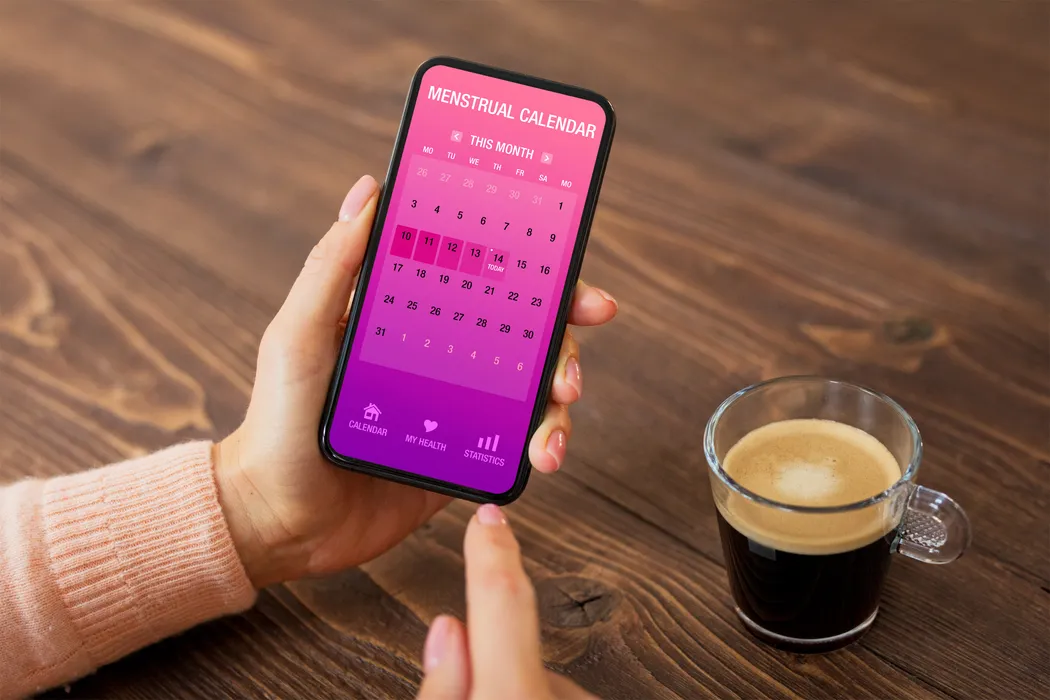
Most period tracker apps use a straightforward algorithm: you log the start and end dates of each period, and the app calculates your average cycle length over several months. From that average, it projects when your next period will begin.

More sophisticated apps also factor in the luteal phase, which is the roughly 12 to 16 day window between ovulation and your next period. Because the luteal phase is relatively stable for most women, a menstrual cycle predictor can work backwards from your predicted period date to estimate when you likely ovulated.

Are the predictions accurate? Reasonably, yes, for women with consistent cycles. Cycle-tracking algorithms generally become more reliable after three to six months of logged data. If your cycles vary significantly in length, the predictions widen, and a good app will reflect that uncertainty rather than give you false precision. No app can account for stress, illness, or hormonal shifts in real time, so treat predictions as informed estimates rather than certainties.

Must-Have Features in a Good Period Tracking App

A basic menstrual cycle predictor tells you when to expect your period. A genuinely useful app does considerably more.

Look for these features before committing to one:

  • Symptom logging for mood, cramps, bloating, discharge, and sleep quality, so you can see whether symptoms cluster around specific cycle phases.
  • A clear ovulation window display based on your personal cycle data, not a generic 28-day template.
  • Customisable reminders for period arrival, fertile window, and medication or supplement timing.
  • Data export in a format you can share with your gynaecologist, such as PDF or CSV.
  • A detailed cycle history view so you can visually scan for irregular cycle length patterns yourself.
  • Strong, clearly stated privacy controls.

Secondary metrics worth having include basal body temperature logging and cervical mucus tracking. Together, these make the ovulation tracking app feature far more reliable than calendar math alone, and they form the backbone of Fertility Awareness Methods for women planning or avoiding pregnancy.

Using Pattern Data to Spot Irregular Cycles

One of the quieter benefits of consistent tracking is the data trail it builds. A good irregular periods app can flag when your cycle falls outside your personal normal range, not just outside a textbook definition.

Patterns worth paying attention to include:

  • Cycles consistently shorter than 21 days or longer than 35 days.
  • Period length creeping above seven days, or heavy flow that regularly requires changing protection every one to two hours.
  • Two or more missed or skipped periods in a row without a clear cause such as pregnancy or significant physical stress.
  • Sudden changes in PMS symptom intensity compared with your own baseline.

Apps can surface these trends because they hold months of your data in one place. A gynaecologist looking at an exported report can immediately see whether heavy flow has been building gradually or arrived suddenly, which narrows the diagnostic picture far faster than memory alone. A reliable menstrual cycle predictor also helps you distinguish a genuinely late period from natural variation in your personal cycle length.

That said, an app flagging something irregular is a prompt to act, not a diagnosis.

Privacy and Data Safety Considerations

Period data is sensitive. It can reveal pregnancy status, fertility intentions, and health conditions, so how an app handles that information matters.

Before downloading any period tracker app, check:

  • Where data is stored: on your device only, or on the company's servers? On-device storage offers stronger privacy by default.
  • Whether the app sells or shares data with third parties, including advertisers or research partners. Read the privacy policy, not just the marketing copy.
  • Whether you can delete your account and all associated data completely.
  • Whether the app complies with applicable data protection regulations in your region.

Avoid apps that require account creation with no option for anonymous use, especially if reproductive data could carry legal sensitivity where you live. If an app's privacy policy is vague or hard to find, treat that as a warning sign.

When to See a Doctor Instead of Relying on an App?

Apps observe and record. They do not examine you, run tests, or interpret results in a clinical context. There are symptoms where waiting for another cycle of data is the wrong move.

Book an appointment if you notice:

  • Bleeding between periods that is not light spotting and has no obvious trigger.
  • Periods that have become consistently and significantly more painful than before.
  • Cycles that have been irregular for more than three consecutive months.
  • Signs of pregnancy alongside continued bleeding.
  • Unexplained weight change, excessive hair growth or loss, or persistent fatigue occurring alongside cycle changes.

If you are on hormonal medication and notice unexpected bleeding or cycle changes, report adverse events to your healthcare provider or the relevant regulatory authority. Do not adjust or stop medication based on app data alone.

An irregular periods app is a useful communication tool in a clinical appointment. It is not a substitute for one.

Contraindications and Safety Notes

Period tracking apps are not diagnostic tools. Two conditions in particular are frequently misunderstood in app communities.

PCOS (polycystic ovary syndrome) causes irregular ovulation that varies unpredictably from cycle to cycle. An ovulation tracking app cannot reliably identify an ovulation pattern that does not follow one, so using app-predicted fertile windows as the sole guide for conception or contraception is not appropriate if PCOS is suspected or confirmed. Diagnosis requires blood tests and, often, an ultrasound.

Thyroid disorders, both underactive and overactive thyroid, commonly disrupt cycle length and flow. An app may log the resulting irregularities, but it cannot tell you whether the cause is thyroid-related, stress-related, or something else entirely. That distinction requires clinical testing.

If you have a known condition affecting your cycle, use the how to track menstrual cycle features of your app as a supplement to medical care, not a replacement for it. Always discuss significant pattern changes with your doctor.

Conclusion

Period tracking apps can be useful for recording menstrual dates, symptoms and cycle patterns, and the information may help you have a more useful discussion with your healthcare professional. However, app predictions are estimates and may be less reliable when cycles are irregular or affected by conditions such as PCOS, thyroid disorders, illness or hormonal changes. Privacy should also be considered before sharing reproductive health information. Use a period tracker as a monitoring tool rather than a diagnostic or replacement for medical care.

FAQS

Which is the most accurate period tracking app?

No single app is universally most accurate because accuracy depends on the regularity of your own cycle and how consistently you log data. Apps that allow basal body temperature and cervical mucus input alongside calendar data generally give more personalised predictions than those using calendar math alone.

Do period tracking apps help with fertility planning?

Yes, when used carefully. An ovulation tracking app can help identify your likely fertile window, but for those actively trying to conceive, combining app data with ovulation tests or clinician guidance improves reliability significantly.

Can period apps predict PCOS?

No. A period tracker app can log irregular cycles and flag patterns that fall outside your norm, but diagnosing PCOS requires blood tests and clinical assessment. Use app data to support a conversation with your doctor, not to self-diagnose.

Are free period tracker apps reliable?

Many free apps offer solid core tracking features and reasonable menstrual cycle predictor accuracy. The main trade-offs are often around privacy, fewer advanced features, or in-app advertising. Always review the privacy policy of any free app before sharing personal health data.

How many months of data does a period app need to predict cycles accurately?

Most apps improve noticeably after three to six months of consistent logging. Women with highly variable cycles may need closer to six to twelve months before predictions reflect their personal pattern reliably.

Apollo 247 Floating Action Button