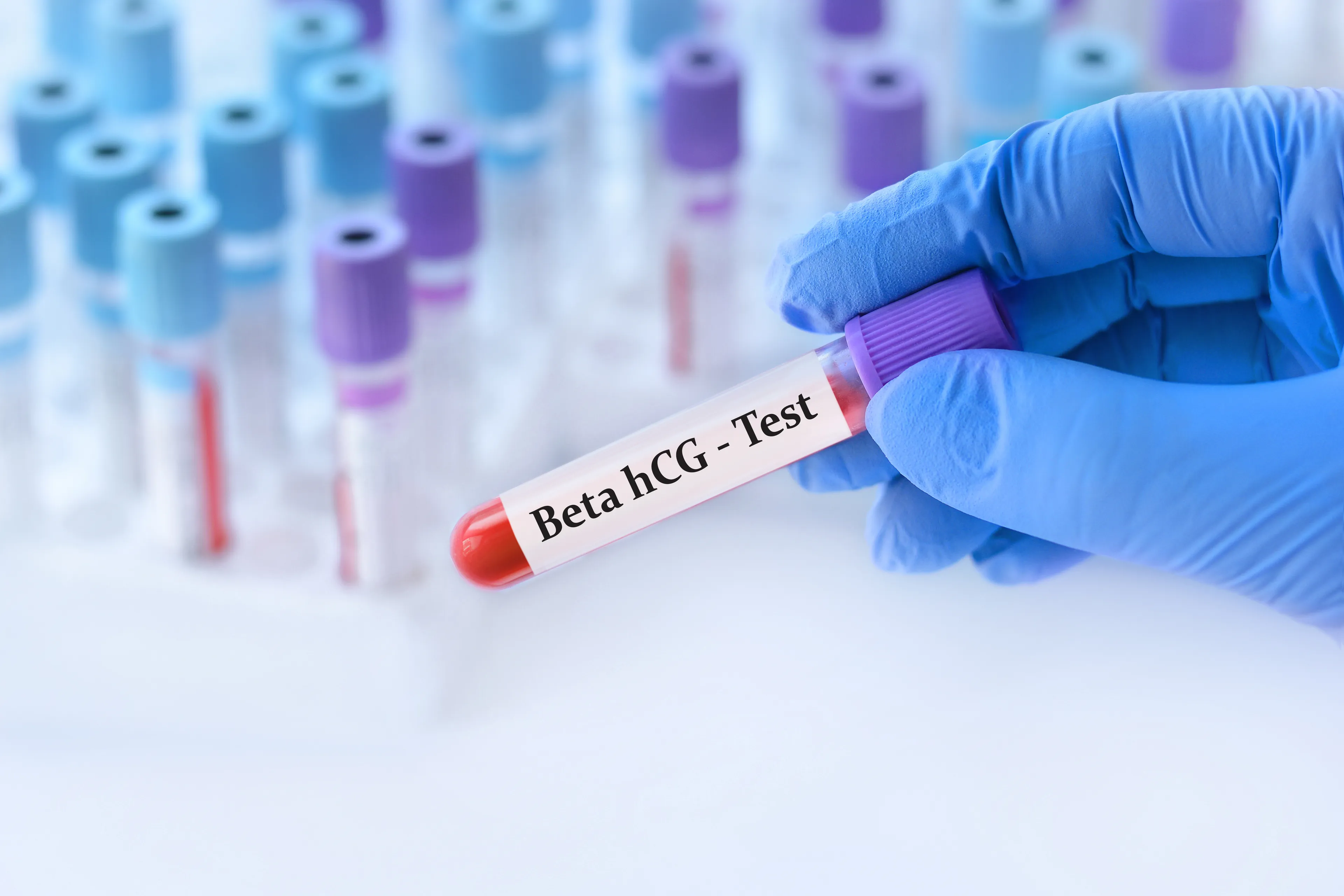
Beta hCG 0.100: What This Result Means for Pregnancy Testing
Understand what a beta hCG level of 0.100 mIU/mL means, whether it indicates pregnancy, when to take a blood pregnancy test, how hCG levels change and when results need further assessment.
Dr.Yusuf
Seeing a beta hCG result of 0.100 mIU/mL can raise questions, particularly if you are trying to conceive or waiting to confirm a pregnancy. You may be wondering whether the result rules out pregnancy, whether you need another test or how it compares with the expected hCG levels in early pregnancy.
In most laboratories, a beta hCG level below 5 mIU/mL is considered negative for pregnancy. A result of 0.100 mIU/mL is therefore generally interpreted as negative. However, the timing of the test matters. If you tested very early, before enough hCG had been produced, a repeat test may be appropriate.
What Does a Beta hCG 0.100 Result Mean?
Beta human chorionic gonadotropin (beta hCG) is a hormone produced by cells that develop into the placenta after an embryo implants in the uterus. Measuring this hormone in blood or urine helps detect pregnancy and monitor certain pregnancy-related conditions.
A beta hCG value of 0.100 mIU/mL is a very low reading, typically interpreted as a negative result indicating no detectable pregnancy.
The beta hCG test meaning depends on the laboratory's reference range, the timing of testing and your clinical circumstances. A common interpretation of quantitative blood beta hCG results is:
Below 5 mIU/mL: Usually considered negative for pregnancy.
Between 5 and 25 mIU/mL: Often considered borderline or indeterminate. A repeat test may be recommended.
Above 25 mIU/mL: Usually considered positive for pregnancy.
These cut-offs can vary slightly between laboratories. Always check the reference range printed on your report.
Is 0.1 hCG Level Positive or Negative?
A beta hCG level of 0.1 mIU/mL is generally negative for pregnancy because it is well below the commonly used threshold of 5 mIU/mL. It indicates that pregnancy has not been detected in that blood sample.
If you tested before your expected period, however, the result may be too early to rule out pregnancy. If your period is delayed or pregnancy is still possible, discuss repeat testing with your doctor.
Beta hCG vs Qualitative Pregnancy Tests: Key Differences
Understanding the quantitative vs qualitative hCG test difference can help you interpret your report and understand why two pregnancy tests may provide different types of results.
A quantitative beta hCG blood test measures the concentration of hCG and reports a numerical value. A qualitative pregnancy test checks whether hCG is present above a particular detection threshold and reports a positive or negative result.
The main differences are:
Quantitative blood test: Measures the amount of hCG in the blood and provides a numerical result, usually in mIU/mL.
Qualitative blood test: Reports whether hCG has been detected above the test's threshold.
Urine pregnancy test: Detects hCG in urine and usually gives a positive or negative result. Most home tests are qualitative.
Quantitative blood tests can generally detect lower hCG concentrations than most home urine pregnancy tests. However, sensitivity varies between laboratories and test products. A negative result from either test may be unreliable if testing is done too early.
Knowing when to take a blood pregnancy test is important because hCG production begins only after implantation.
After ovulation, fertilisation may occur when sperm meets an egg. The fertilised egg then travels towards the uterus. Once implantation takes place, cells that will form the placenta begin producing hCG. Implantation commonly occurs around 6 to 12 days after ovulation, although the timing varies.
For a more reliable result:
Around your expected period: A quantitative blood test can often detect pregnancy by this time, depending on when ovulation and implantation occurred.
Before your expected period: A negative result may be too early to exclude pregnancy because hCG may not yet have reached detectable levels.
If your periods are irregular: A home pregnancy test is generally recommended at least 21 days after the last unprotected sex if you are unsure when your period is due.
If the result is borderline: Your doctor may recommend another quantitative beta hCG test after approximately 48 hours.
If your result is negative but your period remains delayed: Your doctor may advise repeating the test or investigating other reasons for the delay.
A result of 0.100 mIU/mL usually does not need repeating if the test was taken at an appropriate time and you have no concerning symptoms. If you tested early, repeat testing after your expected period may be appropriate.
How Early Can Beta hCG Detect Pregnancy?
A sensitive quantitative blood test may detect hCG around 10 to 14 days after ovulation, sometimes before or around the expected date of your period. However, the exact timing depends on when implantation occurs and the sensitivity of the laboratory assay.
Testing before implantation may produce a negative result even if conception has occurred. If you test early and receive a negative result, repeating the test at the appropriate time can provide a clearer answer.
Understanding the hCG Levels Chart by Week
hCG levels usually rise rapidly during early pregnancy, but the concentration varies considerably between individuals. The following hCG levels chart by week provides approximate blood hCG ranges at different stages of pregnancy.
Gestational age is calculated from the first day of your last menstrual period, not the date of conception.
Gestational age
Approximate hCG range (mIU/mL)
3 weeks
5–72
4 weeks
10–708
5 weeks
217–8,245
6 weeks
152–32,177
7 weeks
4,059–153,767
8 weeks
31,366–149,094
9 weeks
59,109–135,901
10 weeks
44,186–170,409
12 weeks
27,107–201,165
14 weeks
24,302–93,646
15 weeks
12,540–69,747
16 weeks
8,904–55,332
17 weeks
8,240–51,793
18 weeks
9,649–55,271
These are approximate reference ranges, not diagnostic cut-offs. Values vary between laboratories and testing methods. The ranges also overlap, so a single hCG result cannot reliably establish gestational age or confirm whether a pregnancy is developing normally.
During early pregnancy, your doctor may recommend serial hCG measurements to understand how the hormone level changes over time. The trend is often more useful than an isolated result, but it must be interpreted alongside symptoms and ultrasound findings when appropriate.
How Do Doctors Interpret hCG Results 48 Hours Apart?
When an early pregnancy needs monitoring, your doctor may request two quantitative beta hCG tests approximately 48 hours apart.
For example, if an initial result is 1,000 mIU/mL and the next result is 1,700 mIU/mL after 48 hours, the level has increased by 70%. This rise may be consistent with a developing pregnancy, but it does not confirm where the pregnancy is located or guarantee that it will continue normally.
hCG does not need to double exactly every 48 hours in every healthy pregnancy. A slower rise, plateau or fall may need further assessment, particularly when the pregnancy location has not yet been confirmed.
Your doctor may combine serial blood tests with a transvaginal ultrasound to assess the pregnancy. If you experience pain or bleeding, do not wait for the next scheduled blood test before seeking medical advice.
What Can Affect hCG Blood Test Accuracy?
Several factors can affect how a beta hCG result is interpreted. Understanding them can help explain why a result may not match your expectations.
Testing too early: hCG may not yet be detectable if implantation has not occurred or the hormone concentration is still very low.
Recent pregnancy loss: hCG can remain detectable for some time after a miscarriage or pregnancy termination. The level usually falls gradually towards the non-pregnant range.
Fertility treatment: Medicines containing hCG can temporarily affect test results. The timing of testing after treatment is important.
Ectopic pregnancy: A pregnancy outside the uterus may produce hCG that rises more slowly than expected. A low or falling result does not always rule out an ectopic pregnancy.
Laboratory differences: Different testing methods may have different detection limits and reference ranges. If a result is unexpected, your doctor may discuss repeat testing or laboratory review.
Assay interference: Certain antibodies in the blood can interfere with laboratory testing and occasionally produce an unexpectedly positive result.
The hCG blood test accuracy depends on appropriate timing, the sensitivity of the assay, sample handling and correct interpretation. No single test result should be considered separately from your symptoms and medical history.
Contraindications and Precautions for hCG Testing
A beta hCG blood test does not have a general contraindication for pregnancy testing. However, certain medicines and medical conditions can affect the result or make it difficult to interpret without additional assessment.
hCG Trigger Injections During Fertility Treatment
If you are undergoing fertility treatment, your doctor may use an hCG injection to trigger ovulation. This injection contains the same hormone measured by a pregnancy test.
Testing too soon after an hCG trigger injection may produce a positive result because the medicine is still present in your body. This does not necessarily mean that pregnancy has occurred.
Your fertility specialist will advise when to test based on the treatment protocol, injection date and expected timing of implantation. Do not interpret an early positive result without discussing it with your fertility team.
Gestational Trophoblastic Disease and Germ Cell Tumours
Certain medical conditions can produce hCG even when a person is not pregnant.
Gestational trophoblastic disease: This group of conditions involves abnormal growth of cells that normally develop into the placenta. Molar pregnancy and gestational trophoblastic neoplasia can produce elevated hCG levels.
Germ cell tumours: Some tumours arising from reproductive cells, including certain ovarian or testicular tumours, can produce hCG.
Other causes of detectable hCG: Pituitary hormone production, particularly around menopause, and interference from certain blood antibodies can sometimes affect results.
These conditions are uncommon, and a detectable hCG result does not automatically indicate a tumour. If hCG remains elevated without an identifiable pregnancy, your doctor may recommend repeat testing, a different laboratory assay, imaging or specialist assessment.
Recent Pregnancy or Miscarriage
After a pregnancy ends, hCG may remain detectable for several weeks before returning to the non-pregnant range. Your doctor may recommend follow-up blood tests to confirm that the level is falling as expected.
If you have a history of molar pregnancy or gestational trophoblastic disease, follow the monitoring schedule advised by your specialist.
When Should You Consult a Doctor About Your hCG Result?
A beta hCG result of 0.100 mIU/mL is generally negative. If you have no symptoms and the test was taken at an appropriate time, it usually does not require urgent medical attention.
However, consult your doctor if:
Your period remains delayed despite a negative result.
You tested very early, and pregnancy is still possible.
You have received an hCG trigger injection as part of fertility treatment.
Your hCG results are repeatedly detectable or do not follow the expected pattern.
You have a history of molar pregnancy or another condition that requires hCG monitoring.
Seek urgent medical assessment if you experience symptoms that could indicate an ectopic pregnancy or another condition requiring prompt care, including:
Severe or one-sided lower abdominal or pelvic pain: This can occur with an ectopic pregnancy.
Vaginal bleeding with pain: Bleeding accompanied by abdominal pain needs assessment, particularly when pregnancy is possible.
Shoulder-tip pain: This can be a warning sign of internal bleeding.
Dizziness, fainting or collapse: These symptoms require emergency assessment, especially when accompanied by pain or bleeding.
Do not rely on a single low hCG result to rule out an ectopic pregnancy if you have concerning symptoms.
Conclusion
A beta hCG result of 0.100 mIU/mL is generally considered negative for pregnancy because it is well below the commonly used threshold of 5 mIU/mL. If you tested at the right time and have no concerning symptoms, the result is reassuring.
If you tested before your expected period, a repeat test may be needed because hCG may not yet have reached a detectable level. Fertility injections and certain medical conditions can also affect how hCG results are interpreted. Discuss uncertain or persistently elevated results with your doctor, and seek urgent care if you experience severe abdominal pain, shoulder-tip pain, dizziness or fainting. If you need a quantitative beta hCG test, you can check availability and arrange a blood test through Apollo 24|7. Home sample collection is available in supported locations, with availability depending on your city and address.
FAQs
Is 0.1 hCG level positive or negative?
A beta hCG level of 0.1 mIU/mL is generally negative for pregnancy because it is well below the commonly used threshold of 5 mIU/mL. If you tested very early, however, repeat testing after your expected period may be appropriate.
How early can beta hCG detect pregnancy?
A sensitive quantitative blood test may detect hCG around 10 to 14 days after ovulation, depending on when implantation occurs and the test's detection limit. Testing too early may produce a negative result even if conception has occurred.
What does a beta hCG test result of 0.100 mean?
A result of 0.100 mIU/mL is generally interpreted as negative for pregnancy. It indicates that hCG has not been detected at a level associated with pregnancy. Your laboratory's reference range and the timing of testing should also be considered.
Do hCG levels double every 48 hours in early pregnancy?
hCG often rises substantially during early pregnancy, but it does not have to double exactly every 48 hours. Doctors may compare two blood results taken approximately 48 hours apart to assess the trend. The results must be interpreted alongside symptoms and ultrasound findings.
Can a beta hCG test be positive without pregnancy?
Yes. An hCG result may be positive after a fertility trigger injection or due to conditions such as gestational trophoblastic disease, certain germ cell tumours, pituitary hCG production or laboratory assay interference. Persistent or unexpected results need clinical assessment to identify the cause.