logo
0

Positive Pregnancy Blood Test: Meaning & Next Steps

Learn what a positive pregnancy blood test means, how beta-hCG levels are interpreted, test accuracy, and what to do after a positive result.

article image

Dr.Rohini priyanaka

Finding out you might be pregnant is one of those moments that stops time. A blood test positive for pregnancy is often the clearest, earliest confirmation available, but the numbers on the report can feel confusing. This guide walks you through what beta-hCG results actually mean, what levels are normal week by week, how accurate the test is, and what to do once you have your result.

What Does a Positive Blood Test for Pregnancy Mean?

When your doctor orders a pregnancy blood test, they are measuring human chorionic gonadotropin (hCG), a hormone produced by the placenta after a fertilised egg implants in the uterus.

There are two types:

  • A qualitative pregnancy test gives a positive or negative result based on whether hCG is detected above the assay's cutoff. The exact detection threshold varies by test and laboratory, so the manufacturer's or laboratory's stated cutoff should be used rather than assuming a single universal threshold.
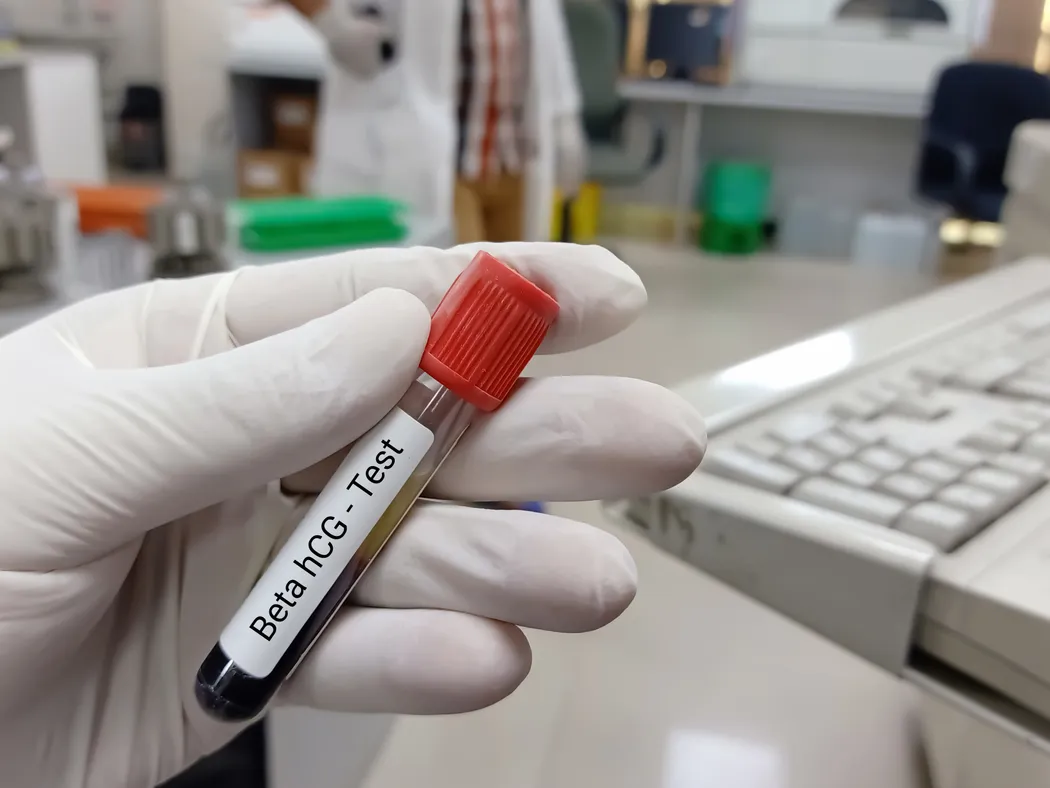
  • A quantitative test (called a beta-hCG test) measures the exact amount of hCG in your blood in mIU/mL.

A positive result confirms that hCG is circulating in your body at detectable levels. It does not, on its own, confirm that the pregnancy is viable or that it is located in the uterus. Your doctor will use serial measurements and, later, an ultrasound to assess those questions.

hCG Beta Levels by Week: What's Normal

An hCG beta levels chart can help you understand how beta-hCG levels may change during early pregnancy. hCG generally rises rapidly during early pregnancy, but the rate of increase varies with the starting hCG level and the stage of pregnancy. Serial measurements are sometimes used in very early pregnancy when clinicians need to assess the pattern of change rather than relying on a single value. The table below provides broad reference ranges for beta-hCG levels by gestational week. Gestational age is counted from the first day of your last menstrual period (LMP)

Gestational ageApproximate hCG range (mIU/mL)
3 weeks5–50
4 weeks10–750
5 weeks200–7,000
6 weeks200–32,000
7 weeks3,000–160,000
8 weeks32,000–210,000
9 weeks    64,000–210,000
10 weeks    46,000–230,000
11–12 weeks27,000–210,000
13–16 weeks13,000–250,000
17–24 weeks4,000–165,000
25–40 weeks3,000–115,000

hCG reference ranges vary considerably between laboratories and assays, so there is no single universal “normal” range for each week of pregnancy. The ranges below are examples from a laboratory reference source and should be interpreted using the reference interval provided with your own test report. Gestational age is usually calculated from the first day of the last menstrual period (LMP). A single hCG result cannot determine whether a pregnancy is developing normally.

These ranges are wide because hCG varies significantly between individuals and even between different pregnancies in the same person. A single number is rarely enough information on its own. What matters most is the trend: two readings taken 48 hours apart tell you far more than one reading alone. If hCG is not rising appropriately in very early pregnancy, your doctor may investigate further.

How Accurate Are Pregnancy Blood Tests?

The short answer to how accurate is a pregnancy blood test: very accurate. Laboratory blood tests for hCG are highly sensitive for detecting pregnancy, but accuracy depends on the assay, timing of testing, and clinical circumstances. No single percentage such as 99% applies universally to every laboratory hCG test.

False negatives are more common than false positives in the earliest days. Testing too soon after conception can produce a negative result because hCG may not yet have reached the assay's detection threshold. hCG production begins after implantation, so testing becomes more reliable as time passes. Diluted samples or handling errors can also push a result below the detection threshold.

False positives are rare but possible. Causes include:

  • Recent use of hCG-containing fertility medications, such as trigger injections used during IVF cycles
  • Certain rare hCG-secreting conditions, including germ-cell tumours and gestational trophoblastic disease (both uncommon, but worth ruling out if results seem unexplained)
  • A very recent miscarriage where hCG is still clearing from the bloodstream
  • Severely haemolysed or lipemic blood samples that interfere with the assay

If the result is unexpected or the pregnancy's location or development is uncertain, your clinician may recommend repeat quantitative hCG testing and/or ultrasound. The appropriate timing depends on the initial hCG level and clinical circumstances

Cost and Timeline: When and Where to Get Tested

How much does it cost?

The quantitative hCG blood test cost in India typically ranges from Rs. 200 to Rs. 700 at a reputed diagnostic centre or hospital laboratory. Prices vary by city and whether the test is walk-in or ordered through a gynaecologist. Packages that pair a qualitative screen with a quantitative confirmation may cost a little more.

When should you take the test?

Knowing when to take a pregnancy blood test matters for getting a reliable result:

A blood test may detect pregnancy before a missed period, but testing very early can still produce a false-negative result because hCG levels may be below the laboratory's detection threshold. Testing around the expected period generally provides a more reliable result.

Testing from the first day of a missed period gives a clearer, more interpretable result because hCG levels are higher by then.

After fertility treatment, the timing of beta-hCG testing is usually determined by the fertility clinic and depends on the treatment and timing of embryo transfer. Follow the testing date provided by your fertility specialist rather than testing earlier on your own.

How fast do results come back?

Turnaround time varies by laboratory, location, collection method, and whether urgent processing is available. For example, Apollo 24|7 currently lists beta-hCG reports as available within about 10 hours in some locations, while other locations may have different turnaround times. Check the laboratory's current reporting time when booking the test.

Blood Test vs Urine Test: Key Differences

Both tests measure hCG but differ in meaningful ways.

Feature Blood (Beta-hCG) Test Urine (Home) TestDetection thresholdAs low as 1 to 5 mIU/mL

FeatureBlood (Beta-hCG) Test    Urine (Home) Test
Detection thresholdAs low as 1 to 5 mIU/mLVaries by home pregnancy test; check the manufacturer's stated sensitivity
Earliest detectionMay detect pregnancy before a missed periodUsually around the expected period, although some highly sensitive tests may detect pregnancy earlier
Test settingLaboratory or healthcare facilityAt home
ResultCan provide a qualitative or quantitative resultUsually provides a positive or negative result
Turnaround time Usually takes several hours, depending on the laboratory    Usually available within minutes
Best use caseConfirmation, monitoring, and IVF follow-upInitial pregnancy screening
CostVaries by laboratory, city, and collection serviceGenerally lower than a laboratory blood test

In the blood test vs urine test pregnancy comparison, a urine test is a practical first screen. For women who need an early or definitive answer, particularly after IVF, after a previous loss, or when a home test gives an unclear reading, the blood test is the better choice for precision and detail.

Who Should Avoid or Be Cautious With This Test

The blood draw itself carries no meaningful risk. The caution is in interpreting results without the right clinical context. Situations that require extra care:

  • Recent treatment: This treatment with a hCG-containing fertility medication can cause a temporary positive pregnancy test because the medication itself contains hCG. The time required for the medication to clear varies with the product and dose, so follow your fertility clinic's instructions about when to test.
  • Known hCG-secreting conditions: certain rare tumours and gestational trophoblastic disease can elevate hCG independently of pregnancy. If there is no clear conception history, your doctor may order additional tests to rule these out.
  • Recent pregnancy loss: hCG clears gradually after a miscarriage or termination and may still register as positive for days to weeks afterward.
  • Sample quality issues: severe dehydration, haemolysis, or lipemia in the blood sample can distort results. A repeat test with a fresh, properly collected sample resolves most of these cases.

Report any unexpected symptoms or test reactions to your healthcare provider or the relevant regulatory authority.

Next Steps After a Positive Result

A positive blood test positive for pregnancy is exciting news, and it is also the beginning of a process, not the end of one.

  • Book an appointment with a gynaecologist as soon as possible. They will confirm the result, estimate gestational age, and Depending on your symptoms, medical history, and hCG results, your clinician may arrange an early ultrasound to confirm the location of the pregnancy and assess its development. The timing varies, and an ultrasound performed too early may not yet show all expected findings.
  • Serial beta-hCG tests may be ordered if there is any uncertainty about viability or location.
  • Your doctor will likely discuss folic acid supplementation and prenatal care at this first visit. Do not start, stop, or adjust any supplement or medicine without their guidance; all prescribing decisions should be made by a qualified healthcare professional based on your individual history.
  • Start thinking about lifestyle adjustments: rest, nutrition, avoiding alcohol and smoking, and limiting unnecessary medications.

As you prepare for the months ahead, you may also find it useful to read about newborn care tips for after delivery so you feel ready well before your due date.

Conclusion

A positive blood test for pregnancy confirms that detectable hCG is present, but a single result cannot determine the pregnancy’s location or whether it is developing normally. Because hCG levels vary widely between individuals and laboratories, results are best interpreted using the laboratory’s reference range and, when needed, follow-up testing or ultrasound. After a positive result, schedule care with a qualified healthcare professional to discuss gestational age, prenatal vitamins such as folic acid, medications, and appropriate follow-up. If you experience severe abdominal pain, heavy bleeding, dizziness, fainting, or other concerning symptoms, seek medical attention promptly. With appropriate follow-up, your healthcare team can help confirm the pregnancy and guide you through the next steps.

FAQS

How many days after a missed period should I take a blood test?

You can take a beta-hCG blood test from the first day of your missed period for a reliable result, though it can detect pregnancy a few days earlier than that. Waiting until the day of your missed period reduces the chance of a very early false negative.

Can hCG levels be high but not pregnant?

Yes, in rare cases. Certain conditions such as gestational trophoblastic disease or hCG-secreting germ-cell tumours can elevate hCG without an ongoing pregnancy. A recent miscarriage can also leave residual hCG in the blood for days to weeks.

Does a blood test confirm pregnancy immediately?

Results are available within a few hours of the blood draw at most certified labs. A positive blood hCG result confirms detectable hCG, but it does not by itself establish pregnancy location or viability. Depending on the circumstances, clinicians may use serial hCG measurements and ultrasound to evaluate an early pregnancy.

What is a good hCG level at 4 weeks?

There is a wide range of hCG values in early pregnancy, and the reference interval varies by laboratory and assay. For example, one major laboratory reference lists 10–750 mIU/mL at 4 weeks of gestation. A single value cannot determine whether a pregnancy is developing normally, so your result should be interpreted using your laboratory's reference range and, when clinically indicated, follow-up testing or ultrasound.

Is fasting required for a beta-hCG blood test?

No, fasting is not required. You can eat and drink normally before the test. Severely fatty or lipemic blood drawn after a very high-fat meal can occasionally affect sample quality, but a standard meal poses no issue.
Apollo 247 Floating Action Button