logo
0

BLW Spoon Guide: Safe Baby-Led Weaning Tips

Learn how to choose a BLW spoon, prepare safe finger foods, prevent choking and introduce baby-led weaning based on your baby's readiness.

article image

Dr. Vasantha Sree

Starting solids is one of the most exciting milestones in a baby's first year, and choosing the right BLW spoon is a small decision that can make a big difference in how confidently your baby takes to self-feeding. Baby-led weaning has gained wide attention among parents and paediatricians alike, but it comes with real questions about safety, equipment, and which foods are actually appropriate. This guide covers what you need to know before handing your baby that first soft carrot stick.

What Is Baby-Led Weaning?

Baby-led weaning (BLW) skips thin purees and lets babies feed themselves soft, appropriately sized pieces of real food from the very start of solids. Instead of a caregiver guiding a spoon into the baby's mouth, the baby picks up food, explores textures, and decides how much to eat. The approach may give babies opportunities to practise self-feeding, grasping and handling different textures, although evidence does not establish BLW as superior to other responsive approaches to complementary feeding.

Traditional spoon-feeding means a caregiver controls the pace and quantity of each bite. BLW hands that control to the baby. Many families also combine both approaches, offering finger foods alongside pre-loaded spoons for foods like yoghurt or dal.

When does BLW start? Most babies are ready to start complementary foods, including BLW, at around 6 months when they show the necessary developmental readiness. Clear readiness signs include:

  • Sitting upright with minimal support
  • Good head and neck control
  • Showing interest in food at mealtimes
  • Being able to swallow food rather than consistently pushing it back out of the mouth

If you are unsure whether your baby is ready, check with your paediatrician before starting. These readiness skills help babies safely manage food and swallow different textures, so complementary foods should be introduced when the baby is developmentally ready.

Choosing the Right BLW Spoon and Baby-Led Weaning Utensils

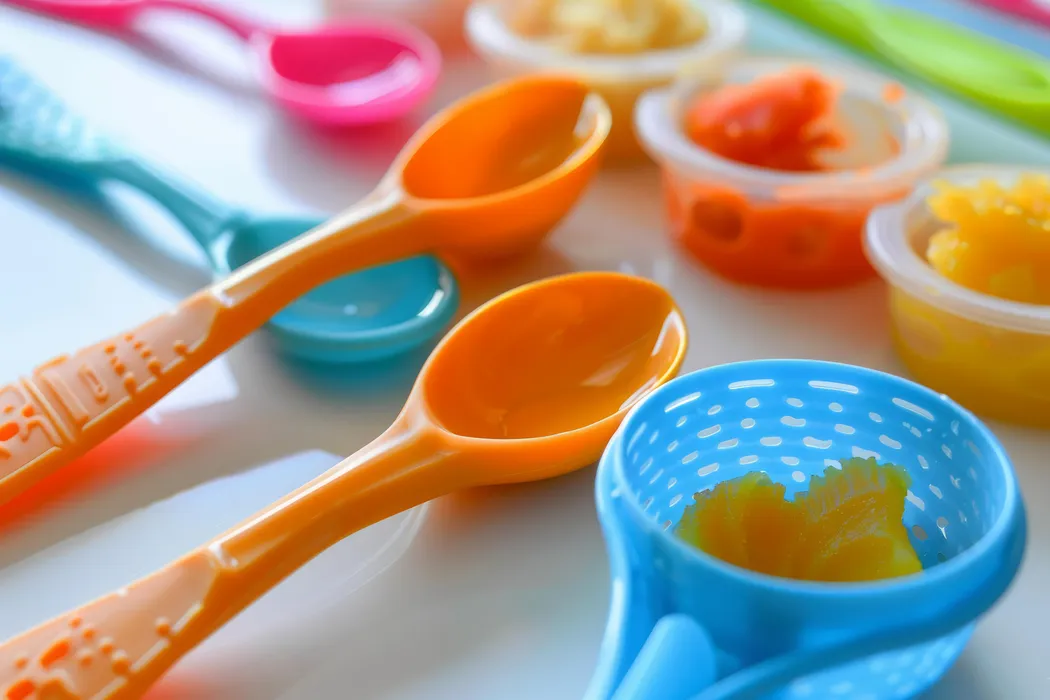
Baby-led weaning does not mean spoons are off the table. A good BLW spoon is actually a core piece of baby-led weaning utensils because it lets babies practice self-feeding with soft, spoonable foods from day one. Paired with the right bowls and bibs, the right spoon makes mealtimes less messy and more successful.

What Makes the Best Spoons for Baby-Led Weaning?

The best spoons for baby-led weaning share a few practical features:

  • A short, chunky handle sized for a baby's palm grip rather than adult fingers
  • A shallow, small bowl so the mouth is never overfilled
  • Soft silicone or rubber tips, gentle on new teeth and gums
  • A broad flange or stopper near the bowl to limit how far the spoon enters the mouth

Silicone spoons are a practical option because they are soft and flexible, but the material is only one consideration. Choose a spoon made from food-contact-safe materials, with no loose or detachable parts, and inspect it regularly for cracks, peeling or other damage. Follow the manufacturer's cleaning and care instructions.

Pre-Loading the Self-Feeding Baby Spoon

Very young self-feeders (6 to 8 months) cannot yet scoop food independently. A practical solution is to pre-load the spoon: dip it into the food and hand it to the baby, bowl-end first. This is still a genuine self-feeding baby spoon approach because the baby controls how the spoon enters their mouth and how much they take.

Around 9 to 12 months, many babies start attempting to dip and scoop on their own. Thicker foods such as mashed sweet potato or hummus stick to the spoon better than thin purees and make early scooping more rewarding.

Other Helpful Baby-Led Weaning Utensils

A few extras round out your BLW toolkit:

  • A silicone suction bowl or plate that grips the tray and reduces tipping
  • A waterproof silicone bib with a front pocket to catch dropped food
  • A small open cup introduced around 6 months for supervised water sips

Getting the right baby-led weaning utensils in place before you start means less frustration for both of you. For broader newborn care essentials for new parents, Apollo has guidance on those early weeks too.

Safe Finger Foods for Self-Feeding

Choosing baby-led weaning finger foods is mostly about texture and shape. The core rule: any food should be soft enough to squash between your thumb and index finger with light pressure.
Shape and Size for Baby-Led Weaning Finger Foods

For safe self-feeding, consider both the food's texture and the way it is cut:

  • Cut food into stick or strip shapes roughly the length of an adult finger. At around 6 months, many babies use a whole-hand grasp to pick up food, so offer soft, appropriately sized pieces that they can grasp and bring to their mouth safely.
  • Avoid offering round, firm foods such as whole grapes and cherry tomatoes because their shape and firmness can increase choking risk. Cut them lengthwise into appropriate smaller pieces before serving.
  • As your baby's hand and finger control develops, they can gradually manage smaller pieces of appropriately soft food. By around 9 months, many babies can use their fingers to rake food towards themselves.

Baby-Led Weaning First Foods: Good Starters

These baby-led weaning first foods are reliable options for the early weeks:

  • Steamed broccoli florets, where the stem acts as a natural handle
  • Soft-cooked carrot sticks or sweet potato wedges
  • Ripe banana or avocado in strips, rolled in baby rice cereal to reduce slipping
  • Scrambled egg in thick, foldable pieces
  • Soft-cooked pasta shapes
  • Unsalted, soft-cooked dal or lentils served on a pre-loaded BLW spoon

Avoid honey before 12 months because it can cause infant botulism. Limit added salt and added sugars, and modify foods appropriately to reduce choking risk. Cow's milk as a main drink is not recommended before 12 months, though small amounts in cooking are fine.

Choking vs Gagging: Safety Precautions

Gagging is one of the most common worries parents bring to BLW, and it deserves a clear explanation. Gagging is a normal, protective reflex. Babies have a gag reflex positioned further forward on the tongue than adults, so they gag more easily. This is the body doing exactly what it should: moving food back to a safe position. A gagging baby may cough, splutter, and make retching sounds, but their colour remains normal.

Choking is different and is a medical emergency. A baby with severe choking may be unable to cough effectively, cry or make sounds and may have difficulty breathing or develop a blue or grey colour. This is why supervised, seated feeding is non-negotiable. Never leave a baby alone with food, and never feed a baby who is reclined or in a car seat.

Choking Hazards Baby-Led Weaning Parents Must Avoid

Some foods are particularly risky because of their size, shape, hardness or stickiness. Common choking hazards include:

  • Whole grapes, blueberries, and cherry tomatoes (always halve or quarter lengthwise)
  • Raw hard vegetables or fruits such as raw apple or raw carrot
  • Whole nuts or large spoonfuls of nut butter
  • Popcorn, hard candies, and raisins

If you suspect your baby is choking, call emergency services immediately. Report any feeding-related adverse events to your healthcare provider or the relevant regulatory authority. For severe incidents, contact the nearest poison control centre or emergency helpline in your region.

Contraindications: When to Delay BLW?

BLW is not appropriate for every baby. Speak with your paediatrician before starting if your baby has any of the following:

  • Premature birth: Babies born prematurely may need an individualised assessment of feeding readiness. Corrected age can help when assessing developmental milestones, but feeding readiness should also be considered alongside oral-motor skills, growth and medical history.
  • Low muscle tone or hypotonia: Reduced muscle tone can affect a baby's ability to maintain a safe feeding position and manage food. A paediatrician or feeding specialist can assess whether your baby is ready for self-feeding.
  • Swallowing difficulties or a history of aspiration: These conditions can affect how safely a baby manages food and liquids. Seek professional feeding assessment before introducing solids.
  • Neurological conditions affecting motor development: These conditions may affect posture, coordination or oral-motor skills needed for safe feeding. Discuss complementary feeding with your paediatrician and, where appropriate, a feeding specialist.
  • Cleft palate or other structural differences affecting oral feeding: These differences can interfere with sucking, chewing or swallowing. A paediatrician or feeding specialist should guide the introduction of complementary foods.

In these situations, a speech-language pathologist or feeding specialist should be involved before solids are introduced. Starting BLW without appropriate assessment in babies with feeding or developmental difficulties may increase the risk of choking or aspiration.

Conclusion

Baby-led weaning can give babies opportunities to practise self-feeding and explore a variety of tastes and textures, but safety should remain the priority. Choosing appropriately sized and soft foods, using suitable utensils, and understanding the difference between gagging and choking can help make mealtimes safer and more manageable.

There is no single right way to introduce solids, and many families use a combination of finger foods and responsive spoon-feeding. If your baby was born prematurely, has difficulty swallowing, or has a medical or developmental condition that may affect feeding, speak with your paediatrician or feeding specialist before starting BLW.

FAQS

What is the best age to start baby-led weaning?

Most paediatric guidance recommends starting solids, including BLW, at around 6 months when readiness signs are present. Starting before 4 months is not recommended. and before 6 months should only happen under medical advice.

Can I use a spoon in baby-led weaning?

Yes, a pre-loaded BLW spoon is a standard part of baby-led weaning and works well for soft, spoonable foods like yoghurt, dal, and mashed vegetables. The baby controls the spoon entering their mouth, which aligns with the BLW philosophy.

What are the first foods for baby-led weaning?

Good baby-led weaning first foods include steamed broccoli florets, soft-cooked sweet potato sticks, ripe banana strips, scrambled egg, and soft pasta. All should be soft enough to squash easily and shaped so a baby can grip them with a full fist.

How do I prevent choking during baby-led weaning?

Always supervise meals with your baby seated upright, offer foods that squash easily, and modify round, firm foods such as grapes and cherry tomatoes by cutting them lengthwise. Learning infant first aid, including back blows for choking, before starting solids is strongly recommended.

Is baby-led weaning better than purees?

Neither approach is universally better. BLW may give babies opportunities to practise self-feeding and explore different textures, but evidence does not establish it as superior to other responsive approaches to complementary feeding. A combined approach works well for many families. The right method depends on your baby's readiness, temperament, and any medical considerations.

Apollo 247 Floating Action Button