logo
0

Bottle Warmer: Guide to Safe Infant Bottle Feeding

Learn how to use a bottle warmer safely, including suitable temperatures, warming methods, hygiene, feeding precautions, and tips for safe infant bottle feeding.

article image

Dr. Nallapu Siri

Feeding a newborn happens up to eight to twelve times a day, so getting the temperature right, keeping equipment clean, and storing milk safely all matter more than they might seem at first. The bottle warmer is one of the most searched-for feeding tools among new parents in India, and understanding how to use it correctly makes every feed safer. This guide covers how bottle warmers work, what features to look for, sterilization, milk storage, and building a routine you can sustain through the sleep-deprived early months.

How a Bottle Warmer Works and Why It Matters?

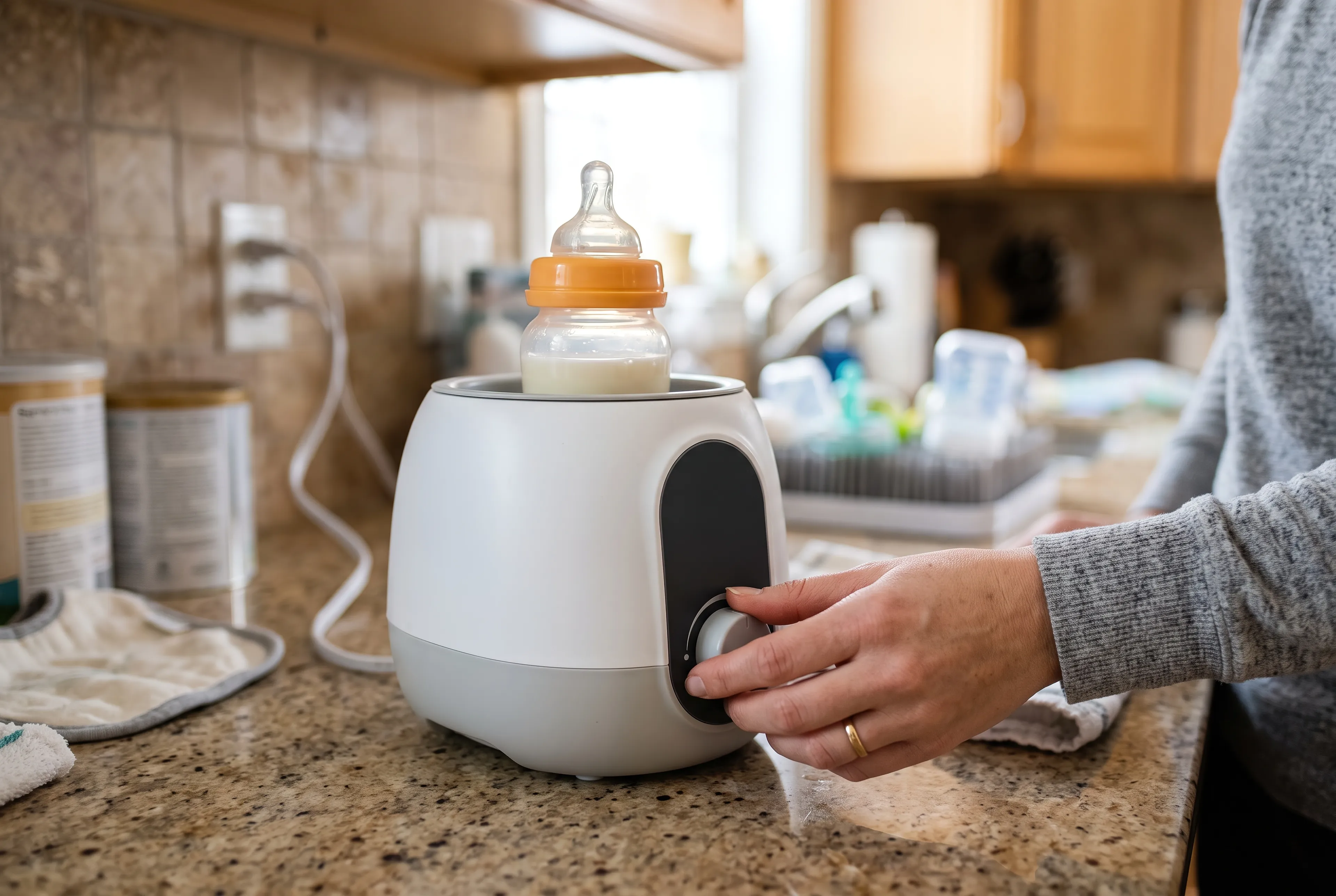
A bottle warmer heats milk by surrounding the bottle with warm water or steam, raising the temperature gradually and evenly. This even heating is the critical difference from a microwave.

Microwaves heat unevenly, creating hot spots inside the milk that can burn a baby's mouth even when the outside of the bottle feels fine. They can also degrade some of the beneficial proteins in breast milk. A dedicated bottle warmer avoids both problems by keeping the process gentle and controlled.

For parents asking whether it is safe to use a bottle warmer for baby milk, the answer is yes, provided you follow the manufacturer's time and water-level guidelines and always test the milk on your inner wrist before feeding.

Choosing a Bottle Warmer: Features to Compare

Not all warmers are built the same. Before picking one, check these features:

  • Compatibility: does it fit the bottle sizes and shapes you already own? Wide-neck and standard bottles have different diameters.
  • Auto shut-off stops warming once the cycle ends, preventing overheating if you get distracted during a night feed.
  • A defrost mode is useful for thawing frozen breast milk without cooking it.
  • Ease of cleaning matters because mineral deposits from water build up inside warmers. Look for a removable warming chamber you can descale easily.
  • Heating speed makes a real difference at 3 a.m.

The Philips Avent bottle warmer range is a commonly recommended example when parents search for the best bottle warmer India has to offer, because it includes auto shut-off and fits most Avent bottles. Compatibility with other bottle brands varies by model, so confirm the fit before buying. Comparing a few models side-by-side on these features is always worthwhile, regardless of brand.

Step-by-Step: Using a Bottle Warmer Safely

Fill the warmer with water to the level marked for your bottle size. Too little water shortens heating; too much can over-warm.

  • Place the sealed bottle in the warmer and set the timer according to the manufacturer's chart. For a refrigerated 150 ml bottle, this is typically around four minutes, but check your specific model.
  • When the cycle ends, remove the bottle and swirl it gently. Never shake, as that introduces air bubbles.
  • Test the formula milk warming temperature by dropping a few drops on the inside of your wrist. The milk should feel warm, not hot. If it stings even slightly, let it cool for a minute and retest.
  • Feed immediately: Milk should not sit in the warmer on a keep-warm setting for extended periods.

How long you warm a bottle depends on the starting temperature (room temperature, refrigerated, or frozen) and the volume. Frozen milk takes significantly longer; most warmers have a defrost setting for this.

Sterilising Bottles and Feeding Equipment

Sterilization removes bacteria that a standard dish wash cannot reliably reach. There are three main methods:

  • Steam sterilising: Electric steam sterilisers or microwave steam bags kill most bacteria quickly and are the most practical for everyday use.
  • Boiling: Submerge bottles and teats in boiling water for five minutes. Effective, but repeated boiling degrades teats faster over time.
  • Cold-water (chemical) sterilising: Uses a sterilising solution or tablet. Bottles must be fully submerged for the required contact time.

How often you sterilise depends on your baby's age. For newborns, sterilise all bottles, teats, and lids before every use. As babies grow past around six months, many pediatricians relax this to once daily, though daily sterilization through the first year is a safe default. When in doubt, ask your child's doctor.

Good sterilization habits pair well with newborn care basics beyond feeding to build a consistent hygiene routine from the start.

Safe Storage of Formula and Breast Milk

Knowing how long milk stays safe prevents both waste and illness. Use this table as a reference:

Milk TypeRoom Temperature (up to 25°C)Refrigerator (4°C)Freezer
Freshly expressed breast milkUp to 4 hoursUp to 4 daysUp to 6 months (optimal)
Thawed breast milk 1 to 2 hoursUp to 24 hoursDo not refreeze
Prepared formulaUp to 2 hoursUp to 24 hoursNot recommended
Opened ready-to-feed formulaUp to 2 hours Up to 48 hours Not recommended

These are general breast milk storage guidelines and baby bottle storage guidelines drawn from widely accepted guidance. Always label bottles with the date and time expressed or prepared. If milk smells sour, discard it regardless of timing.

Contraindications and Safety Precautions

There are situations where you should not use a bottle warmer, or where extra caution is needed:

  • Never re-warm a bottle that has already been warmed once. Repeated heating encourages bacterial growth.
  • Discard any milk left in the bottle after a feed within one hour. Saliva from the teat contaminates milk rapidly.
  • Do not warm formula that has been sitting at room temperature for more than two hours. It is already in the discard window.
  • Do not use a warmer to rescue milk that smells off or has passed its storage time. Warming does not make spoiled milk safe.
  • If your baby has a diagnosed feeding problem, reflux, or allergy, consult your pediatrician before making changes to warming or formula preparation routines.

Report any adverse events related to feeding equipment or formula preparation to your healthcare provider or the relevant regulatory authority.

Establishing a Healthy Feeding Routine

Consistency in how you warm, sterilise, and store feeds makes the whole process less stressful over time. A few habits that help:

  • Sterilise a full set of bottles once a day so you always have a clean one ready.
  • Keep a small jug for measuring warmer water at the feeding station so you refill to the right level every time.
  • Watch your baby's hunger cues rather than feeding strictly by the clock. Responsive feeding works with any equipment.
  • Keep the feeding area organised: warmer, sterilised bottles, formula tin, and a cloth for spills in one place. Fewer steps at 2 a.m. means fewer mistakes.

The bottle warmer fits naturally into this kind of routine because the setup is straightforward and the auto shut-off removes one variable from an already busy process. Whatever warmer you choose, the routine matters more than the brand.

Conclusion

Safe bottle feeding comes down to three consistent habits: warming milk gently to the right formula milk warming temperature (around body temperature, roughly 37°C), sterilising equipment thoroughly, and storing formula and breast milk within safe time limits. The Philips Avent bottle warmer is a practical tool to support those habits, especially for parents managing frequent feeds across day and night. Pair it with good storage practices and responsive feeding cues, and you have a routine that protects your baby and gives you one less thing to worry about.

FAQs

Can I leave milk in a bottle warmer all day?

No. Milk should not sit in a warmer for extended periods. Once a feed is ready, use it within one hour. Warm milk is an ideal environment for bacterial growth, so the keep-warm function is not a safe substitute for proper refrigeration.

Is the Philips Avent bottle warmer worth buying?

For parents who formula-feed frequently or use expressed breast milk, a dedicated bottle warmer is genuinely useful. The Philips Avent bottle warmer is well-regarded for its auto shut-off and straightforward controls, making it a practical choice among the options available in India.

Can bottle warmers cause overheating?

Yes, if you use too much water, set the wrong cycle time, or ignore the auto shut-off. Always follow the manufacturer's water-level guide for your bottle size and test the milk on your wrist before every feed, regardless of the setting used.

How do I clean a bottle warmer?

Empty and wipe the warming chamber after each use. Descale regularly using a solution of white vinegar and water or a descaling product recommended by the manufacturer. Mineral build-up affects heating performance and can harbor bacteria over time.

What is the safest way to warm formula milk?

Place the sealed bottle in a bowl of warm (not boiling) water for a few minutes, or use a dedicated bottle warmer set to the correct cycle. Always test the temperature on your inner wrist before feeding, and never use a microwave.

Apollo 247 Floating Action Button