logo
0

Breast Pain During Pregnancy: Causes & Relief Tips

Understand why breast pain during pregnancy happens, what nipple discharge means, and when tenderness needs medical attention. Expert-reviewed guide.

article image

Dr.Kamran

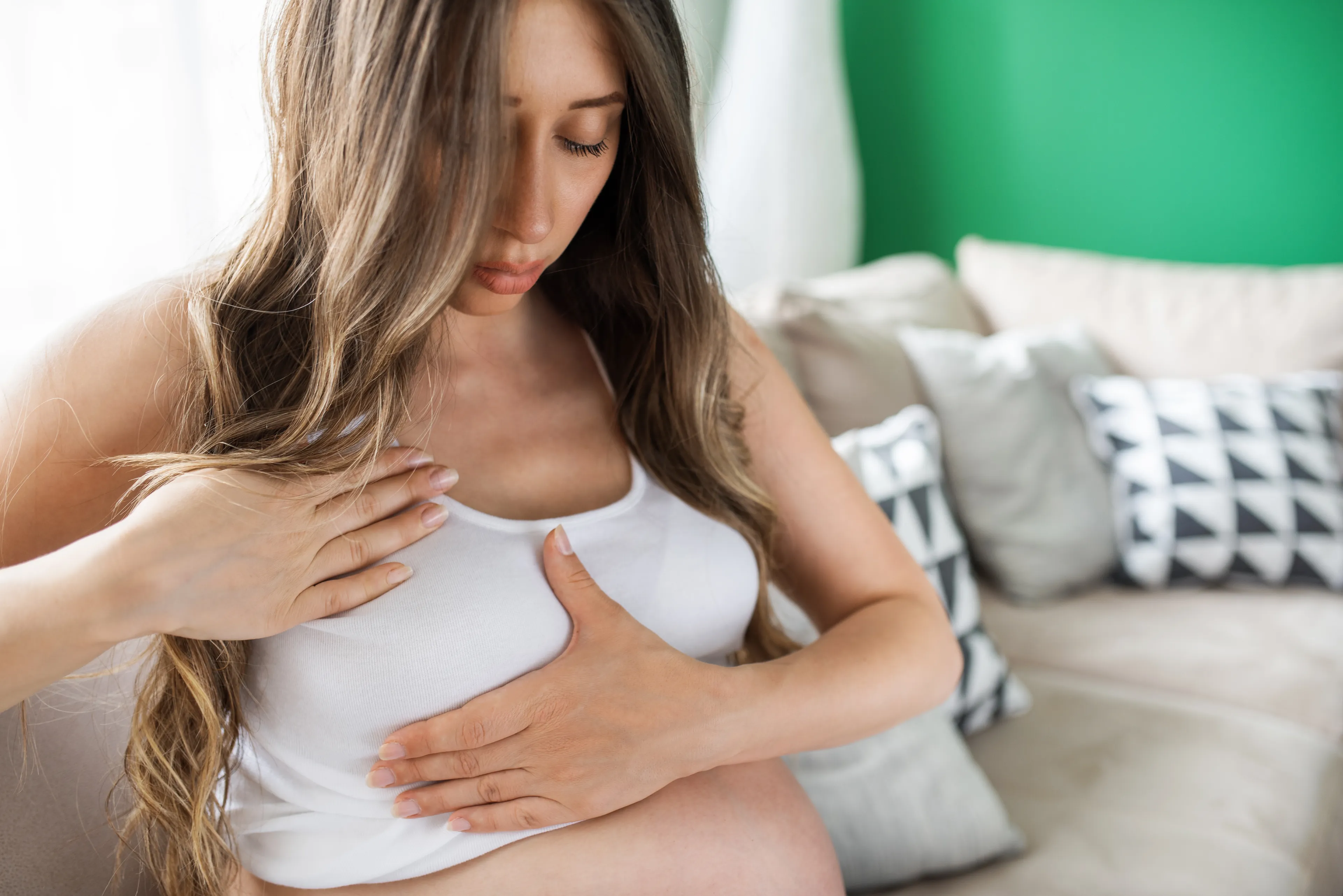
Breast pain during pregnancy is common and may be one of the first physical changes you notice. Your breasts may feel tender, heavy, swollen or unusually sensitive, sometimes even before your missed period. These changes occur as your body prepares for pregnancy and, later, breastfeeding.

Although breast tenderness is usually linked to normal hormonal changes, the timing and intensity vary from person to person. Understanding why it happens, how to manage discomfort and which symptoms need medical attention can help you care for yourself throughout pregnancy.

Why Do Breasts Hurt During Pregnancy?

Breast tenderness during pregnancy is mainly caused by rising levels of oestrogen and progesterone. These hormones support changes in breast tissue, including the growth of milk ducts and milk-producing glands. Increased blood flow and changes in the surrounding tissues can also contribute to swelling, fullness and sensitivity.

You may notice several changes, including:

  • Tenderness and soreness: Your breasts may feel sensitive to touch or uncomfortable when you move.
  • Swelling and fullness: Your breasts may become larger or feel heavier as breast tissue develops.
  • Nipple sensitivity: Your nipples may become more sensitive, tender or uncomfortable against clothing.
  • Changes in the areola: The area around your nipples may become darker or larger.
  • Visible veins: Increased blood flow may make veins beneath the breast skin more noticeable.
  • Montgomery's glands: Small bumps around the nipples may become more prominent. These are normal glands that help protect and lubricate the nipple area.

When Does Breast Pain Start During Pregnancy?

Breast tenderness can begin in early pregnancy, sometimes around weeks 4 to 6 of pregnancy, although some people notice changes earlier or later. It may also feel similar to the breast soreness experienced before a menstrual period.

Breast pain alone cannot confirm pregnancy. If you have missed your period, a home pregnancy test can help determine whether you are pregnant.

Breast Pain by Trimester: What Changes Can You Expect?

Breast changes continue throughout pregnancy, but their timing and intensity differ from person to person. You may experience tenderness throughout pregnancy, or it may come and go.

First trimester (weeks 1 to 13)

Hormonal changes can make your breasts feel tender, swollen or heavy. Your nipples may become more sensitive, while your areolas may darken and small bumps around them may become more noticeable. For some people, discomfort is particularly noticeable during this stage.

Second trimester (weeks 14 to 27)

Your breasts continue to grow as milk-producing tissue develops. Tenderness may become less noticeable for some people, although fullness, heaviness and occasional soreness can continue. You may also notice more visible veins and changes in nipple sensitivity.

Third trimester (weeks 28 to 40)

Your breasts may feel heavier as they continue preparing for breastfeeding. The skin may feel stretched or itchy as breast size changes. Some people also notice colostrum, the first milk produced by the breasts, leaking from the nipples. Others do not notice any leakage before delivery, which is also normal.

Understanding Nipple Discharge During Pregnancy

Nipple discharge can occur during pregnancy as your breasts prepare to produce milk. One common type is colostrum, a nutrient-rich first milk that provides nourishment to your newborn.

Colostrum is usually thick and sticky and may appear clear, pale yellow or golden. It can leak spontaneously or appear when the nipple is gently pressed. Some people notice leakage during the second or third trimester, while others do not notice it until after childbirth.

You do not need to express colostrum during pregnancy unless your maternity team has specifically advised you to do so. Avoid squeezing your nipples repeatedly to check for discharge.

When Should You Get Nipple Discharge Checked?

Although colostrum leakage can be a normal pregnancy change, new or unusual nipple discharge should be assessed. Consult your doctor if you notice:

  • Blood-stained or bloody discharge.
  • Discharge accompanied by a breast lump, swelling or skin changes.
  • Pus-like discharge or discharge with an unpleasant smell.
  • Persistent spontaneous discharge, particularly if it comes from only one nipple.

The colour or appearance of discharge alone cannot establish its cause. Your doctor can assess whether further examination or testing is needed.

Home Care and Relief Tips for Sore Breasts During Pregnancy

Mild breast discomfort can often be managed with simple changes to your daily routine. Try the following measures:

  • Wear a supportive bra: Choose a well-fitted maternity or soft sports bra with wide straps and comfortable fabric. Avoid bras that feel tight or put pressure on your breasts.
  • Use a cool or warm compress: Apply a cool, damp cloth or a comfortably warm compress for short periods, depending on which feels more soothing. Avoid applying ice or excessive heat directly to your skin.
  • Choose comfortable clothing: Wear soft, breathable fabrics that do not rub against your nipples or put pressure on your breasts.
  • Adjust your sleeping position: Sleeping on your side with a pillow supporting your upper body may make breast discomfort easier to manage.
  • Keep your skin comfortable: Use a gentle, fragrance-free moisturiser if your skin feels dry or stretched. Avoid vigorous massage or pressure on tender areas.
  • Maintain a balanced diet: Eat a varied diet and drink enough fluids to support your general health during pregnancy.

If these measures do not provide enough relief, speak to your doctor before using a medicine or medicated topical product.

When Does Breast Pain or Discharge Need Medical Attention?

Although breast tenderness is common during pregnancy, certain changes should not be dismissed as normal hormonal symptoms.

Consult your doctor promptly if you notice:

  • A new breast or armpit lump: Any new or persistent lump needs assessment, even if it is not painful.
  • Redness, warmth or swelling: These changes, particularly when they affect one area of the breast, may indicate an infection.
  • Fever or flu-like symptoms: Fever, chills, body aches or feeling unwell alongside breast pain may suggest an infection.
  • Bloody nipple discharge: Blood-stained discharge should be evaluated.
  • Changes in the skin or nipple: Dimpling, puckering, a persistent rash or a newly inverted nipple needs medical assessment.
  • Persistent or severe pain: Pain that is localised, worsening or does not improve should be checked.

Mastitis is an inflammation of breast tissue that is most commonly associated with breastfeeding, although breast inflammation or infection can occur at other times. A painful, hot or swollen area, sometimes accompanied by fever, needs prompt medical assessment.

Most breast changes during pregnancy are not serious, but a new or unusual symptom should be assessed rather than assumed to be pregnancy-related.

Contraindications and Precautions

Before using medicines or other treatments for breast pain during pregnancy, consider the following precautions:

  • Pain relief medicines: Paracetamol is generally the first-choice medicine for mild to moderate pain during pregnancy when needed. Use the lowest effective dose for the shortest necessary time and follow the product instructions. Check with your doctor or pharmacist if you are unsure whether it is suitable for you.
  • Non-steroidal anti-inflammatory drugs (NSAIDs): Medicines such as ibuprofen, diclofenac and naproxen are generally avoided during pregnancy unless specifically prescribed. The risks are particularly important from 20 weeks onwards, and these medicines should not be used in the third trimester unless a specialist advises otherwise.
  • Medicated creams and essential oils: Do not apply medicated creams, essential oils or herbal preparations to your breasts or nipples without checking whether they are suitable during pregnancy.
  • Nipple stimulation: Avoid vigorous or repeated nipple stimulation as a way to relieve discomfort. It is not a recommended treatment for breast pain, and intentional nipple stimulation may trigger uterine contractions.

If you need regular pain relief or your symptoms are not improving, consult your doctor to identify the cause and discuss suitable treatment.

Conclusion

Breast pain during pregnancy is usually associated with hormonal changes, increased blood flow and the development of milk-producing tissue. Tenderness, swelling, nipple sensitivity and changes in breast size can occur at different stages, and the intensity may vary throughout pregnancy.

A supportive bra, comfortable clothing and cool or warm compresses may help ease mild discomfort. However, consult your doctor if you notice a lump, bloody discharge, skin changes, persistent pain or signs of infection. Appropriate assessment can help identify the cause and ensure you receive suitable care.

FAQS

Is breast pain a sign of pregnancy before a missed period?

Breast tenderness can be an early pregnancy symptom and may occur before a missed period. However, it can also happen before menstruation because of normal hormonal changes. A home pregnancy test is a more reliable way to check whether you are pregnant.

How long does breast tenderness last during pregnancy?

The duration varies. Some people experience tenderness mainly during the first trimester, while others have breast soreness, fullness or sensitivity throughout pregnancy. There is no fixed week by which breast pain must disappear.

Can breast pain mean something is wrong with the baby?

Breast pain on its own is usually related to normal changes in your body and does not indicate a problem with your baby's development. However, if you also experience symptoms such as vaginal bleeding, severe abdominal pain or other concerning changes, consult your maternity team.

Is it normal for only one breast to hurt during pregnancy?

Mild tenderness may affect one breast more than the other because breast tissue and size are not always symmetrical. However, persistent or severe one-sided pain, particularly with a lump, redness, swelling or unusual discharge, needs medical assessment.
Does an increase in breast size make breast pain worse during pregnancy?

Breast growth can contribute to discomfort because of the added weight, tissue changes and stretching of the skin. A well-fitted, supportive maternity bra may help reduce pressure and make everyday activities more comfortable. However, breast size alone does not determine how much pain you experience.

Apollo 247 Floating Action Button