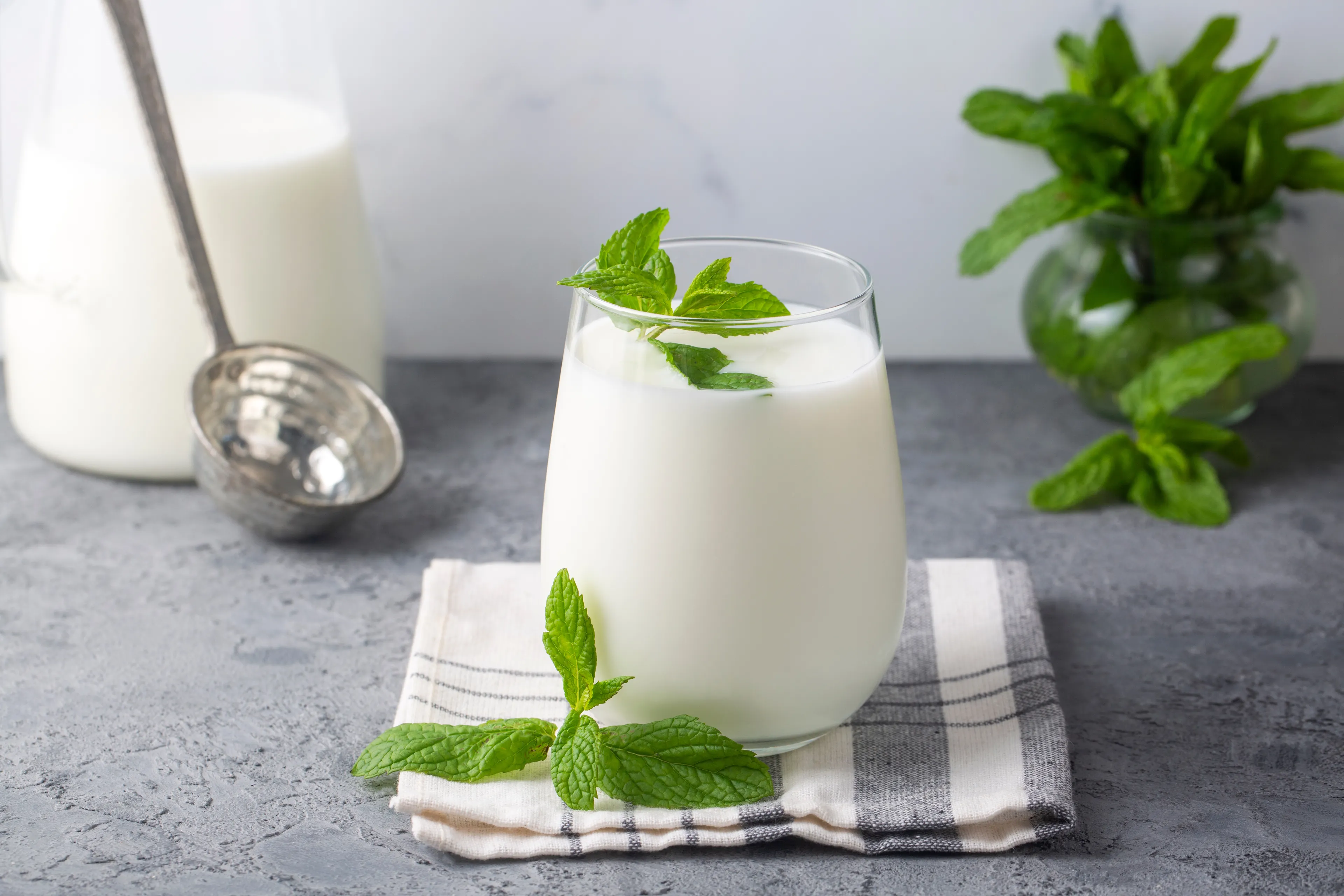
Health Benefits of Buttermilk for Babies
Buttermilk can provide several nutrients that contribute to a child's diet once dairy foods are appropriate.
Provides Calcium and Protein
Buttermilk provides calcium and protein, which support normal bone growth, teeth and overall development. The amount varies according to the type of buttermilk and how it is prepared.
Contains Fermentation Cultures
Traditional and cultured buttermilk are produced through fermentation involving lactic acid bacteria. Some products may contain live cultures, although the number and type of bacteria vary depending on preparation and processing.
Commercial products that undergo heat treatment after fermentation may contain fewer or no viable live cultures.
May Be Easier to Digest for Some Children
During fermentation, some lactose is converted into lactic acid. This means fermented dairy products can contain less lactose than the milk from which they are made, although they still contain some lactose.
Individual tolerance varies, so children with lactose intolerance may still experience symptoms after consuming buttermilk.
Can Add Variety to the Diet
Plain buttermilk can be included alongside other nutritious foods as part of a varied diet. For older babies and toddlers, it can be served with meals once dairy has been introduced and tolerated.