logo
0

Can I Use Wipes for a Newborn? Safe Diaper Care Practices

Learn when to introduce baby wipes for newborns, how to select safe fragrance-free products, gentle changing techniques, and umbilical cord precautions.

article image

Dr.Rohini priyanaka

Bringing a newborn home raises dozens of questions before the first diaper change, and one of the most common is: can I use wipes for newborn skin, or is plain water safer? Given how thin and permeable a newborn's skin is in the early weeks, this is exactly the right question to ask before reaching for the packet.

Can You Use Wipes on a Newborn's Skin?

The short answer: not immediately, and not everywhere.

For the first two to three weeks, most paediatricians recommend soft cotton wool or muslin cloths dampened with warm water. Newborn skin absorbs substances more readily than older baby skin, so it reacts faster to fragrances, preservatives, and other additives in packaged wipes.

Once the umbilical cord stump has dried and fallen off, usually by two to three weeks, you can gradually introduce fragrance-free, alcohol-free wipes. Do a small patch test on the thigh first and watch for redness over 24 hours before using them at every change.

The cord stump area is a strict no-wipe zone at any age until it has fully healed. Keep it clean with plain water and a soft cloth. For a detailed guide, see how to care for a newborn's healing umbilical cord.

How to Choose Safe Wipes for a Newborn?

When considering cotton vs wipes for newborn care, cotton and warm water win in the very early weeks. Once you move to packaged wipes, the label matters as much as the brand name. Look for:

  • Fragrance-free: Even "natural" scents can irritate sensitive skin.
  • Alcohol-free: Alcohol strips the skin's protective moisture barrier.
  • pH-balanced to around 5 to 5.5: It matches newborn skin's naturally acidic surface and supports its bacterial defence.
  • Dermatologist-tested and hypoallergenic labelling: indicating the product has been evaluated for skin tolerance.
  • A short ingredient list: Fewer ingredients mean fewer chances of a reaction.

Avoid wipes containing parabens, propylene glycol, or synthetic dyes. Water wipes (around 99 per cent water with a small preservative) are popular for very young babies, though any product meeting the criteria above can be suitable. If you are unsure what suits your baby's specific skin, ask your paediatrician before making a switch.

Step-by-Step Gentle Diaper Changing Technique

Knowing how to clean a newborn during a diaper change correctly reduces skin trauma and lowers infection risk.

  • Wash your hands thoroughly before touching the diaper area.
  • Lay your baby on a clean, flat surface with a changing mat or soft towel underneath.
  • Open the soiled diaper but keep it under the baby briefly to catch any immediate mess.
  • Wipe front to back, always. For girls, this prevents stool bacteria from reaching the urethra. For boys, wipe carefully around the penis and scrotum, and keep the clean diaper loosely over the penis while you work.
  • Use a fresh wipe or damp cotton for each pass. Do not wipe back and forth with the same cloth.
  • Pat the skin dry gently. Never rub.
  • Check for redness, broken skin, or spots before fastening the new diaper.
  • Apply a thin layer of zinc oxide barrier cream if the skin looks slightly pink, or if your paediatrician has recommended it as a preventive measure.
  • Fasten the clean diaper snugly but with room to slip two fingers inside the waistband.

Preventing Diaper Rash and Skin Irritation

Newborn diaper rash prevention comes down to a few consistent habits, practised at every change.
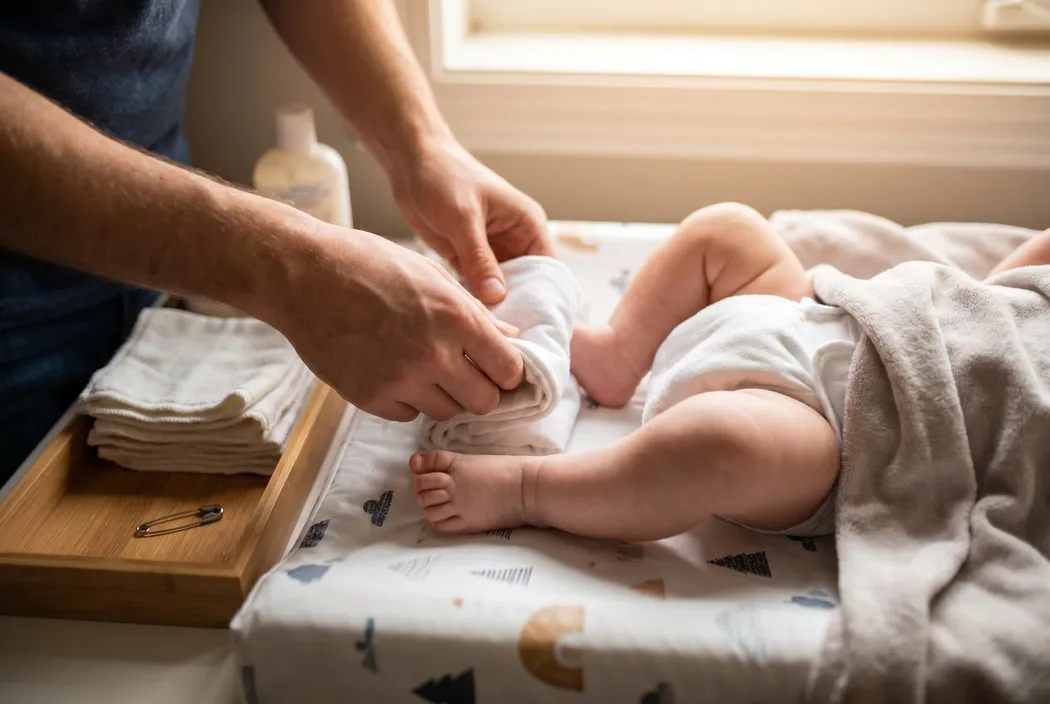
Knowing how often to change a newborn’s diaper is fundamental: newborns urinate frequently, sometimes every one to two hours, and typically need 8 to 12 changes in 24 hours. Leaving a wet or soiled diaper on is the leading cause of rash, so change promptly after soiling and check for wetness regularly.

A few other habits that help:

  • Let the skin air for a minute or two before fastening a fresh diaper, giving trapped moisture a chance to evaporate.
  • Choose diapers that fit well and are not too tight. Snug but not constricting is the goal; tight diapers trap heat and moisture.
  • If redness appears and does not improve within 48 hours, or if you see blistering, white patches, or any oozing, consult your paediatrician. These can signal a fungal infection that needs specific treatment rather than a standard barrier cream.

Report adverse events or unexpected skin reactions to your healthcare provider or the relevant regulatory authority.

When to Avoid Wipes: Contraindications?

There are situations where even the gentlest wipe should stay in the packet, and plain water should be used instead:

  • Broken or cracked skin. Wipes can sting and introduce irritants into open areas. For guidance on when to seek medical help, see treating minor skin irritation or wounds.
  • Active diaper rash with broken skin or oozing.
  • Suspected allergic reaction to a previous wipe brand. Switch to water and cotton immediately and speak to your paediatrician before trying another product.
  • Around the umbilical cord stump until it has fully healed and separated.
  • Any skin condition your doctor has flagged as requiring special care.

If your baby develops hives, swelling, or unusual fussiness after wipe use, seek medical attention promptly.

Conclusion

In the first two to three weeks of life, plain warm water and soft cotton are safest for a newborn's delicate skin barrier. Once the umbilical cord stump has dried and fallen off, you can safely introduce fragrance-free, alcohol-free, pH-balanced wipes after performing a patch test. Following a gentle, front-to-back changing routine, allowing the skin to air dry, and changing diapers frequently will protect your newborn from diaper rash. If your baby develops cracked skin, active rash with breakdown, or an allergic reaction, stop using wipes immediately and consult a paediatrician.

FAQS

Can I use baby wipes from day one?

Most paediatricians advise dampened cotton wool for the first two to three weeks; introduce fragrance-free, alcohol-free wipes only after the cord stump has healed and the skin has settled.

Are water wipes better than regular wipes for newborns?

Water wipes are a gentle option for very young babies, but any fragrance-free, alcohol-free, pH-balanced wipe can be appropriate once your newborn's skin has matured a little.

How often should I change a newborn's diaper?

Newborns typically need 8 to 12 diaper changes in 24 hours. Check for wetness every one to two hours and change immediately after any soiling to protect the skin.

Can wipes cause diaper rash in newborns?

Yes, wipes containing fragrances, alcohol, or other irritants can cause or worsen rash. Using the wrong wipe too early, or wiping too vigorously, can also damage delicate skin.

What should I do if my baby is allergic to wipes?

Stop using the wipes immediately, clean the area with plain warm water and soft cotton, and consult your paediatrician. They can help identify the likely irritant and recommend a suitable alternative.

Apollo 247 Floating Action Button