logo
0

Can I Use Wipes for Newborn Skin? What Experts Say

Learn whether baby wipes are safe for newborn skin, which wipes to choose, ingredients to avoid, and when water and cotton may be better.

article image

Dr.Rohini priyanaka

Bringing a newborn home comes with a flood of questions, and one of the most common is: can I use wipes for newborn care right from day one? The answer is nuanced. Newborn skin is biologically different from older babies' skin, and choosing the wrong product, or using it too early, can trigger irritation or worse. Here is what paediatricians and dermatologists generally advise.

Is Newborn Skin Different From Adult Skin?

Yes, significantly. A newborn's skin barrier is thinner, less mature, and more permeable than adult skin. This means that whatever you apply to the surface, including fragrances, preservatives, and chemicals, absorbs more readily into the bloodstream.

Newborns are also born with a protective coating called vernix caseosa. In the first few days, this natural layer helps regulate moisture and protect against infection. Wiping it away too aggressively, or using harsh products, removes this built-in defence before the skin has time to develop its own.

Key reasons newborn skin needs extra care:

  • Skin pH: A newborn's skin has a higher pH at birth and gradually develops the mildly acidic environment that helps support the skin's natural protective barrier.
  • Greater surface area: Newborns have a larger skin surface area relative to body weight than adults, which can result in proportionally greater absorption of some topical products.
  • Developing skin immunity: The skin's immune defences are still maturing in newborns, which may make their skin more susceptible to irritation and reactions.

Can You Use Baby Wipes on a Newborn?

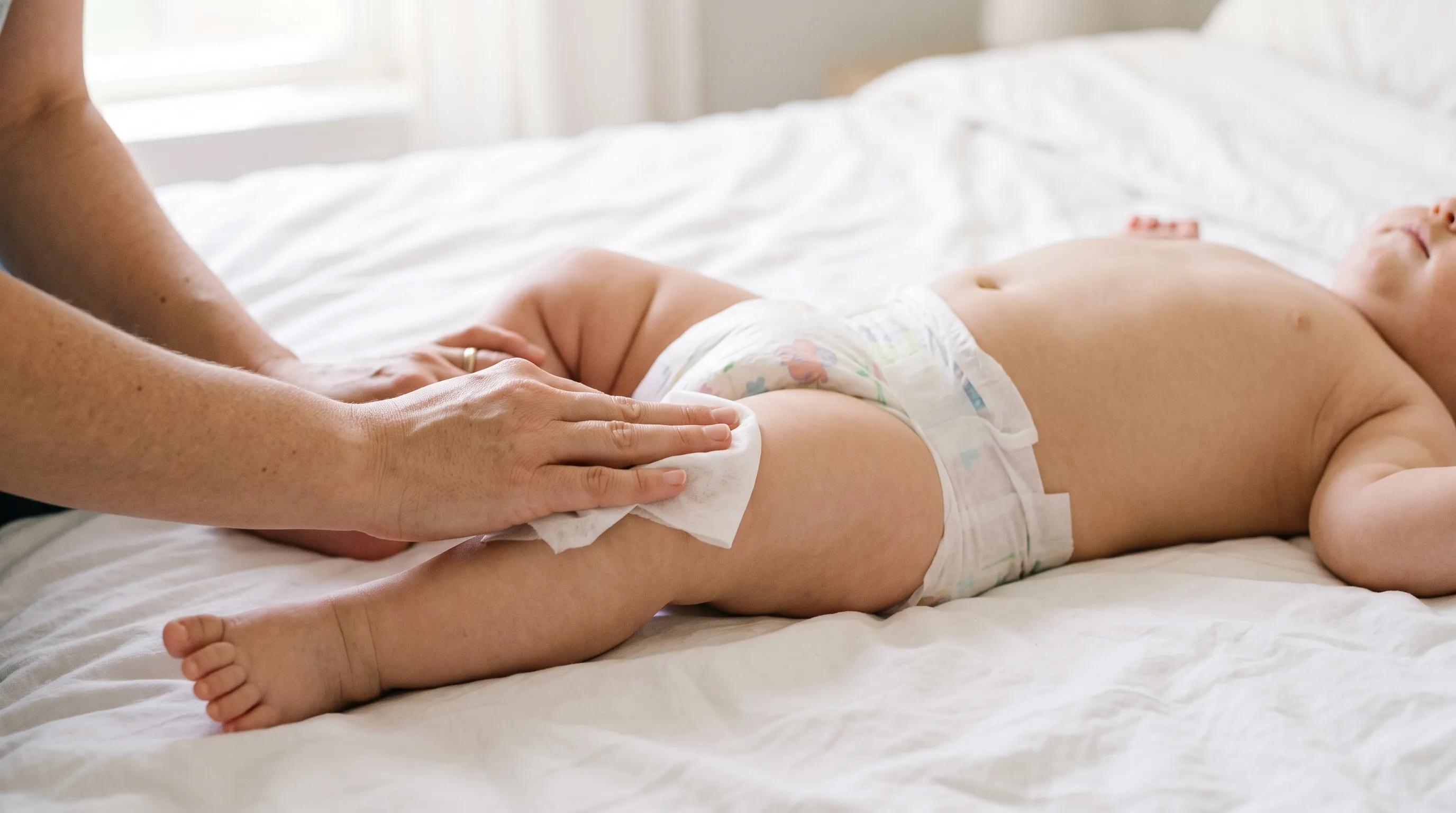
The short answer is yes, but with important caveats. Most paediatricians consider baby wipes for newborn skin acceptable from the first few weeks of life, provided the wipes are specifically formulated for newborns and free from harsh ingredients. In the first one to two weeks, however, many experts prefer plain warm water and soft cotton wool, especially for the face and umbilical area.

When to start using baby wipes depends partly on skin condition and partly on parental preference. After the umbilical cord has fallen off and the skin has had time to settle, gentle baby wipes for newborn skin become a practical option during nappy changes.

A helpful general guideline:

  • First 1 to 2 weeks: cotton wool or muslin with warm water is safest.
  • After 2 to 4 weeks: carefully chosen wipes are generally fine for nappy area changes.
  • Throughout the newborn phase: avoid wipes on the face, eyes, and any broken skin unless a doctor advises otherwise.

What to Look for in a Newborn-Safe Wipe

Not all wipes labelled "baby" are suitable for newborns. Reading the ingredient list matters more than the marketing claims on the front.

Criteria for safe wipes for newborn use:

  • Fragrance-free: Choose fragrance-free wipes to reduce the risk of irritation and contact reactions on sensitive newborn skin.
  • Alcohol-free: Avoid alcohol-containing wipes, as they can dry the skin and may disrupt the skin's protective barrier.
  • pH-balanced: Look for wipes formulated around a mildly acidic pH that is compatible with newborn skin.
  • Free from certain irritants: Consider products free from ingredients such as parabens, methylisothiazolinone (MI), and sodium lauryl sulphate (SLS), particularly if your baby has sensitive skin.
  • Soft and thick texture: Choose thick, soft wipes that allow gentle cleaning with minimal rubbing, helping reduce friction on delicate skin.
  • Water-based wipes: Chemical-free baby wipes, sometimes marketed as water wipes or 99% water wipes, contain a minimal number of ingredients and may be a suitable option for newborns with sensitive skin.

Before using any new wipe brand, do a patch test. Apply the wipe to a small area of the inner arm or thigh and wait 24 hours before using it more widely. This one step can save a lot of discomfort.

When to Avoid Wipes and Use Cotton and Water Instead

Even the gentlest wipe is not always the right tool. Stick to plain warm water and soft cotton in these situations:

  • Around the umbilical cord stump: Until the stump dries and falls off naturally, keep the area clean and dry. For more guidance, see how to care for a newborn's belly button.
  • Rashy, cracked, or inflamed skin: Avoid using wipes on irritated skin, as they may cause stinging or worsen irritation.
  • Broken skin or minor cuts: Avoid using wipes directly on broken skin or small cuts. For guidance, see best treatment for cuts and wounds.
  • Face and around the eyes: Avoid using wipes around the eyes and other sensitive areas of the face, as even gentle formulations may cause irritation if they leave residue.

If your baby has eczema-prone or particularly reactive skin, your paediatrician or dermatologist may advise water-only cleaning for longer than the typical two-to-four-week window. Follow their lead rather than a general timeline.

Contraindications and Skin Reactions to Watch For

Some babies should not use standard baby wipes at all, and even babies without known conditions can react unexpectedly.

Who should avoid standard baby wipes:

  • Newborns with known skin conditions such as epidermolysis bullosa or severe eczema, unless a specialist has approved a specific product.
  • Babies already showing signs of allergic skin reactions.
  • Any baby where the skin around the nappy area is broken or weeping.

Signs that a wipe may be causing a reaction:

  • Redness or a rash that appears within minutes to an hour of use.
  • Small raised bumps or hives in the cleaned area.
  • Skin that looks dry, flaky, or inflamed after regular use.
  • Your baby seems uncomfortable or cries when the wipe touches their skin.
  • Swelling, blistering, or any oozing from the affected area.

If you notice any of these signs, stop using the product immediately. Wash the area gently with warm water and consult your paediatrician before trying another product. Do not switch to a different wipe brand without medical guidance if the reaction is severe. Report adverse events to your healthcare provider or the relevant regulatory authority.

Conclusion

Baby wipes can be a convenient option for newborn skin when they are chosen carefully and used gently. Fragrance-free, alcohol-free, pH-balanced wipes with a simple formulation may be suitable for routine nappy changes, while warm water and soft cotton can be preferable during the early weeks or when the skin is irritated. Avoid using wipes on broken, inflamed, or weeping skin and take extra care around the umbilical cord stump. If your baby develops persistent redness, swelling, blistering, or other signs of a skin reaction, stop using the product and consult your paediatrician.

FAQs

Can I use wipes on my newborn's face?

It is generally best to avoid wipes on a newborn's face and instead use a soft damp cloth or cotton wool with plain water. Even gentle wipes can leave residue near the eyes or mouth that may cause irritation.

Are water wipes better for newborns?

Water wipes, which contain around 99 per cent water and minimal other ingredients, are widely considered a lower-risk option for newborn skin sensitivity. They are a good starting point if you want to minimise the chance of a reaction.

How often should I use wipes on a newborn?

Use wipes only when needed during nappy changes, and avoid over-wiping, as repeated friction can disrupt the skin barrier. For general cleaning between baths, a soft damp cloth is usually sufficient.

Can baby wipes cause diaper rash?

Yes, certain ingredients in wipes, including fragrances, preservatives, or alcohol, can contribute to or worsen diaper rash in sensitive babies. Switching to a fragrance-free, pH-balanced option and allowing the skin to air dry after each change often helps.
When should I consult a doctor about wipe reactions?

See your paediatrician if a rash, redness, or irritation does not clear within 24 to 48 hours of stopping the wipe, or immediately if you notice blistering, swelling, or your baby seems distressed. Persistent or severe reactions need professional assessment.

Apollo 247 Floating Action Button