logo
0

How to Change a Newborn Diaper: A Step-by-Step Guide

Learn how to change a newborn diaper safely, including how to clean your baby's skin, prevent diaper rash, and care for the umbilical cord.

article image

Dr.Vasantha Sree

Changing a newborn diaper may feel unfamiliar at first, but it soon becomes part of your baby's everyday care. Newborns need frequent diaper changes, so learning how to clean their skin gently and put on a fresh diaper can make the routine easier for both of you.

Newborn skin is delicate and can become irritated when exposed to moisture, stool or friction. This guide explains how to change a newborn diaper safely, how to care for the skin and what signs may need medical attention.

What Do You Need Before Changing a Newborn Diaper?

Having everything ready before you begin makes the change easier and means you do not have to leave your baby unattended while reaching for supplies.

Keep these items within reach:

  • A clean diaper: Choose a size that fits your baby comfortably.
  • Cleaning supplies: Use plain water and cotton wool or baby wipes that your baby's skin tolerates well.
  • Changing mat: A clean, waterproof mat can provide a suitable surface for changing your baby.
  • Barrier cream: A simple barrier cream containing zinc oxide or petroleum jelly can help protect the skin when needed.
  • Clean cloth: Use a soft cloth to gently pat the skin dry.
  • Diaper disposal bag: This can help you wrap a soiled diaper before disposal.

Wash your hands with soap and water before and after changing your baby's diaper. Keep everything you need close by before placing your baby on the changing surface.

How Do You Change a Newborn Diaper?

A calm, gentle approach makes diaper changes more comfortable for your baby. Never leave your baby alone on a changing table, bed or other raised surface, even for a moment.

1. Place Your Baby Safely

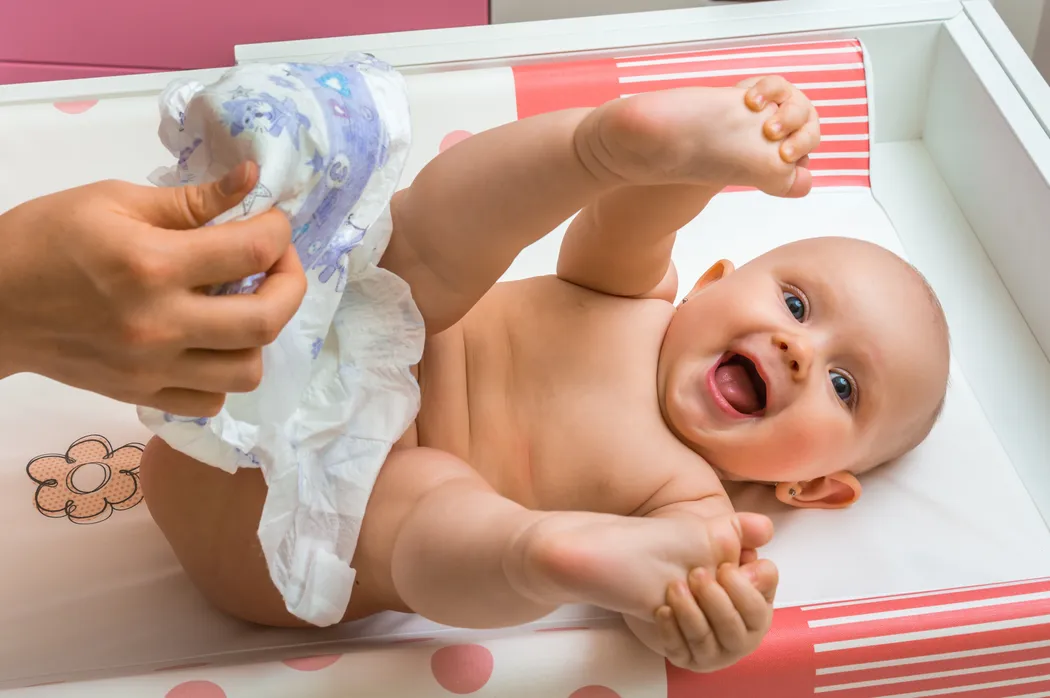
Lay your baby on their back on a clean, flat changing mat or other safe surface. Keep one hand on your baby whenever you need to reach for something.

If you are using a raised changing surface, stay with your baby throughout the change.

2. Remove the Dirty Diaper

Open the diaper and gently lower the front. If there is stool, use the clean part of the diaper to wipe away as much as possible before removing it.

Gently lift your baby's legs by supporting the lower legs or ankles. Raise the bottom only enough to slide the dirty diaper out.

3. Clean the Diaper Area

Gently clean your baby's skin with a fresh wipe or damp cotton wool. Wipe from front to back, particularly when changing a baby girl.

Pay attention to the folds around the legs and buttocks, where moisture and stool can collect. No need to scrub the skin.

For an uncircumcised baby boy, clean the outside of the penis and the surrounding skin. Do not pull the foreskin back.

4. Dry the Skin

Gently pat the skin dry with a clean, soft cloth. You can also allow the skin to dry briefly before putting on the fresh diaper.

Keeping the diaper area clean and dry helps reduce irritation. You don't need to leave the skin exposed for a fixed amount of time.

5. Apply Barrier Cream if Needed

If your baby's skin is prone to irritation, a thin layer of barrier cream can help protect it from moisture and stool.

A thick layer is not necessary. Follow the product instructions, and use medicated creams only when your healthcare professional recommends them.

6. Put on the Clean Diaper

Slide the clean diaper underneath your baby and position the back around the waist. Bring the front of the diaper up between the legs and fasten the tabs.

The diaper should feel secure but comfortable. It should not leave deep marks, rub the skin or feel excessively tight. At the same time, it should fit closely enough around the legs and waist to reduce leaks.

Check that the leg edges are sitting flat against the skin rather than folded inwards.

7. Dispose of the Dirty Diaper and Wash Your Hands

Roll the used diaper inwards, secure it with the tabs and place it in a suitable disposal bag or waste bin.

Wash your hands with soap and water after the change, particularly after contact with stool.

How Should You Clean a Baby Girl or Baby Boy?

The basic diaper-changing routine is the same for all babies, but a few differences apply when cleaning the genital area.

Cleaning a Baby Girl

Gently wipe from front to back, moving from the vulva towards the bottom. This helps prevent stool from spreading to the urinary and genital areas.

You do not need to clean inside the vagina. Gently clean the areas that you can see.

Cleaning a Baby Boy

Gently clean the penis, scrotum and surrounding skin. If your baby is uncircumcised, do not force the foreskin back. The foreskin will gradually separate naturally as your child grows.

Clean only the parts that are easily visible.

How Often Should You Change a Newborn's Diaper?

Newborns usually need several diaper changes throughout the day because they feed frequently and pass urine and stool often.

Check your baby's diaper regularly and change it when it is wet, soiled or uncomfortable. Change a soiled diaper promptly because prolonged contact with stool can irritate the skin.

You don't need to follow a strict number of hours between changes. Your baby's age, feeding pattern, bowel movements and skin condition can all affect how often they need a fresh diaper.

At night, a settled baby may not need to be woken solely because the diaper is wet. However, change a soiled diaper promptly, and change a very wet, leaking or uncomfortable diaper.

For babies who need overnight feeds or closer monitoring, follow your healthcare professional's advice.

How Can You Help Prevent Diaper Rash?

Diaper rash is common in babies, and gentle skin care can help protect the skin. Keeping the diaper area clean and dry matters more than using many products.

A few simple habits can help:

  • Change soiled diapers promptly.
  • Check wet diapers regularly.
  • Clean the skin gently rather than rubbing it.
  • Pat the skin dry before putting on a fresh diaper.
  • Use a barrier cream when your baby's skin needs extra protection.
  • Choose a diaper that fits comfortably and does not rub the skin.
  • Stop using a product if it appears to irritate your baby's skin.

Avoid talcum powder because babies can inhale the fine particles. Avoid antiseptics and medicated creams unless a healthcare professional recommends them.

How Should You Care for the Umbilical Cord During a Diaper Change?

Keep the umbilical cord stump clean and dry while it heals. During a diaper change, position the front of the diaper below the stump so that it does not rub against the area.

Do not pull or pick at the stump, even if it is partly detached. For more guidance, read How to Care for a Newborn's Belly Button.

Speak to your doctor if the skin around the stump becomes increasingly red or swollen, if there is pus or a foul-smelling discharge, or if your baby develops a fever.

When Should You Consult a Doctor About Diaper Rash?

Most mild diaper-area irritation improves with gentle skin care and regular diaper changes. Some rashes need medical attention, especially if they persist, worsen, or occur with other symptoms.

Consult your doctor if:

  • The rash is worsening or not improving with gentle skin care.
  • The skin is cracked, bleeding, blistered or has open sores.
  • There is pus, significant swelling or increasing redness.
  • Your baby seems very uncomfortable during diaper changes.
  • The rash spreads beyond the diaper area.
  • Your baby develops a fever or seems unwell.
  • You are unsure whether your baby needs treatment.

Several skin conditions can cause redness or irritation in the diaper area and may look similar. Your doctor can examine the rash and recommend treatment if needed.

If your baby has a minor cut or skin injury, refer to best treatment for minor skin cuts and wounds for guidance.

If you experience a suspected side effect from a medicine, inform your healthcare professional and report it through the appropriate adverse drug reaction reporting system.

Diaper Changing Safety Tips for Newborns

Diaper changes are usually simple, but a few safety habits are especially important with a newborn.

  • Keep your baby within reach throughout the change.
  • Never leave your baby unattended on a raised changing surface.
  • Keep creams, wipes, disposal bags and other supplies within reach before you begin.
  • Keep medicines and other potentially harmful products away from your baby.
  • Wash your hands before and after each diaper change.
  • Keep clean supplies separate from used diapers and soiled clothing.
  • Follow your healthcare professional's advice if your baby needs special skin or cord care.

Conclusion

Changing a newborn diaper becomes easier with practice. Clean your baby's skin gently, keep the area dry, use a comfortable-fitting diaper and change soiled diapers promptly. A barrier cream can provide additional protection when your baby's skin is prone to irritation.

Most diaper changes are straightforward, but persistent rashes, broken skin, signs of infection or changes in your baby's general health need medical attention. With a little practice, diaper changes can become a simple and comfortable part of your baby's daily care.

FAQS

How often should I change my newborn's diaper?

Check your baby's diaper regularly and change it when it is wet, soiled or uncomfortable. Change soiled diapers promptly. Newborns often need several diaper changes throughout the day, but the exact number varies between babies.

What is the correct way to wipe a newborn?

Gently clean the diaper area with a fresh wipe or damp cotton wool. For a baby girl, wipe from front to back. For a baby boy, clean the penis, scrotum and surrounding skin without pulling back the foreskin.
Can I use baby powder on a newborn?

Avoid talcum powder because babies can inhale the fine particles. If your baby's skin needs protection from moisture, use a suitable barrier cream instead.

How do I know if my newborn has diaper rash?

Diaper rash can cause redness and irritation in the diaper area. Your baby may also seem uncomfortable during changes. If the rash becomes severe, spreads, develops blisters or open sores, or does not improve with gentle skin care, speak to your doctor.

Should I wake my newborn to change a wet diaper at night?

If your baby is settled and the diaper is only wet, you may not need to wake them just to change a diaper. Change a soiled diaper promptly and change a very wet, leaking or uncomfortable diaper. If your baby needs regular overnight feeds or monitoring, follow your healthcare professional's advice.

Apollo 247 Floating Action Button