logo
0

Chewing and Swallowing Issues in Babies

Is your baby struggling with solids? Learn when babies start chewing, how to teach them, and what to do if your baby is not swallowing food properly.

article image

Dr.Mayank

Starting solid baby food is an exciting milestone in your child’s first year of life. As you transition your little one from a diet of breast milk or formula to solid meals, watching your baby chew food is one of the most rewarding developmental phases to observe. However, this transition is not always seamless. Many parents find themselves worried when their child struggles to manage new textures, pockets food in their cheeks, or gags during mealtime.

Learning to chew and swallow is a complex physical process. It requires the coordination of dozens of muscles in the jaw, tongue, cheeks, and throat. Understanding how this process develops and knowing how to support your child can turn mealtime from a source of stress into a fun, bonding experience.

When Does a Baby Start Chewing Food? A Developmental Timeline

Many parents wonder, when does a baby start chewing food? While we often associate chewing with having teeth, babies actually begin the chewing process before their first teeth emerge. They use their strong gums to mash and break down soft textures.

Here is what the developmental timeline typically looks like for oral motor skills:
 

AgeTypical Oral Motor Development
Birth to 4 MonthsBabies rely primarily on the sucking reflex. The tongue-thrust reflex helps prevent solids from being swallowed.
4 to 6 MonthsThe tongue-thrust reflex begins to fade. Babies develop the ability to move food from the front of the mouth towards the back for swallowing.
6 to 9 MonthsBabies begin developing a munching pattern, with an up-and-down jaw movement. Lateral tongue movement also begins, helping them move food towards the gums.
10 to 12 Months and BeyondBabies begin developing more mature chewing patterns, including rotary chewing, while their self-feeding skills continue to develop.


According to the Centers for Disease Control and Prevention (CDC), introducing a variety of textures by 7 to 8 months can help babies develop their feeding skills and become accustomed to different textures.

How to Teach Baby to Chew Food: Practical Tips for Parents

Chewing is a learned skill that requires practice and sensory exposure. If you are eager to learn how to teach your baby to chew food, you can implement several simple, everyday strategies during mealtime.

1. Show, Don't Just Tell (Modelling)

Babies are natural imitators. One of the easiest ways to teach your baby how to chew is to let them watch you eat.

  • Sit face-to-face with your baby during family meals.
  • Take a bite of food and exaggerate your chewing motions.
  • Open your mouth slightly to show them how your teeth and gums mash the food, making exaggerated "nom-nom" sounds.

2. Practise Lateralisation

Lateralisation is the tongue's ability to move food from side to side. It is crucial for effective chewing. You can encourage this by placing soft finger foods or a safe baby spoon towards the sides of your baby’s gums rather than directly in the centre of their tongue. This encourages them to move the food towards their gums for mashing.

3. Transition Textures Gradually

If your baby is used to thin purees, they might be surprised by lumps. Gradually thicken their purees by mashing food with a fork instead of blending it. Moving from smooth purees to lumpy mashes, and then to soft finger foods, helps build chewing skills step by step.

Practising with Textures: How to Make Baby Chew Food Safely

Many parents ask how to make baby chew food when they notice their infant simply swallowing purees without using their jaw muscles. You cannot force a baby's jaw to move, but you can present foods that encourage chewing practice.

  • Introduce Melty Solids: Foods that melt quickly in the mouth, such as infant puffs or suitable teething crackers, can help babies practise managing solid textures. Always choose products appropriate for your baby's developmental stage and supervise them while eating.
  • Use Feeder Pacifiers: Silicone or mesh fresh-food feeders can be used with suitable soft foods. You can place an appropriately prepared piece of banana or steamed pear inside. As your baby bites down on the soft feeder, they can practise chewing motions. Always supervise your baby.
  • Choose the Right Textures: Preparing safe chewing food for baby is crucial. Ensure all finger foods are soft enough to be easily mashed between your thumb and forefinger.

Troubleshooting: What to Do If Your Baby Is Not Swallowing Food

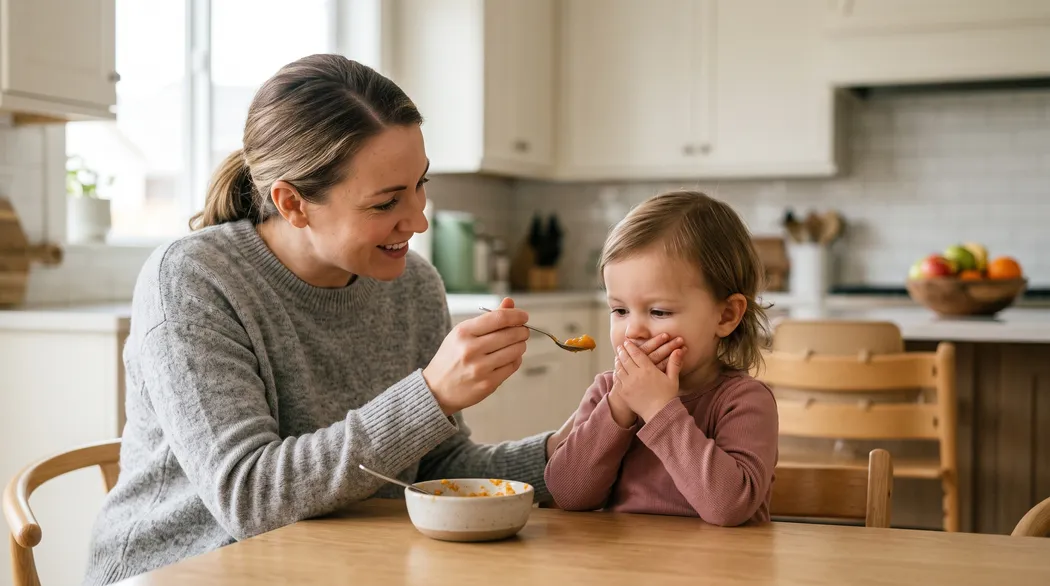
It can be highly concerning for parents when they notice their baby not swallowing food. They may let the food sit in their cheeks for long periods, known as "pocketing", spit it out, or refuse to swallow it entirely.

Why Is Your Baby Pocketing or Refusing to Swallow?

There are several reasons why a baby might struggle to swallow:

  • Sensory Overwhelm: If a texture is too new, thick, or complex, your baby may keep it in their mouth because they do not know how to process it comfortably.
  • Developmental Readiness: Your baby’s throat muscles and tongue coordination might still be adapting to the transition from liquids to solids.
  • Teething Discomfort: Swallowing and chewing can aggravate tender gums when new teeth are cutting through.
  • Underlying Medical Issues: In some cases, reflux, anatomical differences such as tongue-tie, or paediatric dysphagia can make swallowing uncomfortable or physically difficult.

How to Help Your Baby Swallow Safely

If you are concerned about how to help your baby swallow food, the key is to build feeding skills naturally rather than forcing them to swallow. Try these safe, supportive strategies:

  • Keep Portions Small: Offer very small bites. A large clump of food in the mouth can be intimidating and may contribute to pocketing.
  • Alternate Bites with Sips: For babies who are developmentally ready for water, offer a small sip from an open cup or straw cup between bites. Breast milk or formula can also remain part of their feeding routine as appropriate.
  • Keep Textures Consistent: Avoid complex mixed textures, such as thin liquid combined with hard lumps, until your baby is developmentally ready to manage them.
  • Maintain a Calm Environment: A distracted or stressed baby may be more likely to hold food in their mouth. Minimise screens and loud noises during meals.

Never force-feed your child or push food down their throat, as this increases the risk of choking and can create a negative association with eating.

Creating Safe Environments for Baby Chewing Food

Safety is the number one priority when introducing baby chewing food. Knowing what to serve and how to supervise your child can help prevent accidents and build confidence for both you and your little one.

Choking vs. Gagging: Know the Difference

Gagging is a normal protective mechanism that helps prevent choking. Because a baby's gag reflex is located much closer to the front of their tongue than an adult's, they may gag often when learning to eat.
 

FeatureGagging (Normal)Choking (Emergency)
SoundLoud, with coughing, sputtering, or throat noisesSilent or quiet, with inability to cry, cough, or make noise
ColourFace may turn slightly red or flushedFace, lips, or fingernails may turn blue, purple, or pale
BehaviourTongue thrusts forwards to push the food outWide eyes, panicked expression, or hands clutching the neck
ActionStay calm. Let your baby cough to clear the food themselvesAct immediately. Call emergency services and perform appropriate infant choking first aid

Essential Food Safety Rules

  • Always Supervise: Never leave your baby alone while they are eating.
  • Sit Up Straight: Ensure your baby is securely buckled into a highchair and sitting upright. Never feed a baby who is reclining, crawling, or walking.
  • Avoid High-Risk Choking Hazards: Do not serve whole grapes, whole cherry tomatoes, large chunks of meat, hard raw vegetables, whole nuts, popcorn, or sticky spoonfuls of nut butter. Cut and prepare foods into developmentally appropriate shapes and textures.
When to Consult a Professional

While minor struggles with chewing and swallowing are a normal part of learning, some signs warrant a discussion with your paediatrician. Contact a healthcare provider if you observe any of the following:

  • Frequent choking or coughing during meals.
  • Vomiting or regularly arching their back during or immediately after eating.
  • Complete refusal to eat textured foods by around 9 to 10 months.
  • Inability to move food to the sides of their mouth with their tongue.
  • Congestion, wet-sounding breathing, or a gurgly voice during or after eating.
  • Failure to gain weight or falling behind on growth curves.

Your paediatrician may refer you to a paediatric speech and language therapist or an occupational therapist specialising in feeding therapy. These specialists can offer tailored support to help your baby develop safe and effective feeding skills.

FAQS

Why is my baby pocketing food in their cheeks instead of chewing?

Pocketing can occur when a baby is presented with a texture they find difficult to manage. They may hold it in the cheek rather than attempting to swallow food they cannot break down. Try offering softer textures, smaller bites, and developmentally appropriate sips of water to help them clear their mouth.

Can my baby chew soft finger foods if they don't have teeth yet?

Yes. Babies have strong gums that can mash soft foods such as ripe bananas, steamed sweet potatoes, and avocado. Teeth are not required to start safely exploring appropriately prepared soft finger foods when your baby is developmentally ready.

What should I do if my baby starts gagging?

If your baby is gagging, stay calm and do not panic. Do not stick your finger into their mouth, known as a blind finger sweep, as this can accidentally push the food further down their airway. Watch them closely. In most cases, they will cough or work the food forward on their own.

How long does it take for a baby to fully master chewing and swallowing?

Learning to eat is a gradual process. While babies start practising around 6 months, rotary chewing and advanced tongue coordination continue to develop and refine throughout toddlerhood. Patience and consistent, safe exposure are key.

Can I use baby-led weaning if I am worried about my baby's swallowing?

Baby-led weaning can encourage chewing and self-feeding because it allows babies to control the pace of eating. However, all finger foods must be prepared safely, and your baby should show the appropriate signs of developmental readiness before starting. If you are concerned about your baby's swallowing, discuss this with your paediatrician or a feeding specialist.

Apollo 247 Floating Action Button