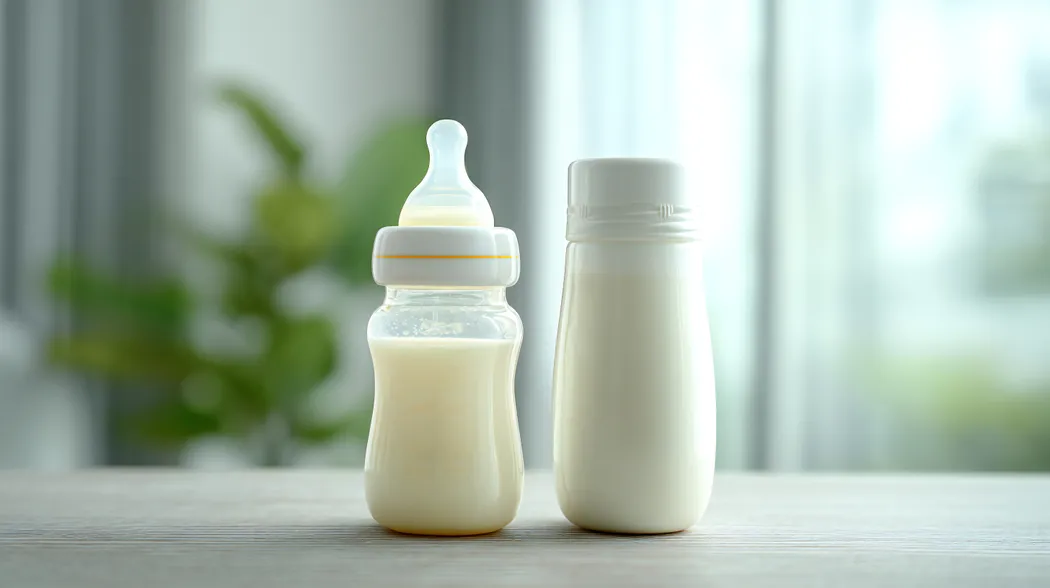
How to Choose a Feeding Bottle for Your Newborn
Material: Glass, Plastic, or Silicone?
The bottle body comes in three main materials, each with trade-offs.
- Glass Material: Durable, plastic-free, and easy to high-temperature sterilize, though prone to breaking if dropped.
- BPA-Free Plastic Material: Lightweight, shatter-resistant, and popular for daily home use, provided the BPA-free label is verified.
- Silicone Material: Soft, squeezable, and travel-friendly, holding up well to repeated sterilization as a practical middle ground.
For most families, BPA-free plastic or glass works well at home, while silicone is convenient for travel.
Shape and Size
Newborns need small bottles, typically 60 to 120 ml, since their stomach capacity in the first weeks is tiny. Wider-necked bottles are easier to fill, clean, and pair with a breast pump. Narrow-necked bottles are lighter but harder to scrub inside.
Anti-Colic Features
An anti-colic bottle for babies includes a vent, straw, or valve system designed to reduce the amount of air swallowed during feeding. Less swallowed air generally means less gas and discomfort after feeds. Look for designs where the vent keeps air bubbles out of the teat rather than mixing them into the milk. If your baby is particularly gassy or unsettled after feeds, an anti-colic bottle is worth trying.
Ease of Cleaning
Bottles with fewer parts are simpler to clean thoroughly. Wide-neck bottles accept a standard bottle brush. If you choose an anti-colic design with multiple components, confirm that every piece is dishwasher-safe or easy to disassemble by hand.