logo
0

Complementary Feeding Guide and Baby Diet Charts

Explore age-appropriate baby diet charts, suitable first foods, feeding schedules, and nutrition tips for healthy infant development.

article image

Dr.Rohini priyanaka

Starting solid foods is one of the most exciting milestones in your baby's first year, and having a clear complementary feeding guide makes the experience safer and less overwhelming. The decisions you make between 6 and 12 months lay the foundation for lifelong nutrition habits, appetite regulation, and food acceptance. This guide walks you through what to offer, when, and how, with practical charts and honest safety advice.

What Is Complementary Feeding and When to Start

Complementary feeding means introducing foods and liquids alongside breast milk or formula, not instead of them. The word "complementary" matters: solids add to breast milk's nutrition at a stage when milk alone can no longer meet a growing baby's energy and iron needs, but breast milk or formula remains the primary drink throughout the first year.

Most guidelines, including those from the WHO, recommend starting complementary feeding at around 6 months of age for healthy, full-term infants. Calendar age alone, however, is not the only signal. Watch for these readiness signs before you begin:

  • Your baby can sit upright with minimal support and hold their head steady.
  • They show interest in food, watching others eat or reaching toward your plate.
  • The tongue-thrust reflex has reduced, meaning they no longer automatically push food out with their tongue.
  • They can move food toward the back of the mouth and attempt to swallow.

Most babies show two or more of these signs around 5.5 to 6 months. Starting solids earlier than 4 months is not recommended, and delaying past 7 months can increase the risk of iron deficiency and texture aversion later on.

Complementary Feeding Chart: 6-8 Months

This is the learning stage. The goal is exposure, not nutrition replacement. Expect tiny quantities, plenty of mess, and frequent refusals. None of that is a problem.

  • Texture: Smooth purees or very soft mashed foods with no lumps or chunks.
  • Frequency: Work up to 2 to 3 small meals a day alongside breast milk or formula on demand.
  • Portion size: Start with 1 to 2 teaspoons per sitting. By 8 months, most babies manage 3 to 4 tablespoons per meal.

Sample Baby Food Chart: 6 Months to 8 Months

TimeWhat to Offer
MorningBreast milk or formula, then 1 to 2 tsp iron-fortified rice cereal or soft moong dal puree
Mid-morningBreast milk or formula on demand
Lunchtime2 to 3 tbsp pureed vegetable (carrot, pumpkin, or potato) or soft khichdi
AfternoonBreast milk or formula on demand
Evening2 to 3 tbsp fruit puree (banana, ripe mango, or stewed apple) or thin dal
NightBreast milk or formula

First Foods for Babies to Prioritise

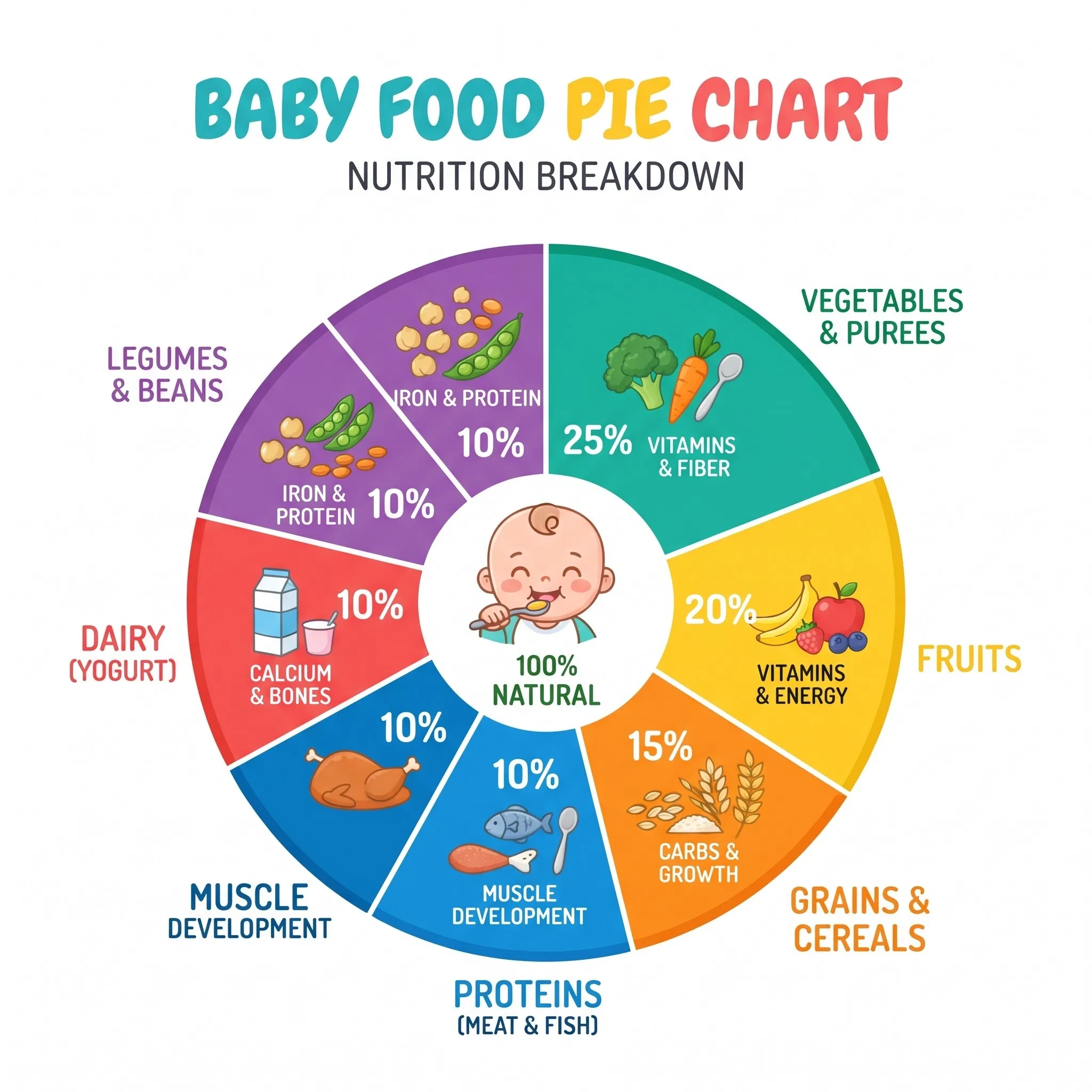
Iron-rich foods deserve early attention because breast milk provides limited iron after 6 months and iron deficiency is common among Indian infants. Good first foods for babies include:

  • Pureed cooked dal, moong, or masoor
  • Iron-fortified infant cereal mixed with breast milk or formula
  • Soft-cooked and pureed egg yolk (well-cooked) or chicken
  • Mashed banana or ripe avocado as an easy starter

Introduce one new food every 3 days so you can identify any reaction before moving on. This baby food chart for 6 months works best when textures stay completely smooth and variety builds slowly. A straightforward complementary feeding chart at this stage should prioritise iron sources, vegetables, and simple grains before moving on to more complex combinations.

Complementary Feeding Chart: 9-12 Months

By 9 months, most babies are ready for more texture, more variety, and a proper meal structure. The 6 to 12 months feeding schedule shifts meaningfully here: this is when the complementary feeding chart starts to resemble a miniature family menu.

  • Texture: Mashed, minced, or soft finger foods. Avoid pureeing everything smooth. Lumpier textures at this stage actively support jaw development and reduce the risk of texture aversion later.
  • Frequency: 3 meals a day plus 1 to 2 nutritious snacks.
  • Portion size: 4 to 6 tablespoons per meal, increasing to roughly half a small bowl by 12 months.

Sample Day Plan: 9 to 12 Months

TimeWhat to Offer
MorningBreast milk or formula, then soft idli with dal or mashed egg
Mid-morning snackSoft fruit pieces (banana, papaya) or small cubes of soft paneer
LunchSoft rice and dal with mashed vegetable sabzi; small amounts of plain curd
Afternoon snackMashed sweet potato or soft roti strips with a little ghee
EveningBreast milk or formula; vegetable soup or soft khichdi
NightBreast milk or formula

What Changes After 9 Months

A 9-month-old can manage foods a 6-month-old cannot, including:

  • Small soft finger foods for building the pincer grip, such as banana pieces or soft-cooked carrot sticks
  • A wider range of mild spices, as used in normal Indian home cooking
  • Curd, soft paneer, and well-cooked scrambled egg
  • Minced meat or fish that is bone-free, well-cooked, and finely mashed

This age is also when family foods gradually enter the picture. Offer unsalted, unsugared versions of what the household eats. Weaning foods for infants work best when they feel like a natural extension of family mealtimes, not a separate feeding event. The 6 to 12 months feeding schedule should always feel like a progression, not a sudden jump.

Foods to Avoid and Allergy Precautions

Some foods are genuinely unsafe in the first year; others need careful, staged introduction.

Avoid entirely before 12 months:

  • Honey, including in baked goods. It can carry Clostridium botulinum spores, which cause infant botulism.
  • Cow's milk as a main drink. Small amounts used in cooking or mixed into food are fine, but cow's milk should not replace breast milk or formula before 12 months.
  • Added salt and sugar. Infant kidneys cannot handle excess sodium, and early sugar exposure shapes future taste preferences.
  • Whole nuts and large seeds, which are choking hazards. Nut butters thinly spread are generally acceptable after 6 months when family allergy history is considered.
  • Hard raw vegetables, whole grapes, whole cherry tomatoes, and large firm pieces of any food.
  • Unpasteurised dairy and undercooked eggs or meat.

Introducing common allergens:

Major allergens include eggs, peanuts, tree nuts, fish, wheat, soy, and dairy products. Current guidance supports introducing these one at a time, in small amounts, starting around 6 months, rather than avoiding them. Introduce each allergen separately, with a 3-day gap, and watch for hives, swelling, vomiting, or unusual fussiness. If there is a strong family history of allergy, discuss timing with your paediatrician first.

Contraindications and When to Consult a Paediatrician

This section is important. Certain babies should not follow a standard complementary feeding timeline without medical guidance.
Speak to your child's doctor before starting solids if:

  • Your baby was born preterm. Their developmental readiness may not match their calendar age, and the 6-month benchmark is typically calculated from their corrected age, not birth date.
  • Your baby has a diagnosed gastrointestinal condition such as gastro-oesophageal reflux disease, malabsorption, or a structural gut problem.
  • There is a strong family history of food allergy, eczema, or asthma.
  • Your baby has failure to thrive, recurrent infections, or is under close nutritional monitoring.
  • Your baby has swallowing difficulties or a neurological condition affecting feeding.

A paediatrician or paediatric dietitian can tailor the timing, texture, and food choices to your baby's specific needs. For broader newborn health and early infant care, you may also find Apollo's newborn care essentials guide a useful reference.

Report any adverse events or unexpected reactions during feeding to your healthcare provider or the relevant regulatory authority.

Signs of Feeding Problems and Safety Tips

Recognising common feeding challenges and following basic safety practices can help make your baby's transition to solid foods safer, smoother, and more comfortable.

  • Gagging vs. choking: Gagging is normal and protective. It looks dramatic but means the reflex is working. Choking is silent, involves no crying or coughing, and requires immediate action. Learn infant first aid before you begin solids.
  • Constipation: Some babies experience harder stools when solids begin. Offering small sips of cooled boiled water with meals, and including soft fruits like prunes or pear puree, usually helps. If constipation persists beyond a few days or causes distress, consult your doctor.
  • Food refusal: Repeated refusal of a food is normal and does not mean allergy or dislike. Research shows babies may need 10 to 15 exposures before accepting a new taste. Keep offering without pressure.
  • Signs a food is not being tolerated: Hives, facial swelling, repeated vomiting after a specific food, blood in stool, or significant behaviour changes after eating all warrant prompt medical review.
  • Positioning: Always feed your baby seated upright. Never leave them unsupervised during a meal.

Conclusion

Complementary feeding helps meet your baby's growing nutritional needs from around six months of age while continuing breast milk or infant formula. Start with soft, nutrient-rich foods such as mashed vegetables, fruits, cereals, pulses, and iron-rich foods. Gradually increase food variety, portion sizes, and textures according to your baby's age and developmental readiness. Use age-appropriate diet charts as flexible guides rather than strict feeding schedules, and follow your baby's hunger and fullness cues. Avoid added salt, added sugar, honey before 12 months, and foods that pose choking risks. Every baby develops at a different pace, so consult a paediatrician for personalised feeding guidance and concerns about nutrition, allergies, or growth.

FAQS

What is the best first food for a baby?

Iron-rich foods make the best first choices because breast milk iron is insufficient after 6 months. Pureed moong dal, iron-fortified infant cereal mixed with breast milk, or well-cooked pureed egg yolk are all practical, nutritious starting points that suit most Indian families.

How much water can a 6-month-old have?

Small sips of cooled boiled water offered in a cup with meals are fine once solids begin, but water should not replace breast milk or formula feeds. Breast milk already meets most fluid needs; large amounts of water can displace nutrients at this age.

Can I give fruit juice to my baby?

Fruit juice is not recommended in the first year. It offers sugar without the fibre of whole fruit, can suppress appetite for more nutritious foods, and is linked to early tooth decay. Offer soft whole fruit or fruit puree instead.

How many times a day should I feed solids to my baby?

Start with 2 to 3 small meals a day at 6 to 8 months, then progress to 3 meals plus 1 to 2 snacks by 9 to 12 months. Breast milk or formula continues alongside all solid meals throughout the first year.

What is the 3-day rule for introducing new foods?

Offer one new food for 3 consecutive days before introducing another. This window gives you time to watch for allergic reactions or intolerance, such as rashes, vomiting, or unusual fussiness, and to identify exactly which food caused a problem if one appears.

Apollo 247 Floating Action Button