logo
0

Complementary Feeding Principles for Parents

Learn when to start complementary feeding, suitable first foods, feeding practices, and essential nutrition tips for babies.

article image

Dr.Rohini priyanaka

Starting solid foods is one of the most talked-about milestones in a baby's first year, and for good reason. Getting complementary feeding principles right sets the foundation for healthy growth, good eating habits, and a positive relationship with food. With advice coming from all directions, it helps to know what current evidence-based guidance actually says.

What Is Complementary Feeding?

Complementary feeding is the process of introducing foods and liquids other than breast milk or infant formula, while continuing to breastfeed or formula-feed. The word "complementary" is intentional: these foods complement milk, not replace it.

It is easy to confuse this with weaning. Weaning usually refers to reducing or stopping breastfeeding altogether. Complementary feeding is different. Breast milk or formula remains the primary source of nutrition well into the second year; solid foods are added alongside it.

WHO complementary feeding recommendations are clear: exclusive breastfeeding should continue for the first six months, after which complementary foods are introduced while breastfeeding continues for up to two years or beyond. Starting too early, before four months, carries real risks including choking, digestive strain, and increased allergy risk.

Core Principles of Complementary Feeding (WHO Guidelines)

The complementary feeding guidelines from WHO describe several principles that work together. Here is a practical summary:

  • Timely: introduce solid foods at around six months, not before four months.
  • Adequate: offer foods that meet the baby's growing energy and nutrient needs.
  • Safe: prepare and store food hygienically using clean utensils and hands.
  • Responsive: feed in response to hunger and fullness cues, not strictly by the clock. Sit with the baby, make eye contact, and let them set the pace.
  • Variety: include foods from multiple food groups, such as grains, legumes, fruits, vegetables, and animal-source foods.
  • Frequency: offer solids 2 to 3 times a day at 6 to 8 months, increasing to 3 to 4 times at 9 to 24 months, with 1 to 2 additional snacks as needed.
  • Texture progression: start with smooth purees, move to mashed and lumpy textures, and progress to family foods by 12 months.
  • Continued breastfeeding: solids do not replace breast milk during the first year.

These principles reinforce each other. Skipping variety, for instance, can leave nutritional gaps even when feeding frequency is correct.

Signs Your Baby Is Ready for Solids

Age is only one indicator. Most babies show signs of readiness when to start solids for baby at around six months, but watch for these physical cues too:

  • Holds head steady and upright without support
  • Sits with minimal or no support
  • Shows interest in food, watching others eat or reaching toward meals
  • Has lost the tongue-thrust reflex, the automatic pushing of objects out of the mouth
  • Opens mouth when food approaches

If your baby was born prematurely, use their corrected age and check with your paediatrician before starting solids. Not every baby ticks every box on the same day, and a quick conversation with your child's doctor can resolve any uncertainty.

How to Introduce Foods Safely: Portion, Texture, and Schedule

Texture by Age

AgeTexture
6 monthsSmooth, runny purees; well-mashed foods
7 to 9 monthsMashed, minced, soft lumps
9 to 12 monthsChopped soft pieces, finger foods
12 months onwardsModified family foods

Portion Size and Baby Feeding Schedule at 6 Months

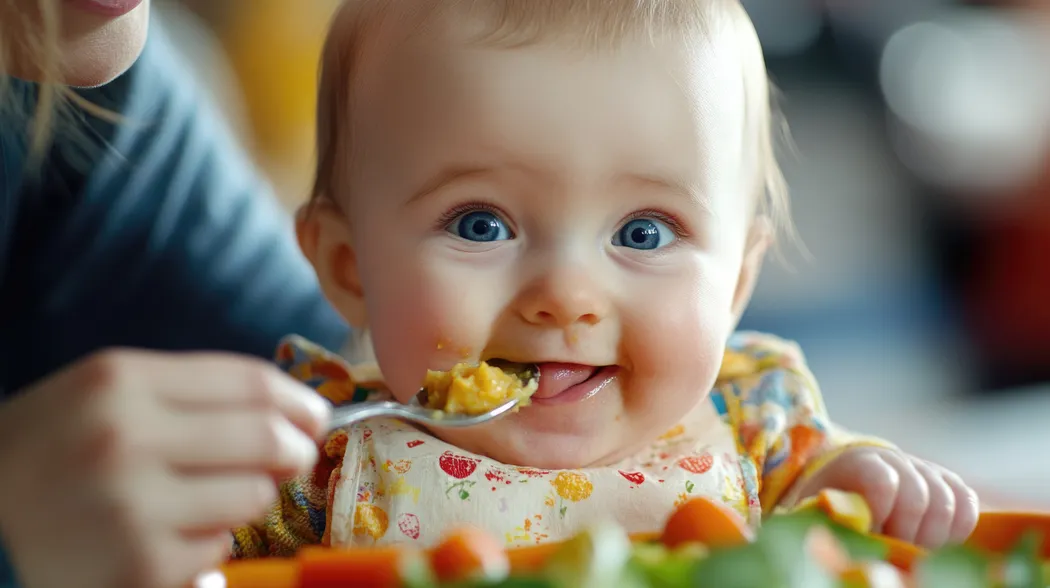
At six months, start with just 1 to 2 teaspoons once a day, then build gradually. A practical baby feeding schedule at 6 months looks like one solid meal in the morning or at midday, with breast milk or formula offered before and after. By 7 to 8 months, add a second solid meal. By 9 to 12 months, most babies manage roughly half a cup per meal, offered 3 to 4 times daily.

Introduce one new food at a time and wait 3 to 5 days before adding another. This makes it much easier to spot any reactions. If your baby seems unsettled after a new food, try gas relief exercises if baby is fussy after solids before assuming a food intolerance.

Foods to Avoid and Allergy Precautions

Certain foods carry real risks in the first year. Keep these off the menu:

  • Honey: risk of infant botulism; never give to babies under 12 months.
  • Cow's milk as a main drink: immature kidneys struggle with the protein and mineral load, and it can crowd out iron-rich foods. Yoghurt and soft cheese are fine from 6 months.
  • Whole nuts and large chunks: choking hazards. Thinly spread nut butters can be introduced from 6 months unless there is a family allergy history.
  • Salty and sugary foods: excess salt stresses immature kidneys, and sugar habits can form early.
  • Unpasteurised cheeses and undercooked eggs: food safety risks.

Early introduction of common allergens, including peanut, egg, and fish, is now encouraged around 6 months for most babies, as it may reduce long-term allergy risk. If your baby has a strong family history of allergies or existing eczema, discuss timing with your doctor first. It is also worth reading about recognizing baby food allergy symptoms so you know exactly what to watch for.
Report any adverse events or suspected allergic reactions to your healthcare provider or the relevant regulatory authority.

Contraindications and When to Consult a Doctor

Complementary feeding should be delayed or supervised closely in certain situations:

  • Prematurity: use corrected age and follow your paediatrician's specific advice.
  • Gastro-oesophageal reflux disease: some textures or feeding positions can worsen symptoms; specialist input is important before starting solids.
  • Congenital digestive or metabolic conditions: conditions such as galactosaemia or short bowel syndrome require medically tailored feeding plans.
  • Severe eczema or multiple food allergies in the family: an allergist or paediatrician should guide the introduction sequence.
  • Neurological or oral-motor difficulties: swallowing safety must be assessed first.

If you are unsure whether your baby is ready, or if they are consistently refusing solids, gagging repeatedly, or not gaining weight well, speak to your paediatrician before continuing.

Supporting Nutrition: Vitamins and Probiotics During Transition

Even with a varied complementary feeding foods list in place, some nutrients can fall short during the transition to solids. Vitamin D is one of the most commonly flagged, since few foods provide enough and sun exposure in India can be inconsistent depending on season and skin coverage. Read the full vitamin D drops guidance for infants for age-specific detail. Iron is another nutrient to prioritise: iron-fortified cereals, well-cooked lentils, and pureed meat are practical early options.

Some families find that probiotic drops to support digestion during weaning help ease the digestive adjustment that can come with new foods. Ask your child's doctor whether supplements are appropriate for your baby's specific needs.

Conclusion

Complementary feeding is an important step in an infant’s growth and development. Introducing a variety of nutritious, age-appropriate foods from around six months, while continuing breastfeeding, helps meet increasing nutritional needs. Parents should focus on food safety, suitable textures, responsive feeding, and balanced meals. Following these principles can help establish healthy eating habits and support a child's overall development.

FAQS

At what age should complementary feeding start?

Most babies are ready at around six months. Starting before four months is not recommended, as the gut and swallowing reflex are not mature enough. If your baby was premature, base the decision on corrected age and your paediatrician's advice.

What is the first food to introduce to a baby?

Single-grain iron-fortified porridge, well-mashed banana, or pureed vegetables such as sweet potato or carrot are common first choices. There is no single "correct" first food; the priority is smooth texture, mild flavour, and iron content.

How many times a day should I feed my baby solids?

Start with once a day at six months, move to twice a day by seven to eight months, and aim for three to four meals plus one or two snacks by nine to twelve months. Breast milk or formula continues alongside every stage.

Can I continue breastfeeding while starting solids?

Yes, and you should. WHO complementary feeding recommendations emphasise that breastfeeding continues for up to two years or beyond alongside solid foods. Solids add nutrients but do not replace the benefits of breast milk in the first year.

What are signs of food allergy in babies?

Watch for hives, swelling around the mouth, vomiting shortly after eating, diarrhoea, or unusual fussiness. Severe reactions such as breathing difficulty require emergency care immediately. Introduce new foods at home during the day so you can observe your baby for several hours after.

Apollo 247 Floating Action Button