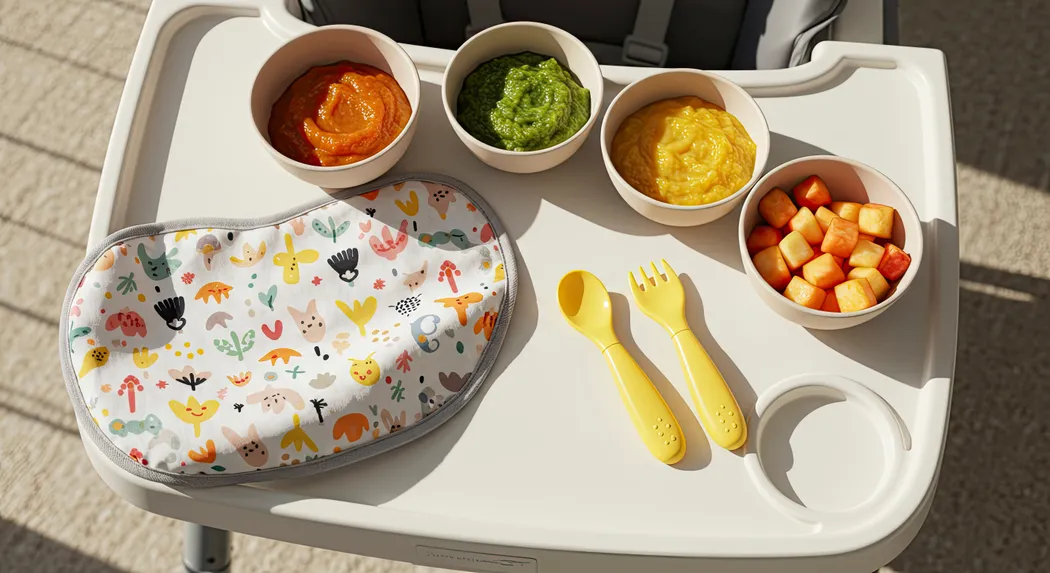
Structured Approach to Introducing New Foods
A step-by-step method makes it far easier to spot problems and build a baby's confidence with new tastes. Understanding how to introduce solid foods to baby systematically can prevent a great deal of anxiety for both caregiver and child.
One Food at a Time
Introduce a single new food and wait three to five days before adding another. This window lets you identify whether the baby reacts to that specific food, whether through a rash, diarrhoea, vomiting, or unusual fussiness. Common allergenic foods such as egg, peanut, fish, and wheat should each have their own three-day observation window. Current evidence generally supports introducing allergens around six months rather than delaying them.
Portion Sizes and Meal Frequency
Start very small: one to two teaspoons at a single meal. Increase quantity gradually over days and weeks as the baby accepts more. Never measure success by how much the baby finishes; appetite varies day to day.
Meal frequency by age, following WHO guidance:
- 6 to 8 months: 2 to 3 meals a day
- 9 to 11 months: 3 to 4 meals, with 1 to 2 snacks
- 12 to 24 months: 3 to 4 meals, with 2 snacks if appetite allows
Breast milk or formula fills remaining nutritional needs between meals at every stage.
Making Mealtimes Positive
Responsive feeding matters as much as what goes in the bowl. Sit with the baby, make eye contact, and follow their cues. Turning off screens and removing distractions helps babies focus on eating and learn to recognise fullness. This approach, central to the complementary feeding chart framework, also builds healthy eating habits that last far beyond infancy.