logo
0

Diaper Rash Cream for Newborn: Causes & Treatment Guide

Learn how to choose diaper rash cream for newborns, understand common causes, prevent irritation, treat mild rashes, and know when to see a paediatrician.

article image

Dr.Nallapu Siri

Bringing a newborn home is full of small, unexpected worries. One of the most common is a red, inflamed patch of skin under the diaper. Choosing the right diaper rash cream for your newborn can feel overwhelming when shelves are packed with options and your baby cannot tell you what hurts. This guide explains why diaper rash happens, what it looks like, how to prevent it, and how to treat it safely.

What Is Diaper Rash and Why Does It Happen in Newborns?

Diaper rash is an inflammation of the skin inside the diaper area. It is one of the most common skin conditions in infants, and newborns are especially vulnerable because their skin is thinner, more permeable, and less able to recover from repeated irritation.

The main diaper rash causes in babies include:

  • Prolonged contact with a wet or soiled diaper, which breaks down the skin's protective barrier
  • Friction from the diaper rubbing against delicate skin
  • Chemical irritants in certain wipes, detergents, or diaper materials
  • A fungal infection, usually Candida, which thrives in warm, moist conditions
  • Allergic reactions to fragrance, dye, or a specific cream ingredient
  • Antibiotic use, which can disrupt the skin's bacterial balance and raise rash risk

How to Identify Diaper Rash: Symptoms to Watch For

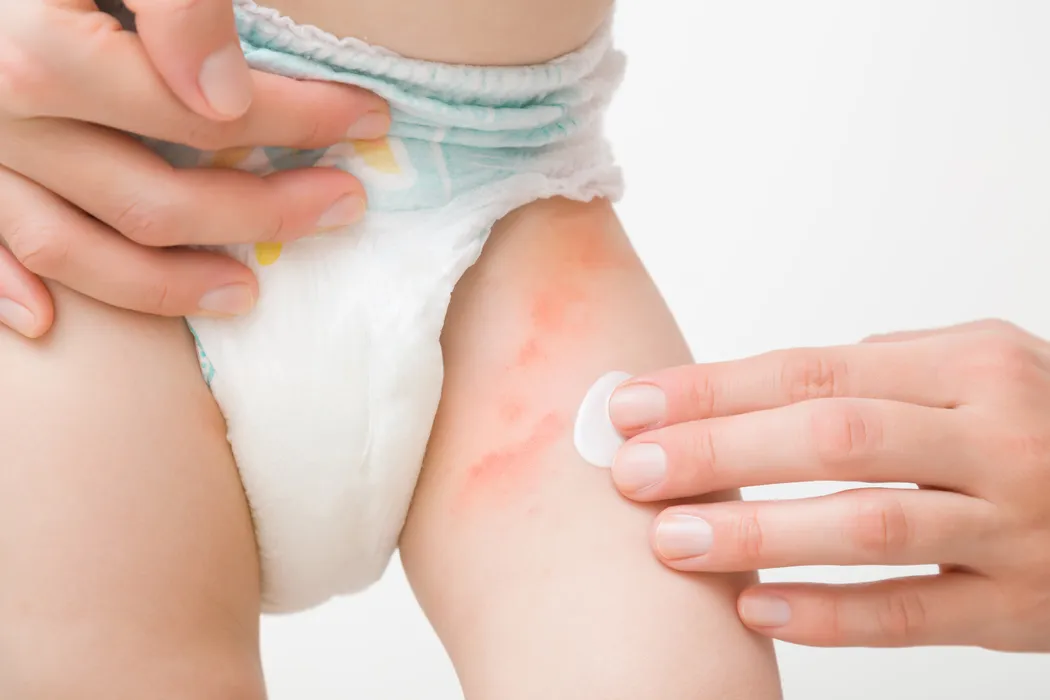
Diaper rash symptoms typically appear as red, shiny, or slightly swollen skin across the buttocks, inner thighs, and genitals. Milder cases show a few scattered red patches; more severe cases can produce blisters, peeling, or small sores.

Some signs suggest the rash has become a fungal infection rather than a simple irritant rash:

  • Bright red skin with a sharply defined edge
  • Small red spots or satellite lesions just outside the main rash
  • Skin folds are involved, which is unusual for irritant rashes
  • No improvement after two to three days of standard barrier cream and frequent diaper changes

A fungal rash needs an antifungal treatment, not just a barrier cream. Spotting these differences early helps you get the right treatment sooner.

Prevention Strategies for Diaper Rash

Most prevention comes down to reducing moisture, friction, and irritant exposure.

  • Change diapers regularly: Change your newborn's diaper every two to three hours during the day and promptly after soiling, including during the night when necessary.
  • Dry the skin gently: After removing a wet diaper, gently pat the diaper area dry rather than rubbing, as friction can worsen irritation.
  • Allow the skin to air-dry: Give the diaper area a minute or two to air-dry before putting on a fresh diaper.
  • Choose absorbent diapers: Use diapers with good absorbency to help keep moisture away from your baby's skin.
  • Use gentle wipes: Choose fragrance-free, alcohol-free wipes, or use plain warm water with a soft cloth for very young newborns.
  • Apply barrier cream: If your baby is prone to diaper rash, apply a thin layer of suitable barrier cream during diaper changes to help protect the skin.
  • Avoid talcum powder: Do not use talcum powder in the diaper area because inhaling fine talc particles can pose a respiratory risk to infants.

For broader guidance on keeping your baby's skin healthy in the early weeks, see newborn skincare basics: belly button care, which covers other common newborn skin concerns.

Choosing the Right Diaper Rash Cream: Key Ingredients

The best cream for diaper rash works by forming a physical barrier between the skin and moisture or stool. Key ingredients to look for:

  • Zinc oxide: Zinc oxide is one of the most commonly used barrier ingredients for diaper rash. It forms a protective layer over the skin and helps reduce exposure to moisture and irritants. It is generally well tolerated when used as directed on intact skin.
  • Petrolatum (white soft paraffin): Petrolatum forms an occlusive barrier that helps protect irritated skin from moisture and friction while reducing water loss from the skin.
  • Panthenol (provitamin B5): Panthenol helps moisturise and support the skin barrier and is commonly included in products designed for sensitive or irritated skin.
  • Dimethicone: Dimethicone is a silicone-based barrier ingredient that helps repel moisture and reduce contact between the skin and irritants. It is generally considered gentle for sensitive skin.

Ingredients to avoid in any diaper rash treatment for newborns include boric acid, camphor, phenol, benzocaine, and products with high concentrations of essential oils. These can be absorbed through newborn skin and cause harm. If you are unsure which product suits your baby, ask your paediatrician or pharmacist before buying.

How to Apply Diaper Rash Cream Correctly?

Applying cream properly makes a real difference to how quickly a rash improves. At every diaper change when a rash is present, or when using cream preventively:

  • Remove the soiled diaper and dispose of it safely.
  • Clean the diaper area gently with a fragrance-free wipe or warm water and a soft cloth, wiping front to back.
  • Pat the skin completely dry; do not rub.
  • Allow one to two minutes of air exposure if possible.
  • Apply a thin, even layer of barrier cream over the entire affected area and a small margin of surrounding skin.
  • Fasten a clean diaper securely but not tightly.
  • Repeat at every change until the rash clears, then continue as a preventive measure.

You do not need to scrub off every trace of old cream at each change. Aggressive wiping causes more friction and trauma than any leftover cream does. If old cream is stubborn, a small amount of mineral oil on a cotton pad removes it gently. For guidance on handling minor skin irritation or breaks, see general wound care tips for minor skin injuries.

Contraindications and When to Avoid Certain Creams

Not every situation calls for a standard over-the-counter barrier cream. Do not apply diaper rash cream when:

  • Broken or infected skin: Avoid applying a routine barrier cream over skin that is deeply broken, blistered, or draining pus. These findings may indicate infection and should be assessed by a paediatrician.
  • Suspected fungal infection: A barrier cream does not treat Candida infection. If a fungal rash is suspected, consult your paediatrician about appropriate antifungal treatment rather than relying on barrier cream alone.
  • Known allergy: Do not use a product containing an ingredient your baby is known to be allergic or sensitive to. Check the full ingredient list, including fragrances and preservatives.
  • Possible bacterial infection: Yellow crusting, spreading redness, warmth, swelling, or an unpleasant odour may indicate bacterial infection and require medical assessment.
  • Steroid-containing creams: Do not use steroid creams in the diaper area unless specifically prescribed by a doctor. The occlusive diaper environment can increase steroid absorption and the risk of side effects in infants.

Report any unexpected skin reaction or worsening symptoms to your healthcare provider or the relevant regulatory authority.

When to See a Doctor?

Most mild diaper rashes clear within two to three days of consistent barrier cream use and frequent changes. See a doctor if:

  • The rash spreads beyond the diaper area or to skin folds such as the neck or armpits
  • Blisters, open sores, or pus develop
  • Your baby has a fever alongside the rash
  • The rash shows no improvement after three days of home treatment
  • You see satellite spots suggesting a fungal infection
  • Your baby seems to be in significant pain during diaper changes

A paediatrician can confirm whether an antifungal, antibiotic, or prescription-strength treatment is needed.

Conclusion

Most newborn diaper rashes improve with simple measures that reduce moisture, friction, and exposure to irritants. Change diapers regularly, clean the area gently, allow the skin to dry, and use a suitable barrier cream containing ingredients such as zinc oxide or petrolatum when appropriate. Avoid potentially harmful ingredients and do not use steroid-containing creams in the diaper area unless prescribed by a doctor. If the rash is spreading, blistered, oozing, infected-looking, involves the skin folds, or does not improve with appropriate care, consult a paediatrician because a fungal or bacterial infection may require specific treatment. Persistent or recurrent rashes also deserve medical assessment to identify any underlying cause.

FAQS

How often should I apply diaper rash cream on newborns?

Apply barrier cream at every diaper change while a rash is present. Once the rash has cleared, a thin layer at each change can help prevent recurrence, particularly in babies who are prone to rashes or during periods of teething or antibiotic use.

Can diaper rash cream be used daily for prevention?

Yes. A gentle zinc oxide or petrolatum-based cream can safely be used at every change as a preventive barrier. Choose a product formulated for newborns, check the ingredient list for irritants, and confirm the approach with your paediatrician if your baby has very sensitive skin.

What is the fastest way to heal diaper rash?

Frequent diaper changes, thorough but gentle cleaning, air-drying the skin before each new diaper, and a thick layer of zinc oxide barrier cream at every change give the rash the best chance to heal quickly. Keeping the area as dry as possible is the single most important step.

Is coconut oil good for diaper rash?

Coconut oil has some moisturising and mild antimicrobial properties, but it does not form the same physical moisture barrier as zinc oxide or petrolatum. It may soothe very mild redness, but it is not a substitute for a clinically studied barrier cream, particularly in newborns with active or worsening rashes.

Can diaper rash cause fever in babies?

A simple irritant diaper rash does not typically cause fever. If your baby has a fever alongside a rash, it may signal a bacterial skin infection or an unrelated illness that needs medical attention promptly.

Apollo 247 Floating Action Button