logo
0

Best Cream for Newborn Face: A Safe Selection Guide

Learn how to choose and safely use cream for a newborn’s face, including gentle ingredients, products to avoid, application tips, and when to see a doctor.

article image

Dr. Kamran

Choosing the right cream for newborn face care is one of those decisions that feels small but matters a great deal. A newborn's facial skin is thinner, more permeable, and far more reactive than adult skin, which means the wrong product can cause irritation, rashes, or worse. This guide walks you through what to look for, what to skip, and how to apply moisturizer safely.

Understanding Newborn Facial Skin

The skin barrier of newborns and infants is still developing during early life. This can make their skin more susceptible to irritation and changes in moisture balance, so gentle, age-appropriate skincare is important.

This is why adult creams, even "natural" ones, are unsuitable. They are formulated for a thicker, more resilient barrier. Even products made for older babies may contain concentrations of actives that are too strong for a face that is just days or weeks old.

Mild peeling is common during the early newborn period as the skin adjusts to life outside the womb and usually settles on its own. Gentle skincare can help if the skin appears dry or uncomfortable. If peeling is severe, persistent, or accompanied by redness or other symptoms, consult your paediatrician. The best moisturizer for newborn skin is one chosen with real care, not grabbed off a shelf because the packaging looks gentle.

What to Look for in a Newborn Face Cream

When scanning labels, prioritise these qualities:

  • Fragrance-free: "Unscented" is not the same thing; some unscented products contain masking fragrances. Look for "fragrance-free" stated explicitly.
  • Hypoallergenic and dermatologist- or pediatrician-tested: These terms signal the product has been assessed for sensitive skin, though no product is allergy-proof for every baby.
  • Paraben-free and preservative-minimal: Where preservatives are necessary, gentler options at low concentrations are preferable.
  • Short, readable ingredient lists: Fewer ingredients generally means fewer opportunities for a reaction.

Safe and well-tolerated ingredients for a baby face cream for dry skin include:

  • Petrolatum (petroleum jelly): An occlusive moisturizer that forms a protective layer on the skin and helps reduce moisture loss.
  • Glycerine (glycerol): a humectant that draws water to the skin's surface.
  • Ceramides: Lipids naturally found in the skin barrier that help support skin hydration and barrier function. Ceramide-containing moisturizers may be useful for dry or eczema-prone skin.
  • Colloidal oatmeal: Used in moisturizers to help soothe dry or irritated skin. Choose a formulation appropriate for your baby's age.
  • Zinc oxide (in barrier creams): Protective and mildly anti-inflammatory.

A hypoallergenic baby cream containing one or two of these ingredients is usually enough. A long list of "actives" is not a sign of a better product for a newborn.

Ingredients and Practices to Avoid

Some ingredients are common in adult or general baby products but are not appropriate on a newborn's face:

  • Fragrances and perfumes: Fragrance ingredients can cause irritation or allergic contact dermatitis in susceptible babies. Fragrance-free products may be preferable for newborns with sensitive skin.
  • Essential oils: Avoid adding concentrated essential oils to a newborn's skincare routine unless specifically recommended by a healthcare professional. Some essential oils can irritate skin or cause adverse effects in young children.
  • Alcohol-containing products: Some alcohol-containing formulations can be drying or irritating, particularly on already dry or sensitive skin. Check the ingredient list and avoid products that cause irritation.
  • Strong cosmetic actives: Avoid using products containing retinoids, salicylic acid, alpha-hydroxy acids, or other exfoliating/active ingredients on a newborn's face unless specifically recommended by a healthcare professional.
  • Avoid Self-Medicating: Do not apply topical steroids to a newborn’s face without explicit guidance from a healthcare professional.

Introduce new skincare products cautiously and one at a time. Follow the manufacturer's directions and stop using the product if redness, swelling, hives, or worsening irritation develops. Redness, swelling, or a rash means the product should not be used.

Report adverse events to your healthcare provider or the relevant regulatory authority.

Contraindications and When to Avoid Creams

Safe skincare for newborns does not mean applying cream in every situation. There are times when a moisturizer should not be used without medical advice:

  • Broken or cracked skin. Applying cream to open skin can introduce bacteria and slow healing. For guidance on managing minor skin injuries, see this resource on treating minor cuts and wounds safely.
  • Active eczema flares with oozing or crusting. Certain emollients can worsen infected eczema; a doctor needs to assess and recommend appropriate treatment.
  • Any visible infection, including yellow crusting, pustules, or swollen skin. These need medical evaluation before any topical product is applied.
  • Skin conditions already under medical management. Always check with the treating doctor before introducing a new product.

How to Apply Cream Safely

Safe application matters as much as the product itself.

  • Wash your hands thoroughly before touching your baby's face.
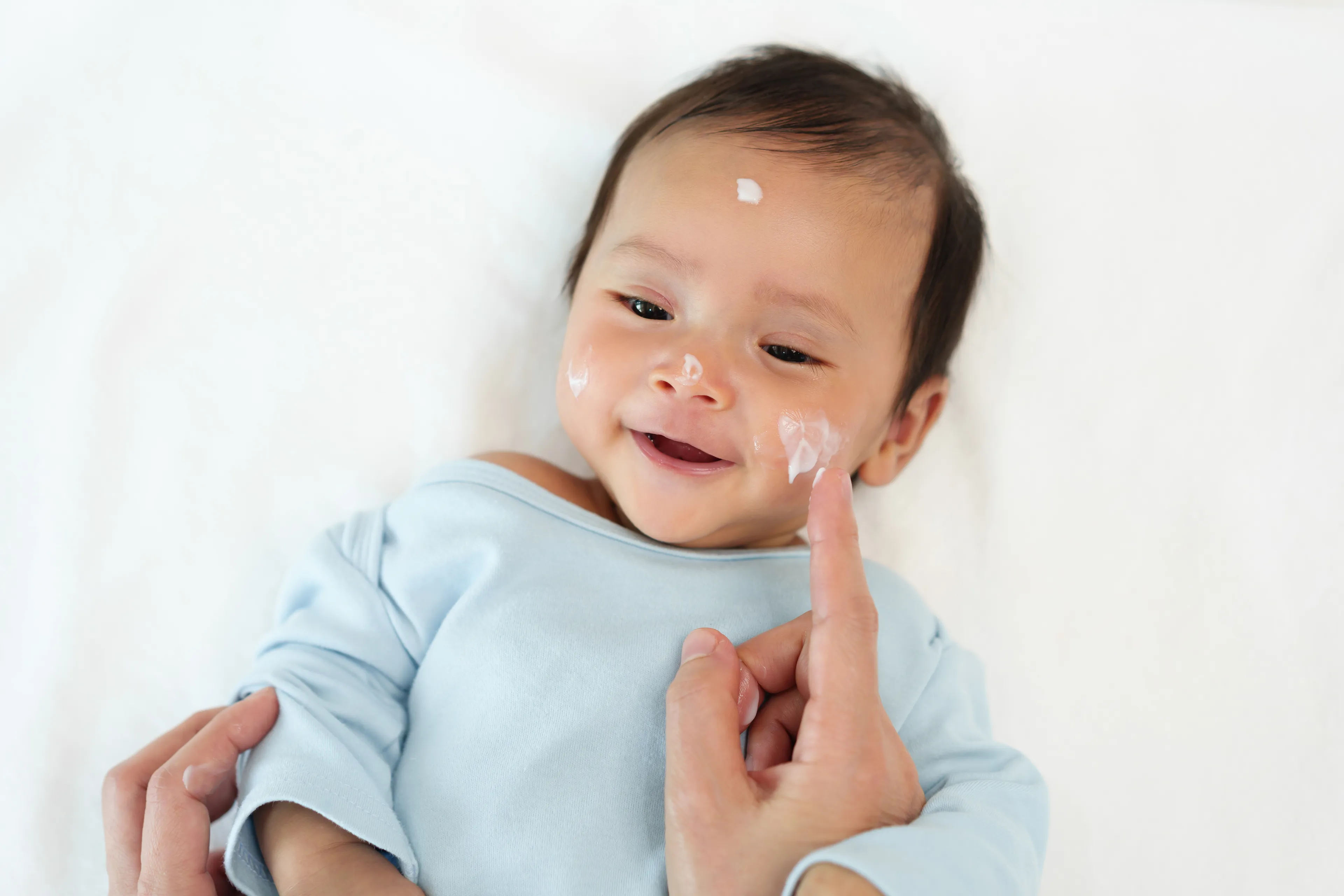
  • Use a small amount and spread a thin, even layer over the affected or dry areas. Follow the product's application instructions rather than relying on a fixed amount.
  • Warm the cream between your fingertips, then apply with light, gentle strokes.
  • Avoid the eye area and the skin immediately around the mouth.
  • Apply after a bath while the skin is still slightly damp to help lock in moisture.

Once daily is usually sufficient for mild dryness. If the skin is very dry, a second application in the evening is reasonable. Over-moisturizing can actually disrupt the skin's own barrier development, so more is not better.

Keep baths brief and use lukewarm rather than hot water to help minimize dryness and irritation.

For other aspects of newborn care, the guide to newborn belly button care covers what to expect and how to keep that area clean during healing.

When to Consult a Doctor

A newborn dry skin remedy from a pharmacy works well for routine dryness, but some signs call for a prompt visit to a pediatrician or dermatologist:

  • A rash that is spreading, blistering, or oozing
  • Skin that looks red, swollen, or feels warm to the touch
  • Yellow or honey-coloured crusting that suggests infection
  • Any skin change accompanied by fever, poor feeding, or unusual fussiness
  • Dryness that does not improve after a week of gentle moisturizing

Do not try to manage these situations with over-the-counter products alone. Early medical review is always the safer choice with a newborn.

Conclusion

Choosing the best cream for a newborn’s face means prioritising gentle, age-appropriate skincare over a long list of ingredients. Fragrance-free infant moisturizers containing ingredients such as petrolatum, glycerin, or ceramides may help support hydration and the skin barrier. Apply a small amount in a thin, even layer and follow the product’s instructions.

Avoid strong cosmetic actives, concentrated essential oils, and medicated creams unless recommended by a healthcare professional. If your baby develops persistent, spreading, swollen, oozing, or worsening skin changes, consult a paediatrician for appropriate evaluation and care.

FAQs

Can I use normal cream on my newborn's face?

No. Adult creams contain fragrances, preservatives, and active ingredients at concentrations that are too strong for newborn skin and can cause irritation or allergic reactions. Always choose a product specifically formulated and tested for newborn or infant use.

Is coconut oil safe for a newborn's face?

Coconut oil is commonly used as a moisturizer, but evidence for its routine use on newborn facial skin is limited. If your baby's skin is dry, a fragrance-free moisturizer formulated for infants may be a more predictable option. Ask your paediatrician before using coconut oil on inflamed, broken, or eczema-prone skin

What cream is best for newborn dry skin?

There is no single "best" product, but look for a fragrance-free, hypoallergenic cream containing petrolatum, glycerine, or ceramides. Your baby's paediatrician can recommend a suitable option based on your baby's specific skin needs.

How do I treat my newborn's dry, flaky face?

Mild flakiness in the first two to three weeks is normal and usually resolves on its own. Gentle moisturizing once daily with a safe, fragrance-free cream, short lukewarm baths, and patting the skin dry are usually all that is needed. If flaking is severe or accompanied by redness, consult your doctor.

Is petroleum jelly safe for newborn skin?

Yes, plain petroleum jelly (petrolatum) is generally considered safe and effective for newborn skin. It forms a protective barrier that locks in moisture without being absorbed. Use a small amount and avoid applying it near the eyes or mouth.

Apollo 247 Floating Action Button