logo
0

CRL Meaning in Pregnancy: Crown-Rump Length Explained

Wondering what CRL means on your ultrasound? Learn crown-rump length normal ranges by week (6 to 14), pregnancy dating accuracy, and when to consult a doctor.
 

article image

Dr. Kamran

Seeing "CRL" on an early ultrasound report can leave you puzzled, especially when you are already processing a lot of new information. Understanding the CRL meaning in pregnancy helps you follow your doctor's explanation, ask better questions, and feel genuinely informed rather than just reassured.

What Does CRL Mean in Pregnancy?

CRL stands for Crown-Rump Length. It is the distance from the top of your baby's head (the crown) to the base of the buttocks (the rump). The legs are deliberately excluded because they are tucked up during early development.

This measurement is taken between roughly 6 and 14 weeks of pregnancy. During this window, foetal growth follows a remarkably consistent pattern, making CRL the earliest reliable marker for gestational age. After 14 weeks, the baby's posture becomes more variable and other measurements, such as head circumference and femur length, take over.

How Is Crown-Rump Length Measured?

A sonographer performs the measurement during a standard pregnancy scan. Before 10 weeks, a transvaginal ultrasound (a slender probe placed gently inside the vagina) usually gives the clearest view because the uterus sits deep in the pelvis at this stage. From about 10 to 11 weeks onward, a transabdominal scan with gel on the abdomen is generally sufficient.

The sonographer captures a side-on image of the embryo or foetus, then places calipers at the crown and the rump. The machine calculates the distance in millimetres. Most sonographers take two or three readings and use the average, and they will wait for the baby to settle into a natural, neutral position before recording the measurement.

Normal CRL Range by Week

Individual babies grow at slightly different rates, so one measurement outside the average is not, by itself, cause for concern. The table below shows commonly used reference ranges for a crl ultrasound normal range across the first trimester.

Gestational WeekApproximate CRL Range (mm)
6  4 to 6
7   7 to 13
8 14 to 20
920 to 28
10 28 to 38
1138 to 50
1250 to 65
1365 to 80
14 80 to 95

Your doctor or sonographer will interpret your result alongside your clinical history, not against the table alone. A crown-rump length chart like this is a guide, not a verdict.

How CRL Is Used for Pregnancy Dating

Many women first calculate their due date using the last menstrual period (LMP). This works well when cycles are regular, but ovulation can shift, and recall is not always precise.

CRL offers a more objective measure for a CRL pregnancy dating scan. Because fetal size in the first trimester is so consistent, a CRL reading can estimate gestational age to within roughly five to seven days, which is why it is considered the gold standard for confirming or adjusting an LMP-based due date.

If your CRL-based age differs from your LMP estimate by more than a week, your doctor may update your expected due date. This is a routine adjustment. The relationship between crl size and due date is most reliable before 14 weeks; later scans carry a wider margin of variation, so the first-trimester dating scan carries the most weight.

When CRL Measurements Raise Concern

A CRL that is smaller than expected for the gestational age, sometimes called a low CRL, can mean different things. The dates may be off by a few days, growth may be slightly slow, or, in some cases, the pregnancy may not be progressing. No single scan is diagnostic on its own.

Your doctor will look at:

  • Biometric date variance: How significantly the millimetre reading deviates from expected crown-rump length norms for your cycle dates.
  • Foetal cardiac activity: The presence, regularity, and rate of embryonic heart action (an absent heartbeat when CRL reaches 7 mm or a slow heart rate carries far greater diagnostic significance than size alone).
  • Maternal clinical presentation: Accompanying symptoms such as vaginal bleeding, cramping, and maternal serum hormone markers.

A repeat scan one to two weeks later almost always gives a clearer answer. A small discrepancy in one reading, without other concerning signs, is rarely a reason to panic. Trust your doctor's guidance rather than drawing conclusions from a number alone.

Contraindications and Precautions for Ultrasound Dating

Diagnostic ultrasound is non-invasive and considered safe at the energy levels used for standard obstetric scanning. No harmful effects to mother or baby have been established from a correctly performed scan.

A few important points to keep in mind:

  • Clinical interpretation context: Ultrasound measurements must always be evaluated by a certified gynaecologist or radiologist within your complete clinical context.
  • High-risk referral: Expectant mothers with recurrent pregnancy loss, assisted reproduction (IVF), or congenital uterine anomalies may benefit from specialist foetomaternal imaging.
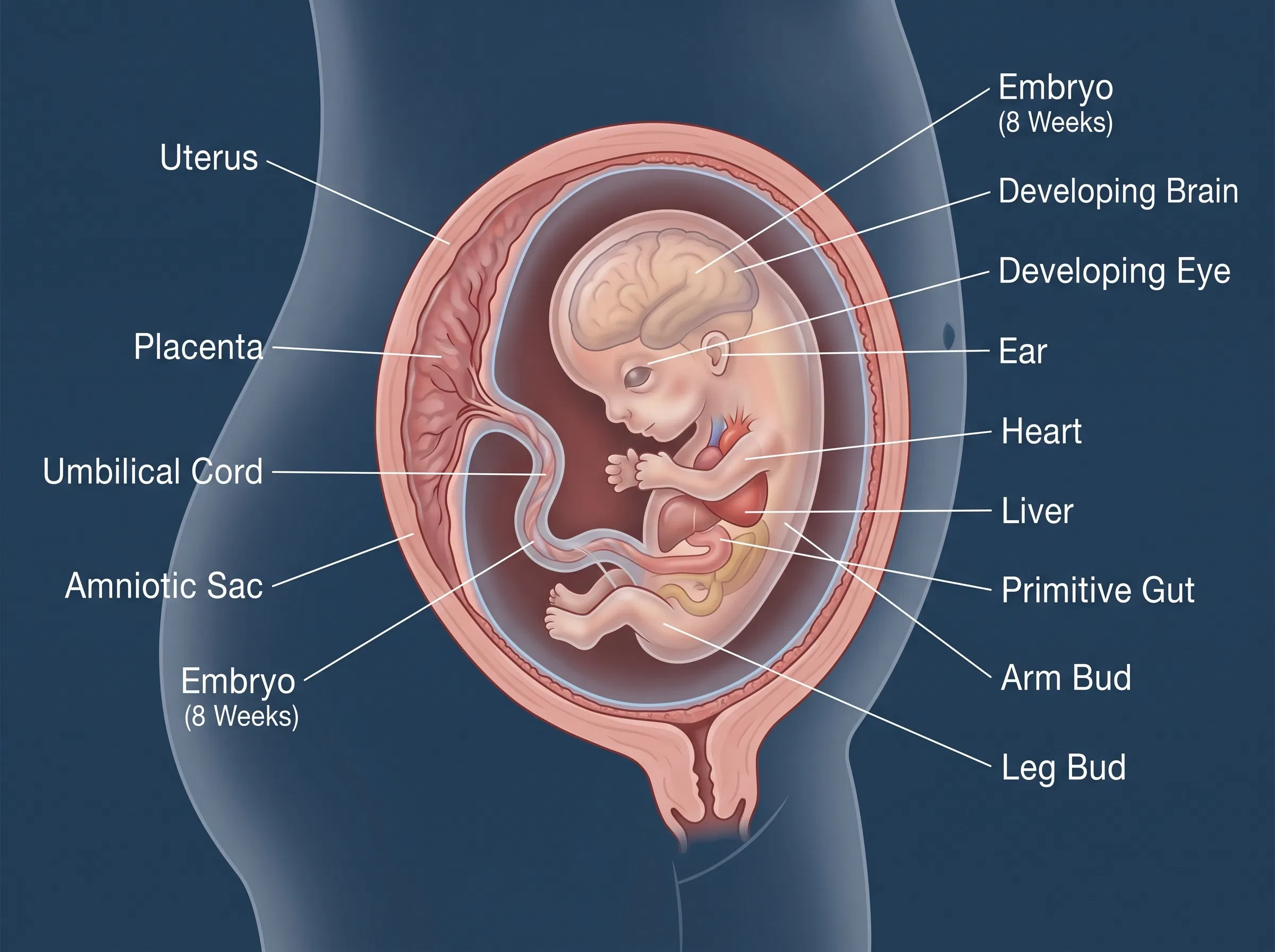
Once your baby arrives, newborn care tips after delivery can help you feel prepared for those early days at home.

Conclusion

Crown-rump length (CRL) is the primary first-trimester ultrasound measurement used between weeks 6 and 14 to assess early embryonic growth and accurately establish your expected due date to within 5 to 7 days. While minor discrepancies often reflect normal ovulation variation, your doctor interprets CRL alongside critical viability markers like the presence and rate of a foetal heartbeat. Always review your scan results directly with your obstetrician or gynaecologist for personalized antenatal guidance.

FAQS

What is CRL in a pregnancy ultrasound?

CRL stands for Crown-Rump Length, the measurement from the top of the baby's head to the base of the buttocks. It is the primary measurement used on early scans to confirm gestational age and monitor growth.

What is a normal CRL for 8 weeks pregnant?

At 8 weeks, a typical CRL falls between roughly 14 mm and 20 mm. Some variation is normal, and your doctor will consider this number alongside your dates and clinical history.

Can CRL predict the baby's gender?

No. CRL is purely a length measurement and gives no information about sex or gender. Gender determination, where legally permitted, relies on different ultrasound markers assessed later in pregnancy.

What if CRL doesn't match my dates?

A small difference of a few days is common and usually means a due date adjustment, not a problem with the pregnancy. A larger discrepancy warrants a conversation with your doctor and possibly a repeat scan.

How accurate is CRL for due date calculation?

A first-trimester CRL measurement is generally accurate to within five to seven days, making it more reliable than LMP dating alone, particularly when cycles are irregular.

Apollo 247 Floating Action Button