logo
0

Diaper Bag Essentials: Practical Packing Guide for Parents

Discover essential diaper bag items for newborns, including diapers, feeding supplies, clothing, hygiene products, medicines, and packing tips.

article image

Dr.Kamran

Stepping out with a newborn feels very different once you have a well-packed diaper bag on your shoulder. A diaper bag is not just a tote; it is a portable care station that keeps feeding supplies, hygiene items, and comfort essentials within reach whenever your baby needs them. For new parents in India, where outings can involve long commutes, warm weather, and unpredictable schedules, the right bag, packed correctly, can make the difference between a smooth outing and a stressful scramble.

What Is a Diaper Bag and Why You Need One

A diaper bag is a dedicated carry-all designed around a baby's care needs. Unlike a regular bag, it has multiple compartments sized for wipes, bottles, and spare clothing, along with easy-access pockets so you can find things quickly while holding a fussy infant.

The core purpose is organisation. Feeding items stay separate from soiled-diaper disposal. Skincare products don’t get crushed into a milk bottle. When everything has a place, outings become manageable even in the early weeks when parents are still finding their footing.

Diaper Bag Essentials Checklist

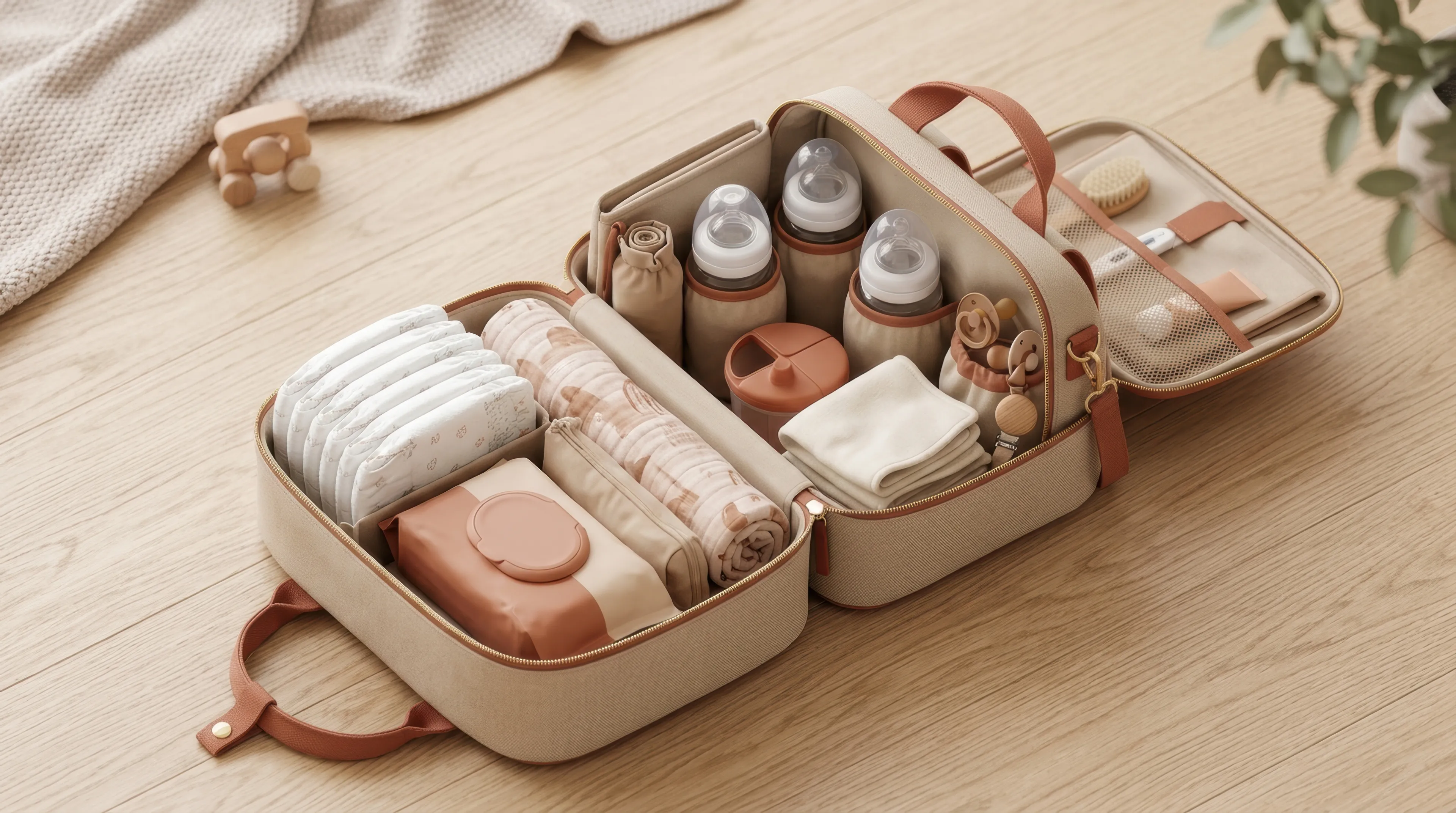
Below is a practical diaper bag checklist organised by category. Adjust quantities based on how long you plan to be out.

Diapering Supplies

  • Carry one diaper for every two hours you expect to be away, plus one or two extras as a buffer. For a four-hour outing, pack four to six diapers.
  • Fragrance-free baby wipes in a resealable pack.
  • A foldable, waterproof changing mat so you are never dependent on a public changing station.
  • A small tube of zinc-oxide diaper rash cream.
  • Disposable nappy bags or a sealed wet bag for soiled diapers.

Feeding Supplies

  • If breastfeeding: a nursing cover if you prefer one, and a small muslin cloth for burping.
  • If formula feeding: pre-measured formula in a dispenser container, an insulated bottle with boiled and cooled water, and a bottle brush packet for rinsing on the go.
  • For babies on solids: a sealed snack container and a soft spoon.

Clothing and Comfort

  • Two complete change-of-clothes sets, including a onesie, vest, and socks, because Indian weather and blowouts are both unpredictable.
  • A light muslin swaddle or blanket that doubles as a sun shield or nursing cover.
  • The baby's pacifier, if used, stored in a clean case.

Hygiene and General Items

  • Alcohol-based hand sanitiser (at least 60% alcohol) for your hands before and after diaper changes.
  • Small pack of tissues.
  • Your own water bottle and a snack. Parents need care too.

How to Choose the Right Diaper Bag

The best diaper bag for a newborn fits your lifestyle, not just your baby's needs. When comparing options, the features below matter most in day-to-day use.

Size

A medium-to-large bag in the 20 to 30 litre range works for most full-day outings. Smaller crossbody styles suit quick errands but fill up fast in the newborn stage. If you are still deciding on the best diaper bag for a newborn specifically, err on the larger side during the first three months, then downsize as feeds and changes become less frequent.

Compartments

Look for at least one insulated pocket for bottles, a wipe-accessible external pocket, and a separate zip pouch for soiled items or dirty clothes. The more predictable your layout, the faster you can find what you need one-handed.

Material

Choose wipeable, water-resistant fabric. Indian summers mean humidity and spills, and a bag you can wipe clean in seconds is worth every rupee. Avoid canvas or fabric that absorbs odors, particularly for the inner lining.

Carrying Options

Backpack-style diaper bags free both hands, which matters when you are also carrying the baby. Stroller strap clips are a useful bonus. A neutral design that both parents will comfortably carry encourages shared packing duty.

Newborn Hygiene and Skin Care Items to Include

Newborn skin is thinner and more sensitive than older baby skin, so the items you pack should reflect that.

  • A mild, fragrance-free baby lotion or moisturiser for dry patches, common in air-conditioned environments.
  • Gentle baby sunscreen if the outing involves outdoor time. Check the label for age suitability, as many sunscreens are not recommended under six months.
  • Cotton balls or soft rounds for gentle cleaning.
  • If your baby still has the umbilical stump, read up on how to care for a newborn's belly button before heading out, and pack any cord-care items your paediatrician has recommended.

Stick to products labelled specifically for newborns. Avoid anything with strong fragrances, alcohol as an active ingredient, or adult formulations.

Handling Minor Cuts, Rashes, or Colds While Out

Babies are curious and accidents happen. A small first-aid pouch inside your diaper bag for baby is a sensible habit.

Basic items to consider:

  • Sterile gauze pads and medical tape for small scrapes.
  • A compact digital thermometer, which fits easily in a side pocket.
  • Saline nasal drops for congestion, particularly useful during the change of seasons in India when colds are common.
  • If your baby has known skin reactions, carry whatever soothing cream your doctor has prescribed.

For guidance on wound care, the Apollo article on the best treatment for minor cuts and wounds is a helpful reference. If stuffy noses are a concern, the piece on Ayurvedic remedies for instant cold relief may be useful for older family members accompanying you.

Important Safety Note on Medicines and Baby Products

Many parents carry paracetamol drops or antihistamines in their diaper bag. If you do, keep the following points in mind.

Only carry medicines prescribed or approved by your child's paediatrician. Dosages for infants are weight- and age-specific and differ significantly from adult or older-child formulations. Never assume a dose based on a previous prescription or from what another parent has shared.

Who should not self-medicate?

Certain over-the-counter cold and cough preparations are not safe for infants under two years. Antidiarrheals and antihistamines also carry age-specific restrictions. If you are unsure whether a product is appropriate, ask your pharmacist or paediatrician before packing it.

Store all medicines in their original, child-resistant packaging. Keep them away from direct sunlight and heat, both of which can alter potency. Diaper bags left in hot cars are not a safe storage place for any medication.
Conclusion

A well-organised diaper bag keeps essential baby-care items within easy reach and can make outings more manageable for new parents. Pack according to the length of your trip, including enough diapers, wipes, changing supplies, feeding items, spare clothes, and comfort essentials. Choose a bag with practical compartments, a wipeable and water-resistant material, and a carrying style that suits your routine. Medicines should only be included when recommended by your paediatrician and kept in their original packaging. Restocking after each outing and cleaning the bag regularly also helps maintain hygiene and readiness.

FAQs

How often should I restock my diaper bag?

Check and restock after every outing so you are never caught short. A quick scan of diapers, wipes, and formula at the door takes under a minute and prevents most mid-outing emergencies.

What size diaper bag do I need?

For a newborn, a bag in the 20 to 30 litre range is a practical starting point. You can switch to a smaller style once feeds and changes become less frequent, usually around six months.

Can I use a regular backpack as a diaper bag?

Yes, any clean backpack with enough compartments can work. The advantage of a dedicated diaper bag for baby is the insulated bottle pocket and wipeable lining, features that are harder to find in a standard bag.

What items are unnecessary in a diaper bag?

Full-size powder tins, multiple toy sets, and an entire first-aid kit add weight without adding much value. A curated bag is lighter and easier to manage, especially on long outings.

How do I keep a diaper bag hygienic?

Empty and wipe the interior with a damp cloth every few days. Wash fabric inserts or pouches weekly, and replace the changing mat liner after any soiling. Never place open food or an unwrapped pacifier directly against a soiled-item compartment.

Apollo 247 Floating Action Button