logo
0

Diaper Bag Guide: Essentials & Packing Tips

Discover what to pack in a diaper bag, including nappies, wipes, feeding supplies, spare clothes, hygiene essentials and useful items for babies and parents.

article image

Dr.Mayank

Stepping out with a newborn can feel like preparing for a small expedition. A well-packed diaper bag is what stands between a smooth outing and a stressful scramble for wipes in a crowded mall. Whether you are heading to a routine check-up or a family lunch, the right baby bag keeps everything your baby needs within arm's reach, cleanly stored and easy to find.

<Explore Diapers>

What Is a Diaper Bag and Why It Matters?

A diaper bag is a dedicated carry bag designed to hold all the supplies a baby needs away from home: diapers, feeding gear, spare clothing, hygiene items, and a small first-aid kit. Unlike a regular handbag, it is built around the demands of baby care on the go.

For newborns especially, hygiene matters enormously. Their immune systems are still developing, and the items that touch their skin, from wipes to clothing, need to be stored cleanly and accessed quickly. A purpose-built diaper bag makes that possible without digging through clutter.

How to Choose the Right Diaper Bag?

The best diaper bag for a newborn is one that fits your lifestyle, not just your baby's gear. Here is what to weigh before buying.

Size

A bag that is too small means leaving things behind; one that is too large becomes heavy and unwieldy. For a newborn, a medium-to-large bag (roughly 20 to 30 litres) works well. As your baby grows past six months, a smaller bag often does the job.

Material

Look for wipeable, water-resistant fabric. Spills and leaks are inevitable. Nylon and coated canvas are easy to clean. Avoid bags with too much internal fabric lining that absorbs odours.

Compartments and access

Multiple outer pockets let you grab wipes or a pacifier without opening the main zip. A dedicated insulated pocket for bottles is useful. Wide, flat openings in the main compartment make finding things faster.

Carrying options

A bag with both shoulder straps and stroller attachment clips keeps your hands free. Backpack-style diaper bags distribute weight better during longer outings.

Key features at a glance

  • Wipeable or water-resistant interior
  • Insulated bottle pocket (fits at least two bottles)
  • Stroller straps or clip loops
  • At least two external zip pockets
  • Padded changing mat included or attachable
  • Comfortable straps for both parents to use

No single bag suits every family. Prioritise the features that match your most common outings.

Diaper Bag Organisation Tips

A good diaper bag organiser system saves you the most time when your baby is crying and you need something immediately. The trick is to zone the bag so that similar items always live in the same place.

Zone 1: Diapering

Keep diapers, wipes, nappy rash cream, a portable changing mat, and disposal bags together. Many parents use a small zip pouch for this zone so the whole kit can be pulled out in one move.

Zone 2: Feeding

Bottles, formula or breast milk storage bags, burp cloths, a small bottle brush, and a bib go here. If you are breastfeeding, include a nursing cover if you use one.

Zone 3: Clothing

Pack one or two spare outfits in a light drawstring bag. Keeping them separate means clean clothes stay clean even if a bottle leaks.

Zone 4: Health and comfort

Thermometer, saline drops, prescribed medications (in original packaging), hand sanitiser, and a small first-aid kit belong here. Label this pouch clearly.

Refill zones as soon as you get home. Running out of diapers mid-outing because you forgot to restock is one of the most common (and avoidable) new-parent headaches.

Diaper Bag Checklist: What to Pack

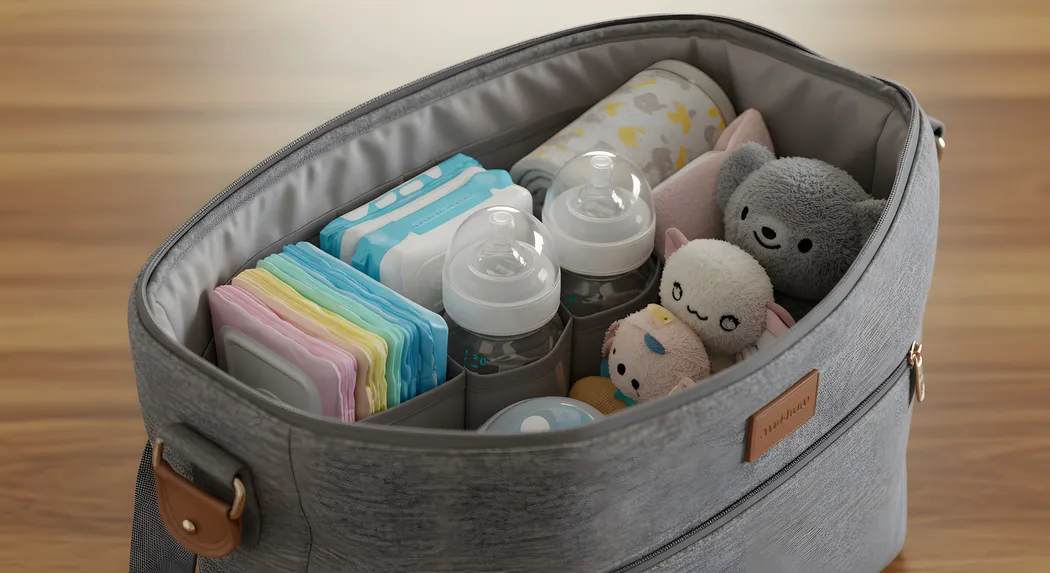
Use this baby bag checklist as your pre-outing scan. Adjust quantities based on how long you will be out.

Diapering supplies

  • Diapers: one per hour of outing, plus two extras as a buffer
  • Fragrance-free baby wipes
  • Nappy rash cream or petroleum jelly
  • Portable changing mat
  • Small scented disposal bags

Feeding

  • Pre-measured formula in a dispenser, or expressed breast milk in a cooler pouch
  • Two clean bottles
  • Burp cloths (at least two)
  • Age-appropriate snacks if your baby has started solids

Clothing

  • Two complete spare outfits, including socks
  • A light muslin swaddle (doubles as a shade cover or nursing cover)

Hygiene and health

  • Hand sanitiser (for caregivers before handling baby)
  • Alcohol-free baby hand wipes
  • Digital thermometer
  • Any prescribed medications your baby is currently on, with dosing instructions written down
  • Basic wound care supplies: sterile gauze, medical tape, and antiseptic appropriate for babies. See our guide on basic wound care items for a baby bag first-aid kit for more detail.

Comfort items

  • Pacifier with a case
  • Small teething toy if applicable
  • Sun hat

For newborns, pay particular attention to skin care around sensitive areas. If your baby still has the umbilical stump, follow guidance on newborn belly button hygiene while packing baby care items so you bring the right supplies.
Hygiene and Safety Precautions While Out with Baby

Packing well is only half the job. How you handle baby items outside your home matters just as much.

  • Handwashing comes first. Before any diaper change or feeding, wash your hands with soap and water for at least 20 seconds. When a sink is not available, use hand sanitiser, then wash hands properly as soon as possible.
  • Keep dirty and clean items separate. Use dedicated wet bags for soiled clothing or used cloth diapers. Never place used items back alongside clean ones in the main compartment.
  • Watch temperatures. Formula and expressed breast milk that have been warmed should not sit at room temperature for long. Discard any that have been out for more than the recommended period. In India's summer heat, use insulated pouches with ice packs.
  • Diaper change hygiene. Always use a clean changing mat. Wipe from front to back. If you notice persistent redness, swelling, or skin breakdown that does not improve with standard nappy rash cream after a couple of days, consult your paediatrician.
  • When to seek medical help. Go to a doctor promptly if your baby develops a high fever, has an unusual rash, seems unusually lethargic, or if a skin wound shows signs of infection such as increasing redness or discharge. Report adverse events to your healthcare provider or the relevant regulatory authority.
  • Who should not rely solely on over-the-counter remedies: Premature babies, newborns under one month, babies with known allergies, or those with any underlying health condition need prompt medical review for any new symptom rather than home management.

Conclusion

A well-organised diaper bag can make outings with a baby easier and help parents handle feeding, nappy changes and unexpected situations comfortably. Choose a bag with enough space, practical compartments, comfortable straps and easy-to-clean materials, then pack essentials according to your baby's age, feeding routine and the length of the outing. Keep nappies, wipes, changing supplies, spare clothes and feeding items readily accessible, and check the bag regularly to replace used or expired items. As your baby's needs change, adjust the contents to keep the bag practical without making it unnecessarily heavy.

FAQS

What is the difference between a diaper bag and a nappy bag?

There is no practical difference. "Diaper bag" is the common term in India and the United States, while "nappy bag" is used more in the United Kingdom and Australia. Both refer to the same type of bag designed to carry baby care supplies.

How many diapers should I pack for a day out?

A useful rule is one diaper per hour, plus two spares. For a four-hour outing, pack six diapers. Newborns typically need more frequent changes than older babies.

Can I use a normal bag as a diaper bag?

Yes, any large bag can work in a pinch. The advantage of a dedicated diaper bag is a wipeable lining, built-in compartments, and stroller clips, which make a real difference during a busy outing.

What size diaper bag is best for daily use?

A medium-sized bag in the 20 to 25 litre range suits most daily outings. It holds everything needed without becoming too heavy to carry comfortably through a full day.

How often should I clean my diaper bag?

Wipe down the interior and exterior with a damp cloth every week, or immediately after any spill or leak. Empty and air the bag fully once a month, and wash any removable fabric pouches according to their care labels.

Apollo 247 Floating Action Button