logo
0

Diaper Bag Guide: Essentials for Baby Care

Complete diaper bag guide: what to look for, must-pack essentials, organization tips, and newborn hygiene basics for stress-free outings.

article image

Dr.Mayank

Every new parent learns quickly that a good diaper bag is not a luxury, it is the difference between a smooth outing and a stressful scramble in a parking lot. Choosing and packing the right diaper bag means you can handle a blowout, a hunger cry, or a sudden rash without missing a beat. This guide walks you through what to look for, what to pack, and how to keep everything organised so outings with your baby feel manageable rather than chaotic.

How to Choose the Right Diaper Bag?

The diaper bag market is overwhelming. Backpacks, totes, slings, messenger styles, all of them claim to be the best diaper bag for newborn outings. What actually matters comes down to a handful of practical features.

Size: A bag that is too small means you are leaving something critical at home. A bag that is too large becomes a back-breaking chore. For most parents of a newborn, a medium-to-large bag with a volume of roughly 20 to 30 litres gives enough room without turning into a carry-on suitcase. If you have a toddler plus a newborn, size up.

Compartments: Look for at least three distinct sections, one main compartment, one insulated pouch for bottles, and a quick-access outer pocket for your phone and wipes. The more logical the layout, the faster you can find things one-handed while the other arm holds the baby.

Material: Wipeable fabric is non-negotiable. Nylon and coated canvas clean up in seconds. Avoid pale fabric or untreated canvas for the interior; spit-up and formula stains are relentless.

Stroller compatibility: Many bags now include clip-on stroller straps or slip-over handles. This keeps your shoulders free and the bag within reach during walks. Check that clips are rated to hold the bag's full weight.

Carry style: Backpack-style diaper bags distribute weight evenly across both shoulders, which matters on long outings. Totes and cross-body bags are quicker to open but harder on one shoulder over time. Choose based on how far you typically walk.

Diaper Bag Essentials Checklist

Packing a diaper bag well is really a diaper bag checklist problem. Forget one thing and that one thing is guaranteed to be the thing you need most. Below is a practical list organised by category.

Diapering

  • Diapers: plan for one diaper roughly every two to three hours, plus two extras for unexpected leaks. A half-day trip needs four to six; a full day, eight to ten.
  • A travel-sized pack of unscented baby wipes. Fragrance can irritate sensitive newborn skin.
  • A portable changing mat or foldable changing pad. Public changing tables are not always available or clean.
  • Diaper rash cream or barrier ointment.
  • Small scented disposal bags for used diapers when a bin is not nearby.

Clothing

  • At least two full spare outfits for the baby. Newborns can soil through to the vest layer in a single incident.
  • A light muslin wrap, useful as an impromptu blanket, shade cover, or nursing cover.

Feeding

  • Pre-measured formula in a small dispenser or a ready-to-feed bottle if formula-feeding.
  • Two sterilised bottles if needed.
  • Nursing pads and a cover if breastfeeding.
  • Burp cloths, two at minimum.

Hygiene and first aid

  • Hand sanitiser for use before and after changes.
  • A small nasal aspirator.
  • Any prescribed medication your baby takes, kept in the original labelled packaging.

For you

  • A snack, water, and your own medication if needed. Hungry, dehydrated parents make slower decisions.

Organising Your Diaper Bag for Quick Access

Packing everything in is step one. A good diaper bag organizer system is step two, because a bag where everything sinks to the bottom is nearly as useless as one that is half-empty.

Zone by urgency. Items you reach for at every single change, wipes, a diaper, the changing mat, belong in the outermost or most accessible pocket. Things you need occasionally, like a spare outfit or feeding equipment, can sit deeper in the main compartment.

Use small pouches inside the main compartment. A waterproof zip pouch holds clean diapers neatly. A separate pouch, ideally in a different colour, holds soiled items or used wipes until you reach a bin. Keeping clean and dirty items visually separated saves you from rummaging with dirty hands.

Label or colour-code. Small labels on pouches or different-coloured zip bags make identification instant, especially when a partner or another caregiver is handling the outing.

Refill as soon as you get home. The worst version of a diaper bag is the one packed last week. Spend two minutes restocking wipes, diapers, and snacks the moment you walk back through the front door.
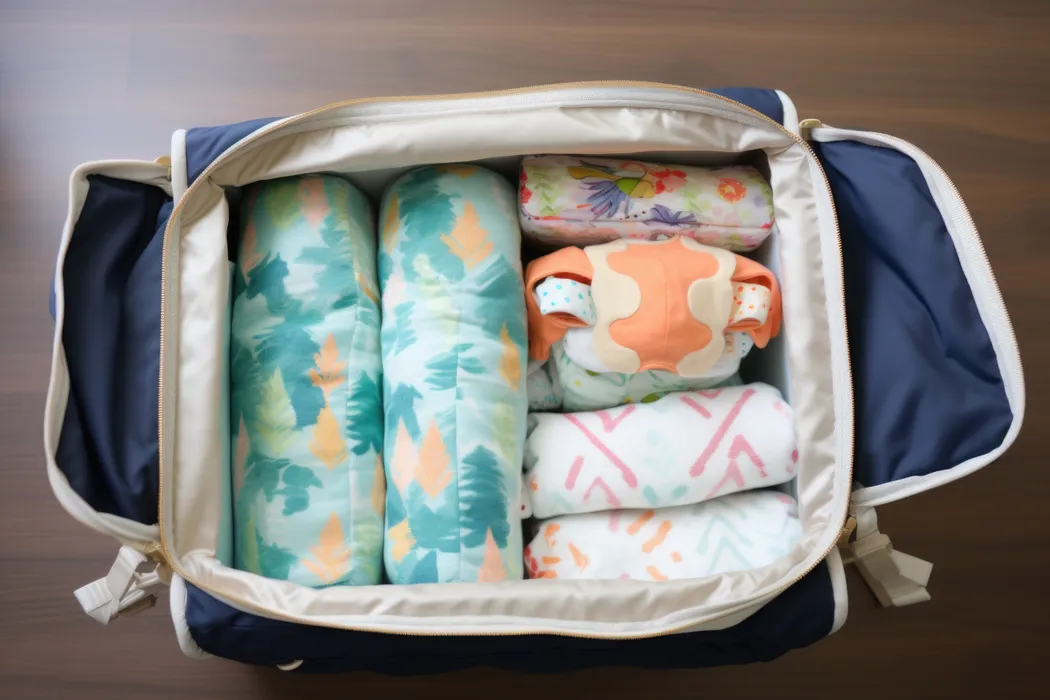
Rotate perishables. Check cream and wipe expiry dates during your weekly restock. Products that have sat in the bag through summer heat may degrade faster than the printed date suggests.

Hygiene and Skin Care On-the-Go

Newborn skin is thinner and more permeable than older infant skin, which means it absorbs irritants more readily and dries out faster. A few habits protect it during outings.

Change diapers promptly. Prolonged contact with urine or stool is the main driver of diaper rash. Pat the area dry gently before applying any barrier cream; rubbing on damp skin causes micro-abrasions.

Always wash or sanitise your hands before and after a change, even on the go. If you are using a public changing station, place your portable mat on top of it rather than laying the baby directly on the surface.

If your baby is a newborn with a healing umbilical stump, keep the area dry and above the diaper line during changes. For a detailed, doctor-reviewed guide on protecting that area during the early weeks, see Apollo's newborn belly button hygiene care guide.

Carry a thin muslin cloth to pat skin dry quickly after a wipe-down, and avoid leaving any moisture trapped in skin folds before re-diapering.

Contraindications and Safety Precautions for Baby Care Products

Not every product marketed for babies is safe for every baby. A few precautions apply before you load up the baby travel bag with creams and lotions.

When to avoid certain products:

  • Do not apply diaper rash cream to broken, bleeding, or deeply inflamed skin without a paediatrician's advice. Some barrier creams can seal in infection if the skin is already compromised.
  • Avoid products containing fragrance, alcohol, or boric acid on newborn skin. These can cause contact irritation or, in rare cases, absorption of harmful amounts of certain compounds through immature skin.
  • If your baby has a known allergy or has reacted to a product before, do a patch test on a small area of inner arm skin 24 hours before using it more widely.
  • Babies with eczema or other skin conditions may need specific formulations recommended by their doctor. Do not substitute a prescribed cream with an over-the-counter alternative without checking first.

Medication in the bag: Any prescription medicine carried in the diaper bag should remain in its original container with the pharmacist's label intact. Do not mix medications into unlabelled containers for convenience.

Adverse events: If your baby experiences unexpected redness, swelling, rash, or any reaction to a product used during an outing, stop use immediately and consult your paediatrician. Report adverse events to your healthcare provider or to India's National Pharmacovigilance Programme (NPVVP), which operates under the Central Drugs Standard Control Organisation (CDSCO).

Medical disclaimer: The information in this article is intended for general guidance only and does not constitute medical advice. Always consult a qualified paediatrician or healthcare professional before introducing new products to your baby's skin care routine, especially if your child has a pre-existing skin condition, allergy, or other health concern. Apollo Pharmacy does not endorse specific brands or products. Individual needs vary; what works for one baby may not be suitable for another.

Conclusion

Diaper rash is common in babies and is often caused by prolonged moisture, friction, irritants, or changes in the diaper area. Frequent diaper changes, gentle cleansing, allowing the skin to dry, and using a suitable barrier cream can help prevent and manage most mild cases. Zinc oxide-based creams and plain petroleum jelly can provide a protective layer that reduces contact between delicate skin and moisture.

Most mild diaper rashes improve within a few days with consistent care, but a rash that persists, spreads, or develops blisters, pus, crusting, open sores, or bleeding should be assessed by a paediatrician. Fever or significant discomfort also warrants medical attention. Avoid talcum powder and do not use antifungal, antibiotic, or steroid creams without professional guidance, as treatment depends on the underlying cause. With appropriate skin care and timely medical advice when needed, most diaper rashes can be managed safely and effectively.

FAQS

What is the best diaper bag size for daily use?

A bag with a volume of around 20 to 25 litres suits most daily outings with a single infant. It holds a full day's supply of diapers, a change of clothes, feeding supplies, and your own essentials without becoming too heavy to carry comfortably.

How many diapers should I carry in a diaper bag?

For a half-day outing, four to six diapers is a practical baseline. For a full day, carry eight to ten, plus a couple extra in case of blowouts or delays. Newborns go through diapers more frequently than older babies, so pack on the higher end in the early weeks.

Can I use the same diaper bag for twins?

Yes, but size up significantly. A bag in the 30-litre-plus range, or two coordinated smaller bags, one for each parent or carer, works better than trying to squeeze double supplies into a standard single-infant bag.

What is the difference between a diaper bag and a regular tote?

A diaper bag is designed with features a regular tote lacks: insulated bottle pockets, a wipeable lining, built-in stroller straps, and compartments sized for changing mats and wipe packets. A regular tote can work in a pinch, but the organisation and hygiene features of a dedicated bag make a real difference day to day.

How often should I replace baby wipes and creams in the bag?

Check expiry dates monthly and replace any product that has expired, changed texture, or smells off. Wipes left in a hot bag can dry out or grow bacteria even before the printed date, so replace opened packs every week or two during warmer months.

Apollo 247 Floating Action Button