logo
0

Diaper Bag Guide: Choosing the Right Bag and What to Pack

Learn how to choose the right diaper bag and what to pack, including nappies, wipes, spare clothes, feeding supplies, changing essentials and useful extras.

article image

Dr.Vasantha Sree

A well-packed diaper bag can make the difference between a smooth outing and a stressful scramble in a public restroom. For new and expecting parents, the diaper bag is less a fashion accessory and more a mobile care station for your baby. Getting the right one, and knowing exactly what to put in it, sets you up for calmer days from the start.

<Explore Diapers&gt

How to Choose the Right Diaper Bag?

Choosing the right diaper bag involves considering its size, storage compartments, comfort, durability, and the essentials you need to carry while travelling or caring for your baby.

Size and Compartments

The bag needs to hold enough for your outing without becoming a heavy, disorganised pit. For a newborn, you will go through more supplies per hour than you expect, so err toward a medium-to-large size with multiple compartments. For toddlers, a slimmer bag often works because feeds are less frequent and changes are fewer.

Look for:

  • At least one large main compartment for bulky items like a changing mat and extra clothing
  • Several smaller pockets for things you need fast, such as wipes or a pacifier
  • An insulated pocket or sleeve to keep formula or breast milk at a safe temperature
  • A dedicated wet bag pocket, or a spot to clip one on

Material and Washability

Bags come in canvas, nylon, faux leather, or coated fabric. Nylon and coated materials wipe clean easily, which matters because spills and leaks are inevitable. Canvas looks good but can absorb odours over time. Whatever the material, check that the lining is wipeable or machine-washable.

Backpack or Tote?

Both work well. A backpack distributes weight across both shoulders, which is helpful on long walks or when you are pushing a stroller. A tote is quicker to open on one side and suits parents who prefer one-handed access.

If you use a stroller, look for bags with reinforced loops that clip onto the handles, or a flat back panel that slides over the stroller frame. Some bags convert between backpack and tote, giving you flexibility as your baby grows.

Diaper Bag Checklist: What to Pack

Packing by category keeps you from forgetting something critical. Here is a practical diaper bag checklist organised by need.

Diapering

  • Diapers: a general rule is one diaper per hour or two of your planned outing, plus a couple of extras as a buffer. Newborns need changes more frequently, so pack generously for short trips.
  • A portable changing mat (many bags include one)
  • A small pack of unscented wet wipes
  • Diaper rash cream or barrier ointment
  • Two or three small disposable bags for used diapers

Feeding

  • Pre-measured formula in a dispenser, or a sealed container if formula-feeding
  • A clean feeding bottle
  • Breast pads and a small muslin cloth for burping, if breastfeeding
  • Age-appropriate snacks and a spill-proof cup for older babies

Clothing

  • At least two full changes of clothing, including a vest, onesie, and socks, because blowouts happen more often than you expect
  • A lightweight blanket or swaddle for warmth or cover

Health and Safety

  • A digital thermometer
  • Any prescription medication your baby is currently taking, in its original labelled container
  • Infant paracetamol drops, only if specifically prescribed by your paediatrician for your baby's age and weight. Do not carry or administer without current medical guidance.
  • Saline nasal drops, if recommended by your doctor. Consult your paediatrician on the appropriate type and frequency for your baby's age before use.
  • A nasal aspirator
  • A small packet of cotton balls

Caring for a newborn on the go also means being prepared for minor queries early on. Reading up on newborn belly button care basics can help you know what is normal and when to call a doctor.

Parent Essentials

  • Your wallet and phone
  • A snack and a small water bottle for yourself
  • Hand sanitiser containing at least 60% alcohol, in line with general infection-control guidance
  • A nursing cover if needed
  • Any personal items you reach for regularly

Organising and Storing Items Inside the Bag

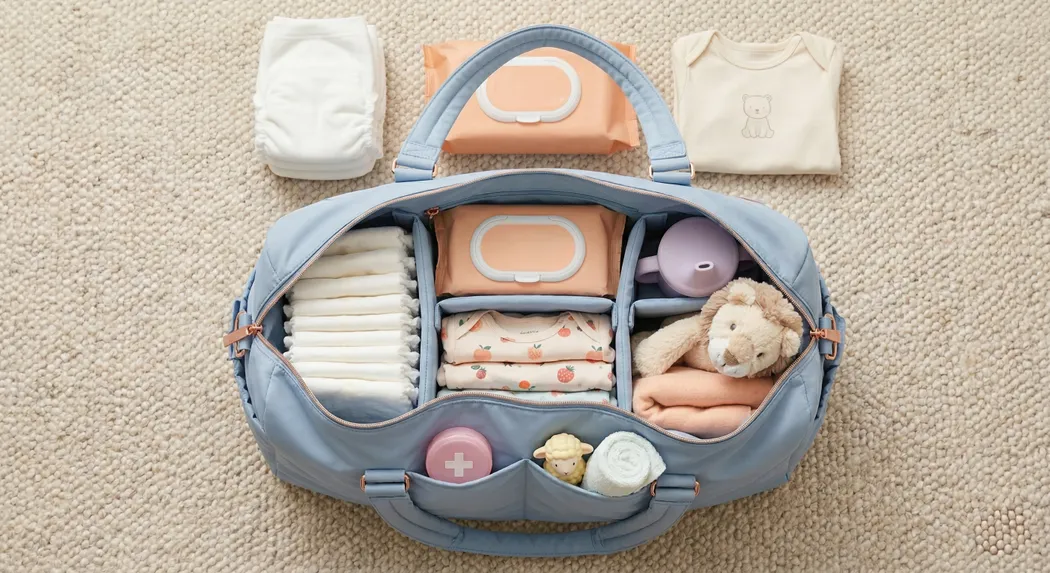
Organising a diaper bag into clearly separated sections can make baby essentials easier to find while helping keep clean items, feeding supplies, and used or soiled items safely stored.

Use Pouches and Labels

Small zip pouches are the single most useful diaper bag organisation tool you can use. Group similar items: one pouch for diapering, one for feeding, one for health items. Label them with a marker or use colour-coded pouches so anyone helping you can find things quickly.

Build a Pre-Packed Diaper Kit

Keep a small drawstring bag or zip pouch permanently stocked with two diapers, a travel pack of wipes, and a sachet of rash cream. When you reach a changing table, you grab one pouch rather than rummaging. After each outing, restock this kit before you put the bag down.

Restocking After Every Trip

Make restocking a habit the moment you get home, not the next morning when you are already running late. Do a quick check: count remaining diapers, confirm the bottle is cleaned, replace used clothing or wipes, and top up the sanitiser. Ten minutes at home saves twenty minutes of panic later.

Hygiene and Safety Tips for Diaper Bag Use

Maintaining good hygiene and safe storage inside the diaper bag helps prevent contamination and keeps your baby’s nappies, feeding supplies, clothing, and other essentials clean and ready to use.

Keep the Changing Mat Clean

Wipe the portable changing mat with a disinfectant wipe after every use. Some mats are machine-washable; check yours and wash it weekly or whenever visibly soiled. Wipe down the surface you plan to use before placing the mat on it.

Store Products Safely

Creams, ointments, and medications should sit in a sealed inner pocket, away from heat and direct sunlight. Check expiry dates every month. Parked cars get extremely hot in Indian summers, so never leave your diaper bag inside one for extended periods.

Avoiding Contamination

Keep used items, including soiled nappies and dirty clothing, fully separated from clean ones. A zipped wet bag works well for soiled clothes. Wash your hands or use hand sanitiser before and after every diaper change, even when a sink is not nearby.

Contraindications and Who Should Take Care

Not all products in a diaper bag are suitable for every baby. Medicated creams, antiseptic wipes containing alcohol, and essential oil-based products should not be used on newborns without a pediatrician's advice. Always confirm with your doctor before applying any topical product to skin that is already broken or rashy. Babies with known allergies or sensitive skin need extra caution; your doctor can recommend appropriate alternatives.

Report adverse events related to any product to your healthcare provider or the relevant regulatory authority.

When to Consult a Doctor?

The items in your diaper bag, including creams, wipes, and saline drops, are practical care tools, not medical treatments. They help you manage day-to-day hygiene on the go, but they are not a substitute for professional medical care.

Seek medical attention promptly if:

  • Your baby develops a rash that is spreading, blistering, bleeding, or not improving after two days of basic care
  • Your baby has a fever, particularly in the first few months of life. For very young infants, any fever warrants urgent attention; consult your paediatrician immediately rather than waiting.
  • Your baby seems unusually drowsy, is feeding poorly, or is crying inconsolably
  • You notice any reaction, such as redness, swelling, or worsening skin irritation, after applying a new product

When in doubt, call your paediatrician. A quick phone consultation can save unnecessary worry and catch something that needs early treatment.

Conclusion

Choosing the right diaper bag can make travelling with a baby more convenient and help keep essential items organised. Consider the bag's size, compartments, comfort, durability, ease of cleaning and how well it suits your daily routine. Pack essentials such as nappies, wipes, changing supplies, spare clothes and feeding items according to your baby's age, feeding needs and the length of the outing. Keep frequently used items easily accessible and check the bag regularly to replace used or unsuitable items. A practical, well-organised bag can help you stay prepared without carrying unnecessary weight.

FAQS

What size diaper bag do I need?

For a newborn, a medium-to-large bag with multiple compartments handles the volume of supplies well. As your baby grows and needs fewer frequent changes and feeds, a smaller bag becomes practical.

Can I use a regular backpack as a diaper bag?

Yes, any bag with enough compartments and a wipeable lining can work. A dedicated diaper bag typically adds useful features like an insulated pocket and a changing mat, but a well-organised backpack is a reasonable substitute.

How many diapers should I pack per outing?

Pack based on how long you will be out, keeping in mind that newborns need changes more often than older babies. A general buffer of one or two extra diapers beyond your estimate is a safe habit.

What is the best material for a diaper bag?

Nylon and coated fabrics are the easiest to wipe clean and tend to hold up well with daily use. Canvas is fine if the lining is wipeable, but check that it does not absorb moisture and odours over time.

Do I need a diaper bag for a newborn?

A dedicated diaper bag is genuinely useful in the newborn stage because the volume of supplies, diapers, feeds, changes of clothing, and health items is higher than at any other age. Having everything organised in one bag makes outings significantly less stressful.

Apollo 247 Floating Action Button